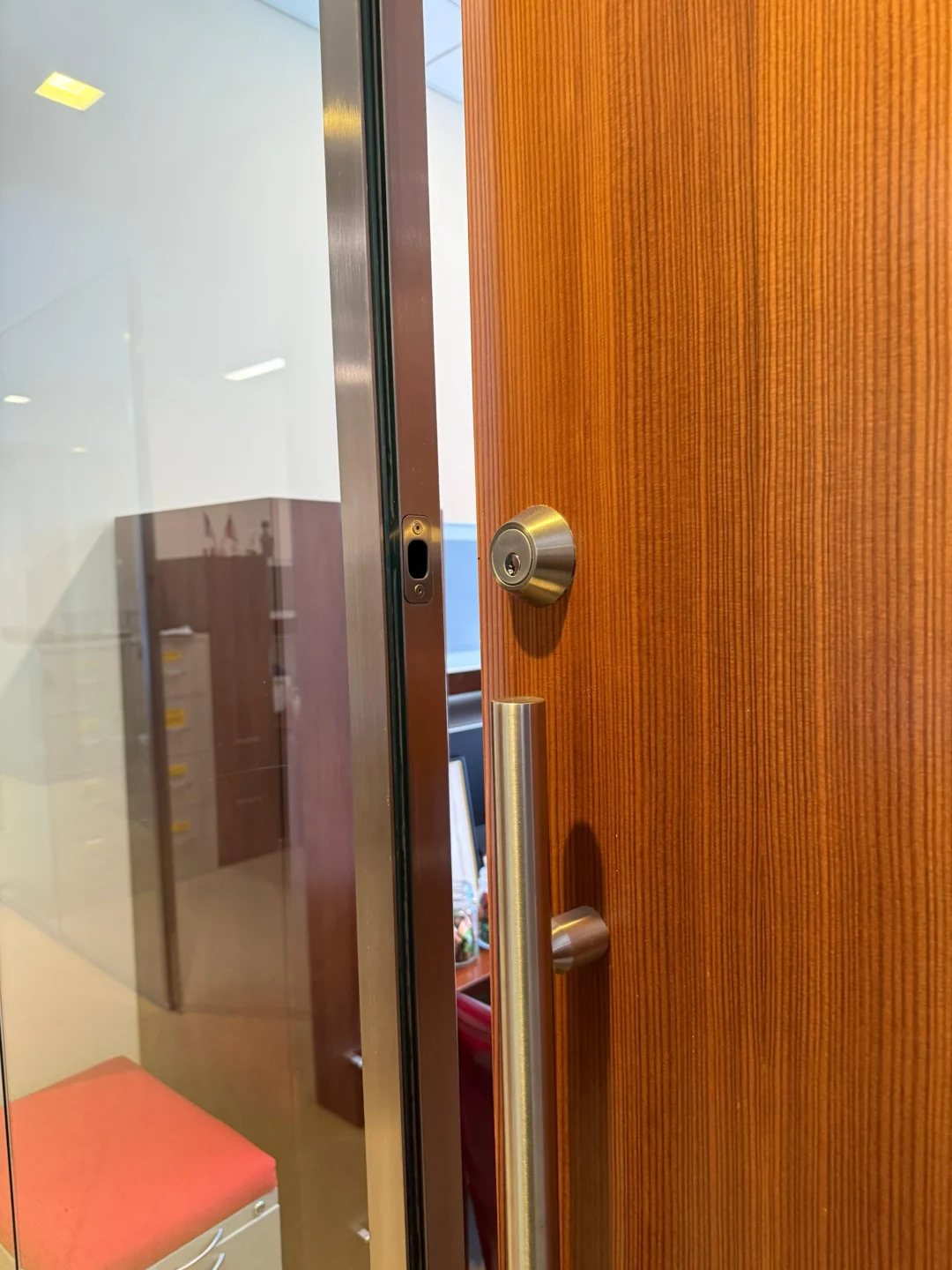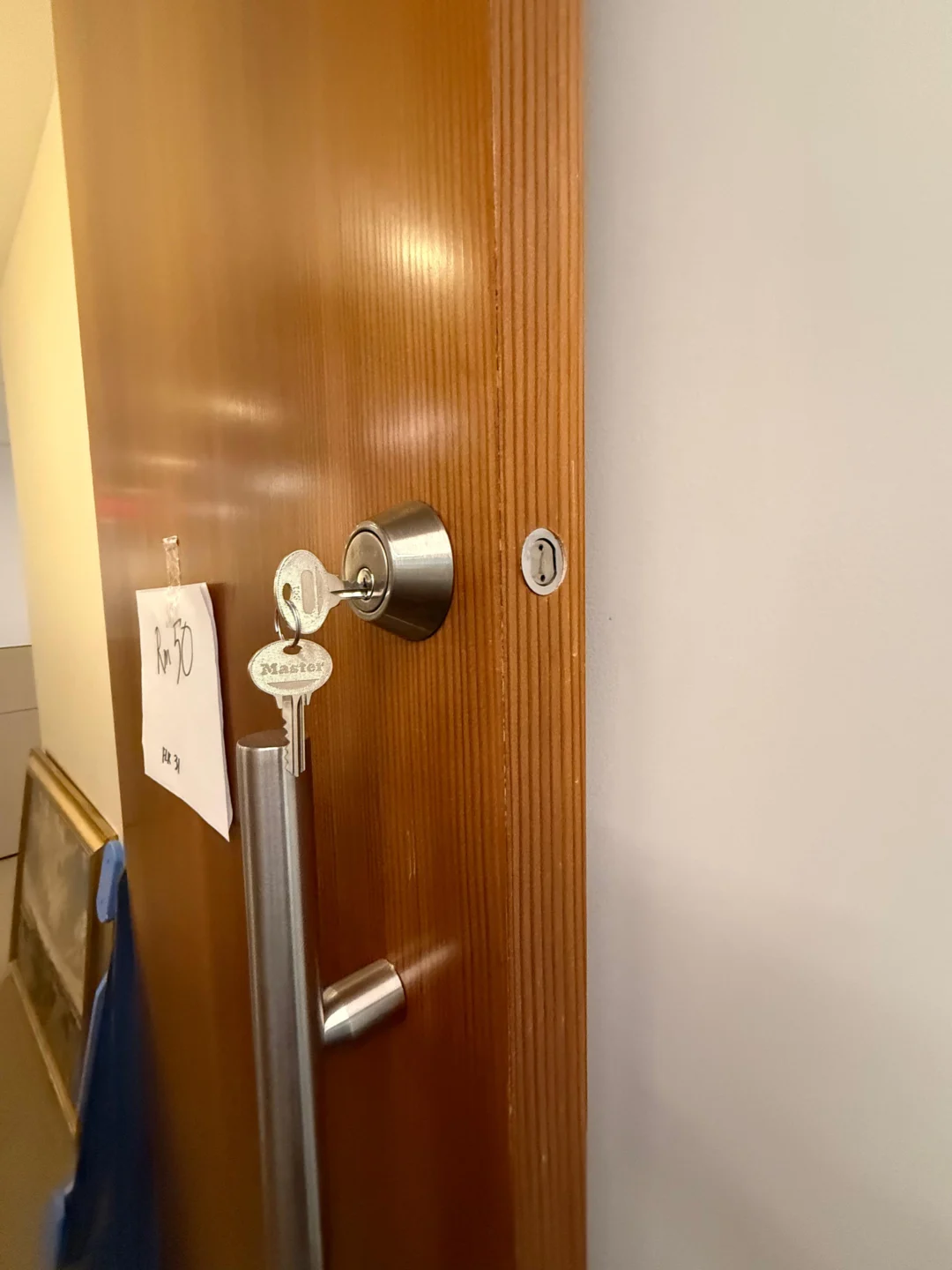
If the entire key cylinder comes out when you remove your key, that is not normal lock operation. Something that is supposed to retain the cylinder has either loosened, disconnected, broken, been installed incorrectly, or worn enough that the cylinder is no longer securely held inside the lock. The important part is determining what actually came out.
A conventional residential deadbolt may use a retaining screw or clip to hold its cylinder inside the exterior assembly. Schlage’s current residential deadbolt instructions, for example, show removable cylinders secured by a dedicated cylinder retaining screw. Kwikset’s current 816 deadbolt uses a different arrangement in which a metal retaining clip secures the cylinder inside its housing. A commercial mortise cylinder is different again: it can thread into the lock case and be secured against unwanted movement by hardware associated with the lock body. Adams Rite, for example, specifies that mortise cylinders on compatible mortise devices thread into the latch case and are secured with a set screw, while rim cylinders are attached differently with mounting screws.
So if your lock cylinder has fallen out, do not simply push it back into the hole and assume the problem is solved. The cylinder needs to be retained by the mechanism designed for that particular lock. If the entrance cannot currently be secured, Rainbow Locksmith NY provides emergency lock repair in NYC for damaged, worn, and malfunctioning locks.
Keep the door open if possible and identify whether the complete cylinder came out intact or whether the cylinder plug, pins, or springs came apart. Do not simply push the cylinder back into the door. Find the lock’s actual retaining system, which may be a screw, clip, mortise-cylinder set screw, or mounting screws depending on the hardware. If the correct retainer is intact, follow the manufacturer’s procedure to reinstall the cylinder and test the lock with the door open. If the retainer, housing, threads, or cylinder is damaged – or the door cannot be secured – repair or replace the lock before relying on it again.
First question: what exactly fell out?
People use “lock cylinder” and “lock barrel” to describe several different pieces. Look carefully at what came out before trying to put anything back.
Scenario A: the complete key cylinder came out as one piece
You may be holding a complete metal cylinder with the keyway in front and a tailpiece, driver bar, or cam at the rear. This usually points toward a retention problem rather than the pins inside the cylinder suddenly failing. Depending on the lock, the missing or failed retaining component might be:
- Cylinder retaining screw
- Metal retaining clip
- Set screw
- Mounting screws
- Cylinder housing component
- Retaining cap or associated hardware
Schlage’s current B60/B62 cylinder procedure confirms that its cylinder is intentionally removable once its retaining screw is taken out. Kwikset likewise documents a removable cylinder held by a silver clip on its 816 deadbolt. If one of those retaining components is absent or damaged, merely sliding the cylinder back into position does not restore a reliable lock.
Scenario B: the inner plug came out and small pins or springs fell loose
This is a more serious servicing problem. The plug is the portion containing the keyway that rotates inside the cylinder shell. If the plug comes out and you see loose pins, springs, tiny brass components, or internal wafers, you are no longer dealing with a simple loose mounting screw. The cylinder has been disassembled internally. Do not start inserting the parts randomly. Cylinder pinning determines how the key operates the lock, and incorrect reassembly can leave the lock unusable. Schlage currently states that residential cylinder rekeying should be handled by a certified locksmith to preserve its warranty, which is another reason not to treat a spilled cylinder as a casual snap-together repair.
Scenario C: a round mortise cylinder unscrewed from the door
This is common enough on commercial and older-style lock hardware to deserve separate diagnosis. A mortise cylinder typically has a threaded body. Rather than being held inside a deadbolt housing like a common residential cylinder, it screws into a mortise lock or narrow-stile lock case. ASSA ABLOY describes current mortise cylinders as screw-in cylinders used with main-entry aluminum and metal doors, while Adams Rite commercial hardware uses mortise cylinders on numerous narrow-stile lock systems. If a mortise cylinder has backed completely out, there may be a problem with:
- Cylinder set screw
- Lock faceplate
- Cylinder depth
- Improper installation
- Worn threads
- Wrong cylinder
- Cylinder guard or trim
- Lock case
Do not simply screw it inward as far as it will go. Cylinder depth and rear cam engagement matter.
Scenario D: the exterior rim cylinder came away from the door
A rim cylinder may look similar to a mortise cylinder from outside, but it mounts differently. Adams Rite states that rim cylinders used with compatible rim and surface vertical rod devices are attached directly to the door using two mounting screws. If the complete rim cylinder falls outward, inspect the mounting arrangement rather than searching for a mortise-cylinder set screw that does not exist on that installation.
Not sure which lock family you have? Our guide comparing mortise locks vs. cylinder locks explains how to tell these systems apart.
Immediate action: keep the door open if it is already open
If the cylinder falls out while the door is open, do not close and lock the door just to test it. Keep the door open until you understand whether the lock can still operate. This gives you access to the interior trim, door edge, mounting screws, lock case, and cylinder retention hardware. It also reduces the risk of turning a loose-cylinder problem into a lockout.
If you are already outside and the door is locked with the cylinder missing, avoid inserting screwdrivers, picks, or improvised tools into the exposed lock mechanism. At that point, professional access is safer than damaging the lock case or door. Rainbow Locksmith NY’s emergency home lockout service covers malfunctioning locks and urgent residential access problems in NYC.
If the door is closed but currently unlocked
Get the door open before beginning disassembly. Then keep it open during inspection and testing. If this is an apartment entrance, tell other occupants not to close the door until the lock has been repaired. A cylinder that is sitting loosely in the exterior trim may appear normal from several feet away but can come out again the next time someone uses the key.
If the door cannot be secured
Treat this as an active security problem. Do not leave an exterior entrance unattended with the cylinder missing or loose. For an apartment, contact building management or your superintendent where appropriate in addition to arranging the lock repair. For a business, keep the affected entrance controlled until the locking hardware is restored. Rainbow Locksmith NY’s current lock replacement service specifically lists damaged and worn locks among situations where replacement may be required.
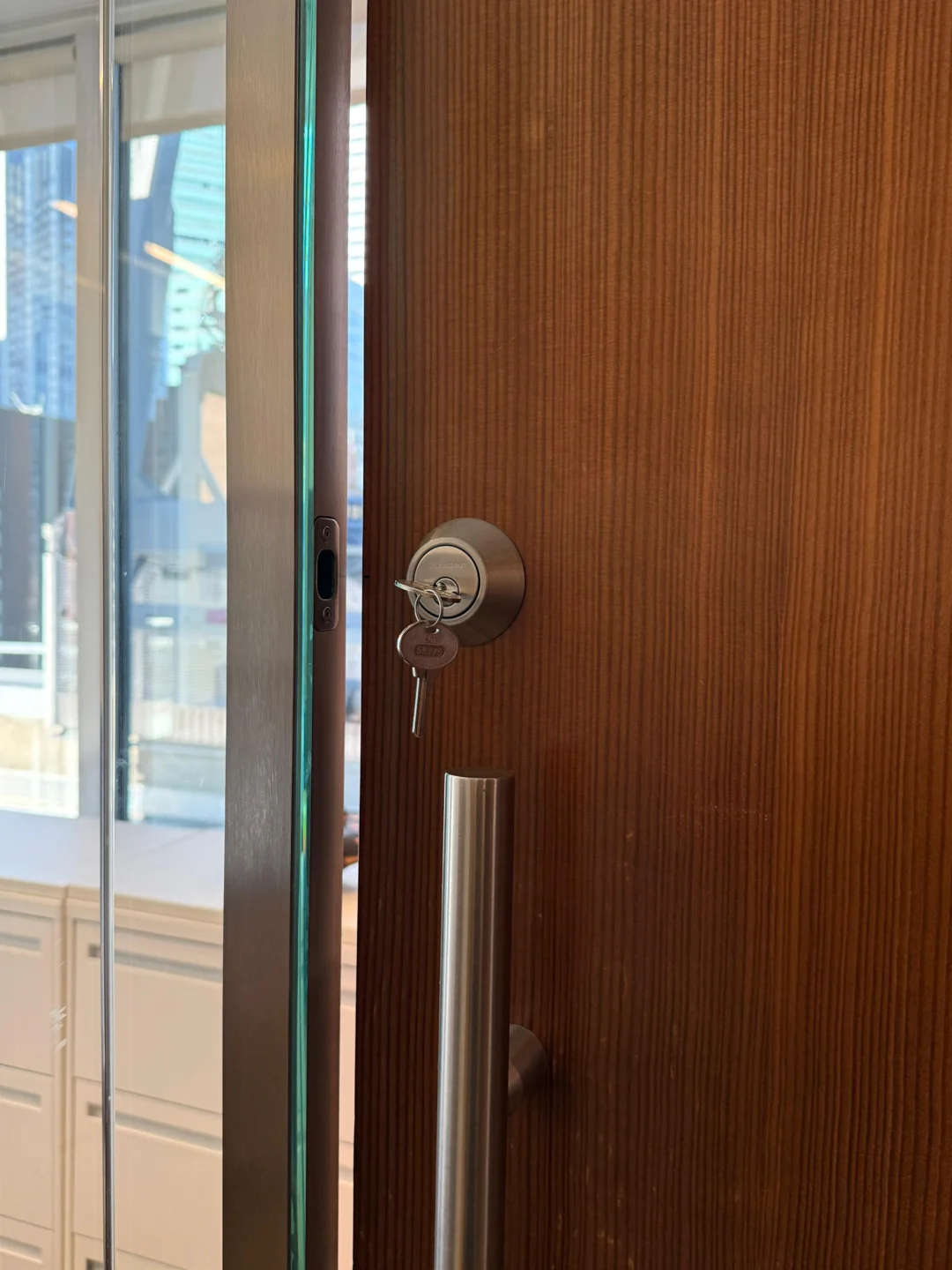
Why would a lock cylinder suddenly fall out?
There is no one cause because cylinders are retained differently across lock designs. The failure usually falls into one of the categories below.
Cause 1: the cylinder retaining screw came loose or is missing
Some deadbolts use a dedicated screw to hold the cylinder inside the exterior assembly. Schlage’s current B60 and B62 servicing instructions tell users to remove the cylinder retaining screw before the cylinder itself can be removed, then reinstall that screw when fitting the replacement cylinder. If the correct retaining screw is missing, loose, damaged, or unable to engage the cylinder correctly, the cylinder may no longer stay in position. This becomes especially plausible when the lock was recently rekeyed, repaired, disassembled, installed, or had its cylinder replaced. The timing is useful evidence.
Cause 2: a retaining clip was not reinstalled or has failed
Other locks use clips rather than the same type of retaining screw. Kwikset’s current instructions for its 816 deadbolt require removal of a silver clip before the cylinder can be pushed from the housing. During reinstallation, Kwikset instructs users to reinsert the cylinder and then secure the cylinder with the clip. Kwikset even lists a dedicated deadbolt plug retainer clip as a current replacement service part. If your cylinder came out shortly after cylinder service, check whether the correct retention hardware was actually reinstalled. Do not improvise a replacement using wire, adhesive, tape, or an unrelated clip.
Cause 3: the lock housing or retaining area is damaged
Sometimes the retaining screw or clip is present, but the part it attaches to is damaged. That changes the repair. A new retaining clip cannot securely repair a broken housing that no longer gives the clip anything to retain. Look for:
- Cracked metal
- Broken groove
- Deformed housing
- Missing material
- Retainer that will not seat
- Cylinder that remains loose with proper hardware installed
In that situation, replacing the complete lock or exterior assembly may be safer than repeatedly reinstalling the cylinder.
Cause 4: the wrong replacement cylinder was previously installed
Cylinder compatibility involves more than whether the front fits the opening. Schlage notes that even within its own products, replacement cylinders must match the intended lock. For its Encode deadbolts, for example, Schlage specifies a particular 5-pin cylinder and warns that incompatible cylinders may cause malfunction. Schlage also states that Dexter and Schlage-series cylinders are not interchangeable because their lock components and chassis designs differ. A cylinder that is too short, the wrong housing type, the wrong retention design, fitted with an incorrect tailpiece, or from the wrong lock family may appear to work temporarily without being properly retained.
Cause 5: a mortise cylinder set screw is loose
This is a different mechanism. Compatible commercial mortise cylinders thread into the lock body. Adams Rite explains that mortise-type devices allow the mortise cylinder to thread into the latch case and be secured with a set screw. Some Adams Rite products go further and use an armored faceplate that protects the cylinder set screws and helps keep them from loosening. If a mortise cylinder gradually becomes loose enough to rotate in the trim and then comes out, inspect the set-screw arrangement. Do not treat this as a residential deadbolt retaining-clip problem.
Cause 6: mounting screws on a rim cylinder are loose or missing
Rim cylinders mount differently. Adams Rite states that rim cylinders on compatible rim devices use two mounting screws that attach the cylinder directly to the door. If that type of cylinder is coming away from the door, inspect the mounting screws, backing hardware, door preparation, cylinder housing, and trim. Again, cylinder type determines the repair.
Cause 7: the cylinder was installed incorrectly during previous service
If the failure happens soon after rekeying, cylinder replacement, new lock installation, a smart-lock retrofit, or door repair, review the previous work first. A retaining clip may not have been fully seated. A retaining screw may not have engaged. A mortise cylinder may not have been secured correctly. A driver bar or tailpiece may also be mispositioned. Recent service is an important diagnostic clue because a cylinder normally should not simply fall out during ordinary key removal.
Cause 8: long-term wear or repeated movement damaged the retention system
Watch for earlier warning signs. Many cylinder failures do not begin with the cylinder suddenly landing in your hand. You may first notice:
- The cylinder wiggles
- The exterior keyway moves when the key turns
- The lock rotates slightly in the trim
- Movement increasing over several weeks
- Clicking from the exterior assembly
- The cylinder protrudes farther than before
Those symptoms mean the retention system should be checked before complete separation occurs.
Warning sign: the whole cylinder rotates when you turn the key
The key plug is supposed to rotate. The complete outer cylinder generally should not rotate freely with it. If the whole cylinder moves inside the door, stop treating that as normal “play.” It can indicate a loose mortise cylinder, loose mounting, a failed retainer, a damaged housing, or incorrect installation. A cylinder that first begins rotating and later falls out has been giving a warning.
Can you simply push the cylinder back in?
Only when the lock’s actual retaining mechanism is identified, intact, and correctly reinstalled. For example, Schlage’s documented cylinder-replacement procedure involves dropping a compatible cylinder into its correct position and reinstalling its retaining screw. Kwikset’s documented procedure requires inserting the compatible cylinder and securing it with the proper clip. That is very different from simply pushing a loose cylinder into the exterior opening. If there is nothing actively retaining it, it can come back out the next time you remove the key.
When a deadbolt cylinder can potentially be re-seated
A straightforward repair may be possible when all of the following are true:
- The door is open.
- The complete cylinder came out intact.
- The lock model is identified.
- The correct retaining hardware is present.
- The housing is not damaged.
- The cylinder is the correct model.
- The manufacturer provides a clear cylinder installation procedure.
- No internal pins or springs escaped.
For a compatible Schlage mechanical deadbolt, the official procedure is to place the proper cylinder into its housing and reinstall the cylinder retaining screw. For the documented Kwikset 816 configuration, the cylinder is aligned with the gear assembly and secured using the appropriate clip before the lock assemblies are returned to the door. Follow the instructions for your exact lock rather than transferring those steps to another brand.
When you should not attempt to re-seat it
Stop DIY repair when:
- Pins or springs fell out.
- The cylinder housing is cracked.
- The retaining groove is broken.
- The correct clip or screw is missing.
- A mortise cylinder keeps backing out.
- The cylinder threads are damaged.
- The lock type cannot be identified.
- Commercial master-key hardware is involved.
- A high-security cylinder is installed.
- The smart lock manufacturer restricts cylinder service.
- The door is closed and locked.
- Evidence of forced entry is present.
This is where diagnosis is more valuable than improvisation.
Special case: Schlage keypad and smart locks
Do not assume that because the cylinder looks like a conventional Schlage cylinder, you should disassemble the electronic lock the same way. Schlage currently warns that cylinder replacement on the BE365 keypad deadbolt must be performed by a certified locksmith to avoid voiding the warranty. Its Encode-series cylinders are replaceable, but Schlage requires compatible cylinder specifications for those products. If the cylinder fell from a smart or keypad lock, identify the model before opening the housing.
Special case: mortise locks on NYC apartment doors
Older and specialty apartment doors can use mortise hardware rather than a common bored deadbolt. A mortise cylinder may thread through the trim directly into the lock case. If yours has become loose, do not simply turn it clockwise until it cannot move farther. Cylinder installation depth affects cam engagement, trim fit, key operation, and lock function. Mortise cylinders can also use different lengths and cams depending on the lock body. ASSA ABLOY describes mortise cylinders as components that work in conjunction with compatible mortise locks, while current manufacturer systems offer differing cylinder dimensions for specific applications. If the entrance is part of a building master-key system, an independently purchased replacement cylinder may also disrupt authorized building access.
What if the cylinder fell out with the key still inside?
Do not yank the key sideways trying to separate it from the cylinder. Hold the cylinder body rather than placing all of the force on the key. Once you have the complete assembly safely in hand, inspect whether the cylinder is intact, the rear tailpiece or cam is attached, the retainer is missing, the housing remained in the door, and whether any internal components escaped. If the key cannot be removed normally from the detached cylinder, that is another reason for professional cylinder service rather than added force.
What if the cylinder fell into the door instead of out?
A cylinder or component disappearing inside the door suggests a mounting or retention failure. Do not repeatedly shake or slam the door in an attempt to bring it back. Loose metal inside a door can interfere with other hardware, and a heavy component can damage wiring in electronic doors or become lodged around moving parts. Open the door, identify the hardware, and access it according to the manufacturer’s service procedure.
What if the cylinder is still hanging from a tailpiece?
Support it. Do not continue operating the key while the cylinder is hanging loose. A connected tailpiece or driver can bend or break when the cylinder is no longer held squarely in the lock housing. Once that rear connection is damaged, the repair can expand from a retention problem into a complete cylinder or lock replacement.
Could someone have tampered with the lock?
Possibly – but a loose cylinder alone does not prove attempted entry. Mechanical causes such as loose retaining hardware, incorrect installation, wear, or component failure are all possible. However, if a normally secure exterior cylinder is suddenly pulled outward, scratched heavily, bent, surrounded by fresh tool marks, or accompanied by damaged trim or frame and strike damage, treat the incident as more than routine maintenance. Photograph the condition before repair where practical and have the complete locking system inspected. After an attempted break-in, simply putting the visible cylinder back may overlook damage to the lock body, door, strike, or frame.
Cylinder fell out after rekeying: does that mean rekeying was the problem?
Not necessarily, but the timing matters. Rekeying concerns the internal keying of a compatible cylinder, while cylinder removal and reinstallation can also involve retention hardware. If a cylinder was removed for service and then fell out shortly afterward, inspect whether its retention components were correctly reinstalled. Do not solve a mechanical retention failure by rekeying it again. Rainbow Locksmith NY’s rekeying service is intended to change which keys operate a functioning lock, while our rekey vs. replace guide distinguishes key-control needs from damaged hardware.
Will rekeying fix a cylinder that keeps falling out?
No, not by itself. Rekeying changes key operation. It does not fix a missing retaining clip, a broken cylinder screw, a damaged chassis, stripped mortise cylinder threads, loose rim-cylinder mounting screws, or a broken housing. Fix the mechanical retention problem first. Rekey afterward only if there is also a key-control reason to do so.
Repair the retaining hardware or replace the whole lock?
This is the key repair decision.
Retaining-hardware repair may be enough when
The lock is otherwise healthy and:
- The correct retainer simply came loose.
- A manufacturer replacement part is available.
- The housing is undamaged.
- The cylinder is compatible.
- The tailpiece or cam is intact.
- The lock operates smoothly after proper reassembly.
Kwikset currently sells a dedicated deadbolt plug retainer clip as a service part, illustrating that some retention components are individually replaceable.
Full lock replacement is safer when
Replacement becomes more reasonable if:
- The housing is cracked.
- The cylinder-retention area is broken.
- Threads are stripped.
- The lock body is worn.
- The cylinder is incompatible.
- Multiple components are loose.
- The failure has happened repeatedly.
- Parts are discontinued.
- The lock suffered forced-entry damage.
Schlage notes that it does not provide replacement parts for discontinued residential locks, meaning complete replacement can sometimes be the practical path when required hardware is no longer available. Rainbow Locksmith NY offers residential lock replacement for damaged and worn locks.
How to test the lock after the cylinder is properly repaired
Do not close the door immediately. First test everything with the door open. Check that the cylinder:
- Sits firmly in its housing.
- Does not pull outward.
- Does not rotate as a complete unit.
- Accepts the key normally.
- Allows normal key removal.
- Operates the bolt or latch fully.
Then test the interior side. Make sure the thumb turn operates, the lever operates where applicable, the deadbolt fully extends and retracts, and the lock does not bind. Only after those tests pass should you close the door.
Closed-door test
Close the door gently. Operate the lock again. The key should feel similar to the open-door test. If the cylinder remains secure but the key becomes difficult when the door is closed, investigate strike alignment, door sag, weatherstripping pressure, and frame position. That is a separate alignment problem. Do not loosen the newly repaired cylinder to compensate for a poorly aligned door.
Check the cylinder again after several cycles
Lock and unlock the door repeatedly. Then inspect the exterior cylinder. It should remain flush or properly positioned, stable, securely retained, and consistent in operation. If movement returns almost immediately, the repair has not addressed the underlying problem.
Do not use glue to hold a lock cylinder in place
A lock cylinder is a serviceable mechanical component. Adhesive does not substitute for a retaining screw, retaining clip, set screw, mounting screws, or a proper cylinder housing. Glue can also complicate future legitimate servicing and may contaminate moving components. If the correct hardware no longer retains the cylinder, repair or replace the damaged assembly.
Do not use tape as a security repair
Tape may temporarily keep a loose decorative piece from falling onto the floor, but it does not restore the lock’s designed retention. An exterior cylinder needs mechanical support. A door that depends on tape to keep the keyed component in position should be considered unrepaired.
Do not overtighten a mortise cylinder
If the cylinder is threaded, tighter is not automatically better. The correct position needs to allow the cam to operate the lock while keeping the cylinder properly seated relative to the trim. If a mortise cylinder keeps loosening, find out why its normal retaining system is not holding it. Do not solve the problem by applying excessive force to the cylinder body.
Do not replace only the cylinder after forced-entry damage without inspecting the door
A forced lock can transmit damage into the lock case, door edge, strike, jamb, cylinder guard, and mounting hardware. If exterior trim has been attacked or the cylinder appears to have been pulled, inspect the complete entrance. A shiny new cylinder mounted into damaged surrounding hardware is not a complete security repair.
NYC apartment considerations
If a cylinder falls out of an apartment entrance lock, the priority is restoring reliable security without compromising the door’s required operation. Building-owned or master-keyed hardware deserves additional caution because an independently installed replacement cylinder can affect management access or existing key systems. Rainbow Locksmith NY’s residential locksmith services currently include lock repair, installation, replacement, and rekeying, while the rekeying service includes master-key work. If you rent, also preserve any original hardware and coordinate with building management where your lease or building key system requires it.
Could the existing cylinder be rekeyed after repair?
Yes, if it is mechanically intact, compatible, and serviceable. But keep the sequence straight: first restore mechanical retention, then decide whether keying needs to change. Rekeying can make sense if a key is lost, previous occupants have keys, building access arrangements are changing, or you want compatible locks keyed together. It is not the repair for a cylinder falling out.
When to call a locksmith immediately
Professional service is appropriate when:
- The door is locked and the cylinder has fallen out.
- The door cannot be secured.
- Pins or springs fell from the cylinder.
- Retaining hardware is missing.
- The cylinder housing is cracked.
- A mortise cylinder repeatedly loosens.
- Threads appear damaged.
- A high-security cylinder is involved.
- A master-key system is involved.
- The smart-lock manufacturer restricts cylinder service.
- Evidence of tampering is visible.
- The cylinder fell out after a break-in attempt.
- The key is stuck in the detached cylinder.
- The lock type cannot be identified.
Rainbow Locksmith NY offers emergency lock repairs, lock replacement, and broader residential locksmith services for NYC doors, with 24-hour emergency service and damaged-lock repair among current offerings.
Repair the retention problem, not just the symptom
When a lock cylinder falls out, the visible cylinder is only half of the diagnosis. The more important question is: what was supposed to hold it there? On one deadbolt, that may be a retaining screw. On another, it may be a clip. On a mortise lock, the cylinder may thread into the lock case and rely on a set screw. On a rim lock, the cylinder can be secured with mounting screws. And when pins or springs come out with the cylinder, you are dealing with an internally disassembled cylinder rather than simply loose mounting hardware.
If the complete cylinder came out intact and the correct manufacturer retention hardware is undamaged, the repair may be straightforward. If the retainer is broken, the housing is damaged, the cylinder keeps loosening, internal pins have escaped, or the entrance cannot be secured, continuing to push the cylinder back into place only postpones the actual repair.
Frequently asked questions
Why did my door lock cylinder fall out?
The cylinder’s retaining system may be loose, missing, incorrectly installed, or damaged. Different locks use different retainers. Current Schlage residential deadbolts can use a cylinder retaining screw, while Kwikset’s documented 816 configuration uses a metal retaining clip.
Can I just push the lock cylinder back in?
Not unless the correct retaining hardware is identified and restored. Simply inserting the cylinder without its screw, clip, set screw, or mounting hardware allows it to come out again.
Why does the cylinder come out with my key?
The key may be pulling a cylinder that is no longer securely retained in its housing. Stop repeatedly using the lock and inspect the cylinder retention mechanism.
What holds a deadbolt cylinder in place?
It depends on the lock. Schlage documents a retaining screw on several current residential deadbolts, while Kwikset documents a retaining clip on its 816 cylinder system.
What holds a mortise cylinder in place?
Mortise cylinders generally thread into compatible lock hardware, and the specific lock can include a set screw or related retaining arrangement. Adams Rite states that its compatible mortise-type devices secure the threaded mortise cylinder using a set screw.
Why does my whole lock cylinder spin?
The cylinder may be loose in its housing, the mortise cylinder may no longer be properly secured, or its retaining hardware may have failed. The complete cylinder body should not rotate freely during normal operation.
What if pins fell out when the cylinder came apart?
Stop DIY reassembly. That indicates the cylinder plug has come apart internally rather than simply separating from its mounting. Have the cylinder professionally serviced or replaced.
Can I glue a lock cylinder back into the door?
No. The cylinder should be secured using the mechanical retaining system designed for the lock. Adhesive is not a substitute for the correct screw, clip, set screw, or mounting hardware.
Should I replace the whole lock if the cylinder fell out?
Not always. If the correct retainer merely loosened and the cylinder, housing, and lock remain undamaged, proper reassembly may be enough. Replace the lock when the housing, retaining area, threads, or other components are damaged or repeatedly fail.
Will rekeying fix a loose cylinder?
No. Rekeying changes which key operates the cylinder. It does not repair the mechanical components that hold the cylinder in the lock.
Why did my cylinder fall out right after it was rekeyed?
If the cylinder was removed during previous service, its retaining component may not have been installed correctly afterward. Have the retention system checked rather than assuming the keying itself caused the failure.
Can a smart-lock cylinder be reinstalled?
It depends on the exact model. Schlage currently allows cylinder replacement on certain Encode models using specified compatible cylinders, while it requires certified locksmith service for cylinder work on the BE365 keypad deadbolt.
Is a loose cylinder a security problem?
Yes. If the keyed component is no longer securely attached to the lock, the entrance should not be considered properly repaired until its designed retention and normal operation have been restored.
What should I do if my apartment lock cylinder falls out at night?
If the door cannot be securely locked, keep the entrance controlled and arrange urgent repair rather than pushing the cylinder loosely back into position. Rainbow Locksmith NY provides 24/7 emergency locksmith service and emergency lock repairs in NYC.
Get help from Rainbow Locksmith NY
Cylinder in your hand instead of in your door? Rainbow Locksmith NY repairs and replaces failed cylinders, retaining hardware, mortise locks, and rim locks across NYC – 24/7, with the price quoted before dispatch.
Rainbow Locksmith NY | 338 E 65th St, New York, NY 10065 | Licensed and insured | NYC DCWP License. Lock designs vary; follow your exact manufacturer’s guidance and avoid forcing hardware that is already failing.