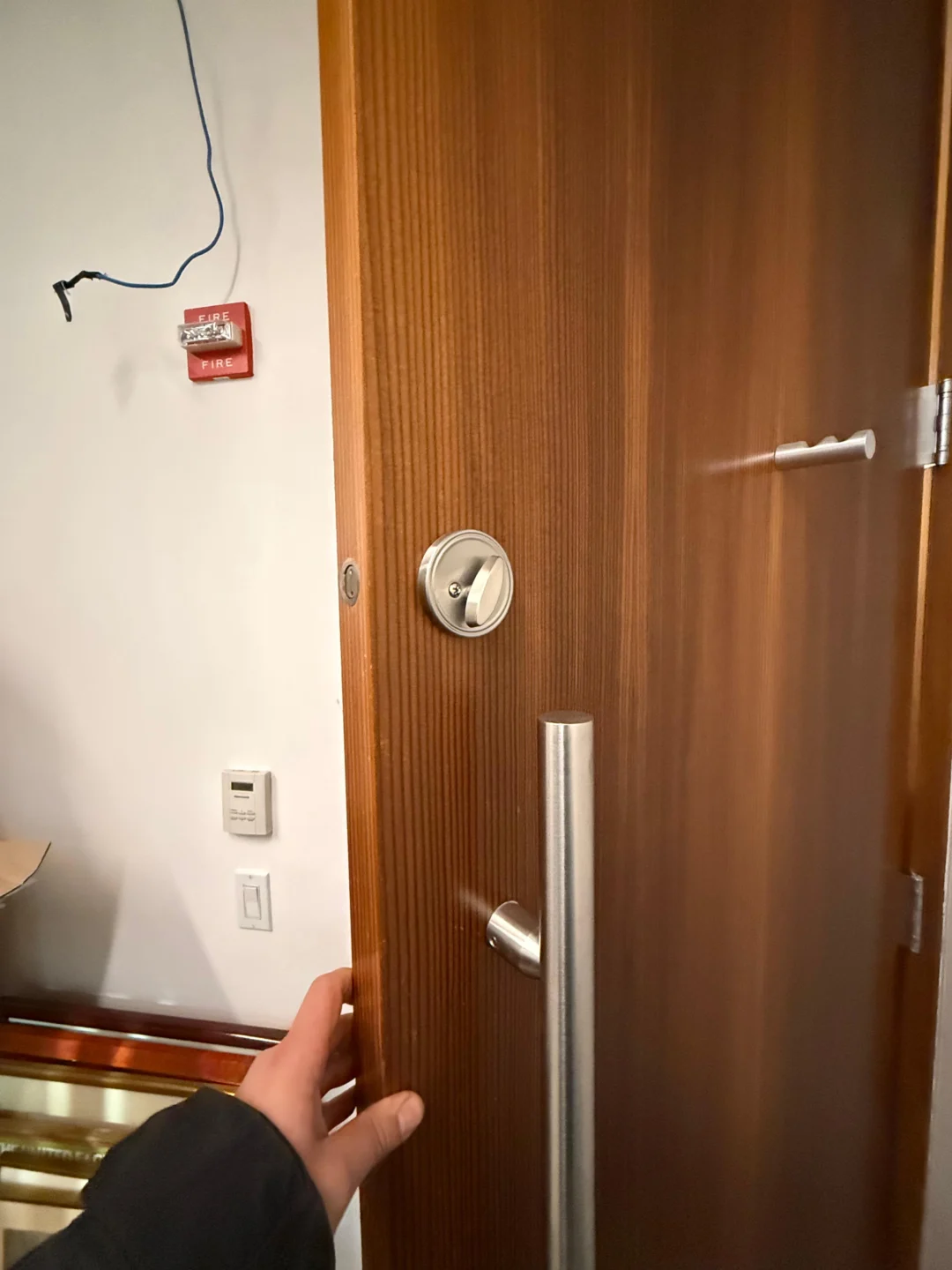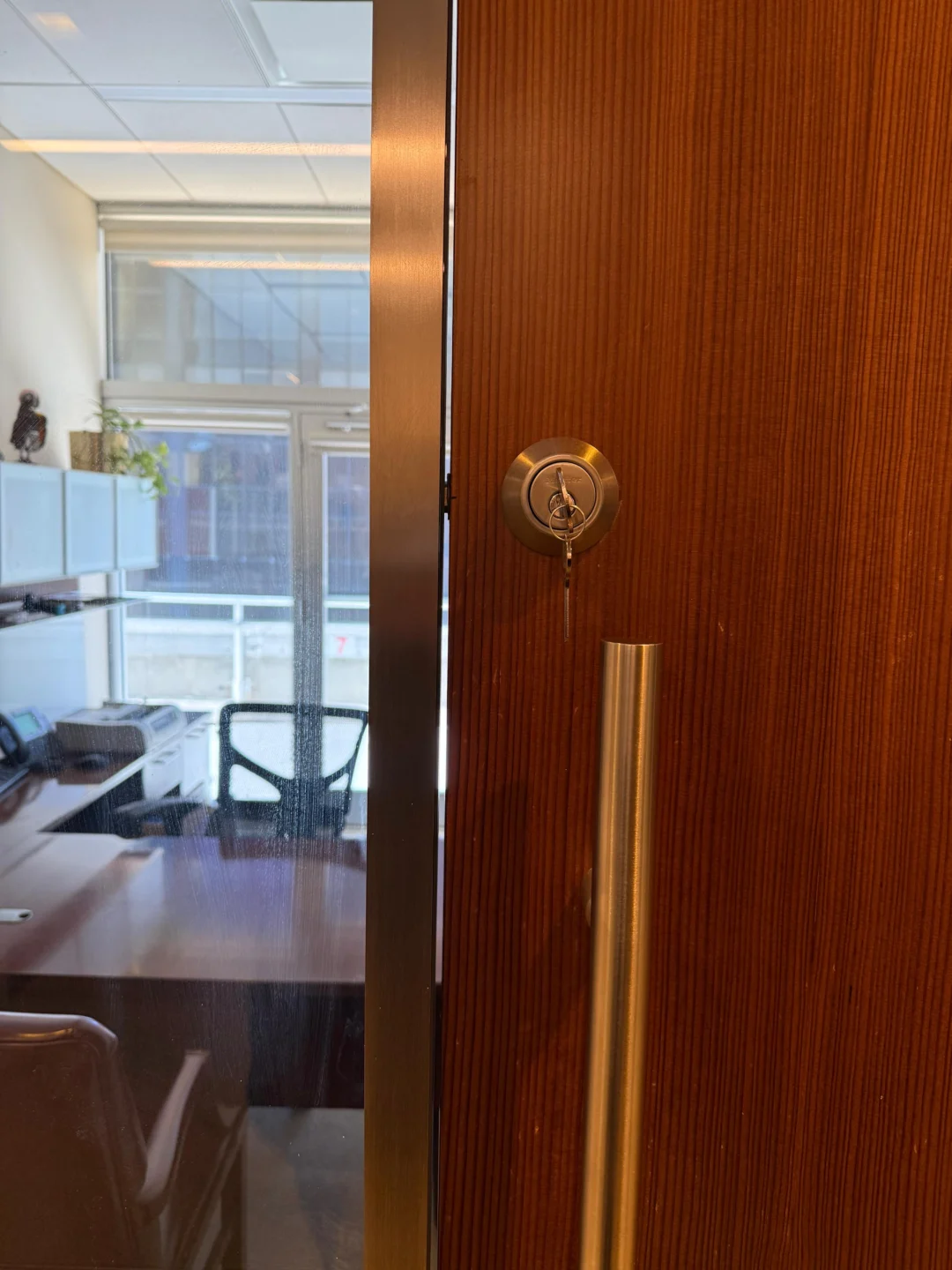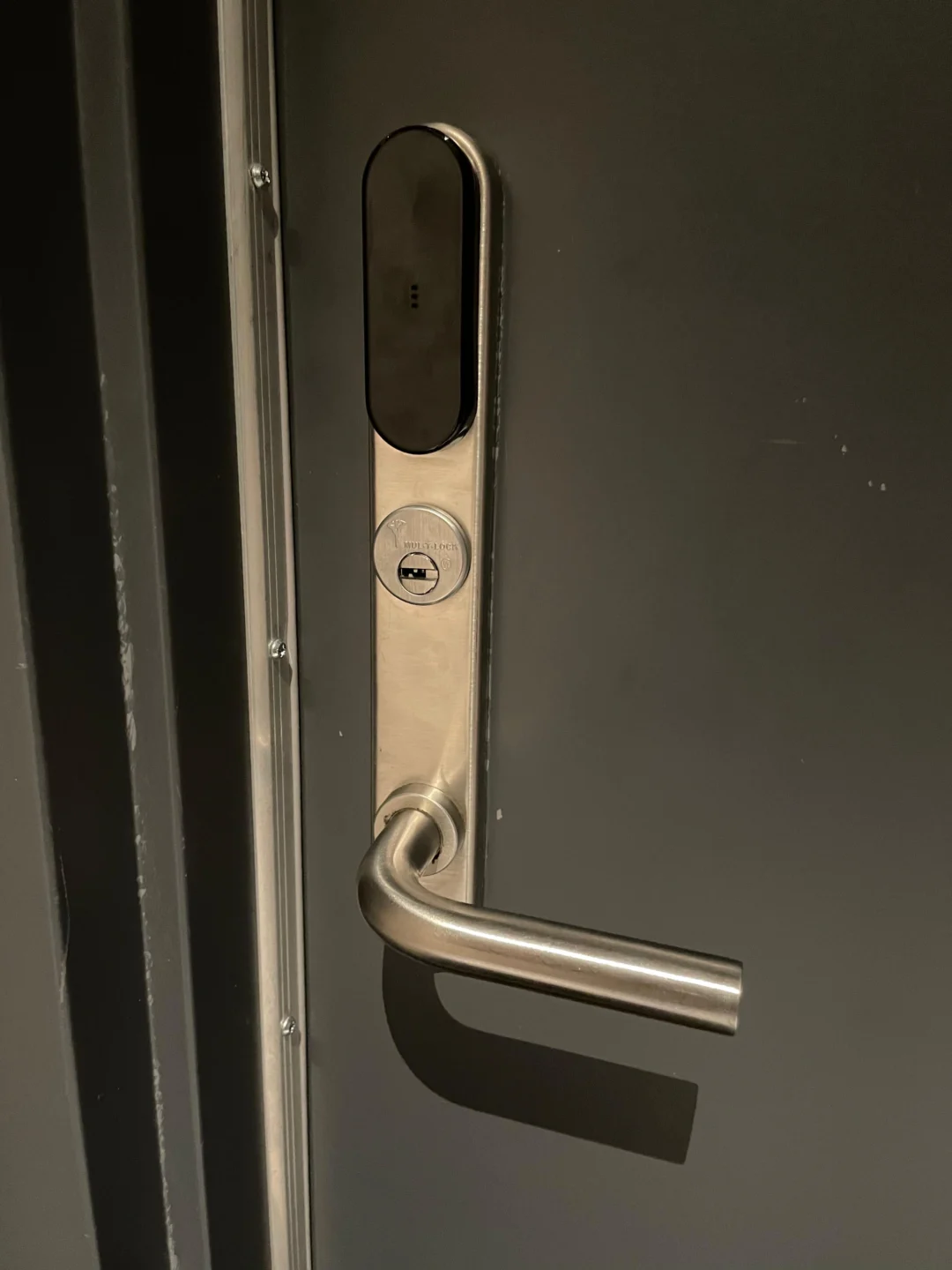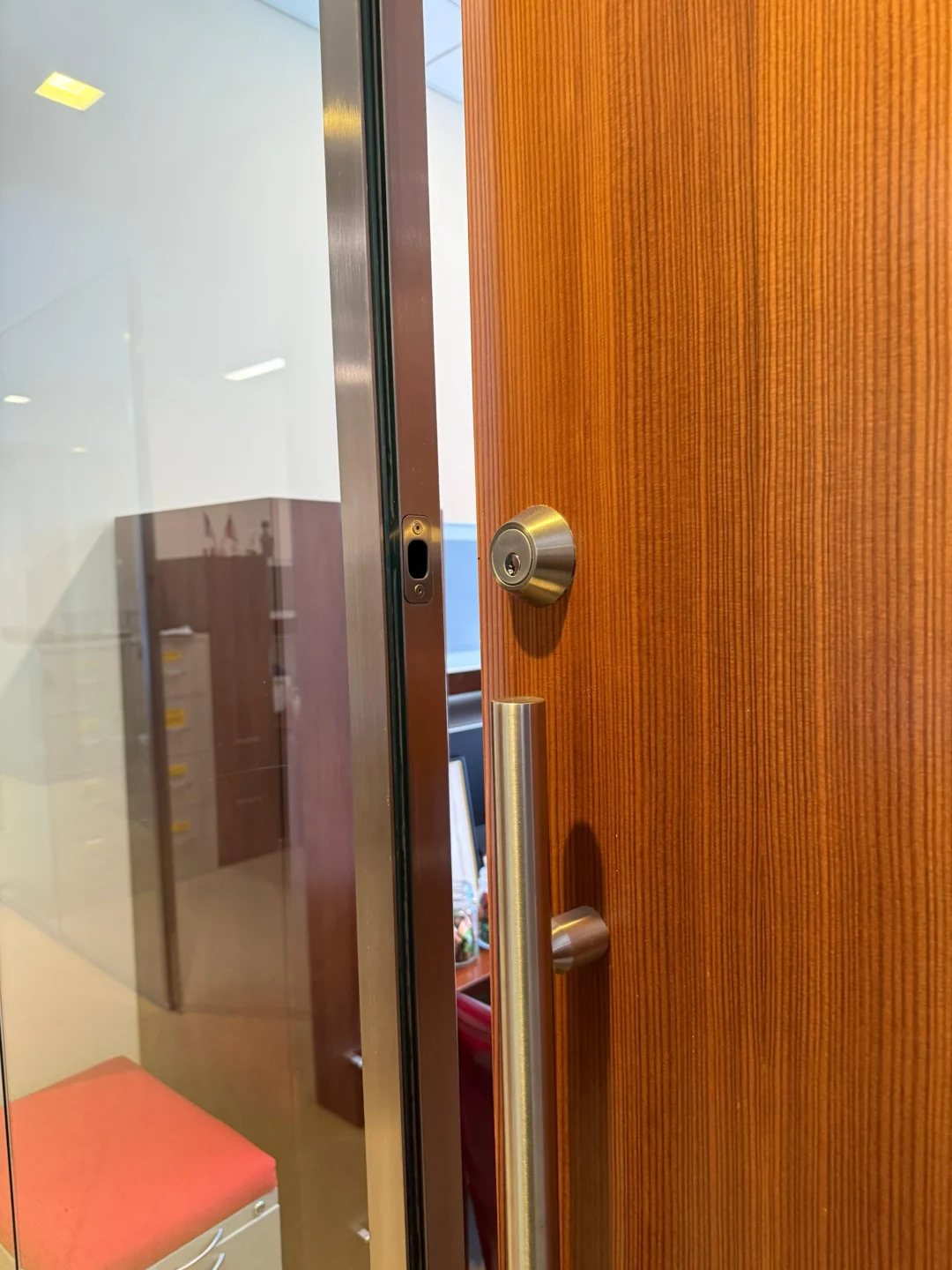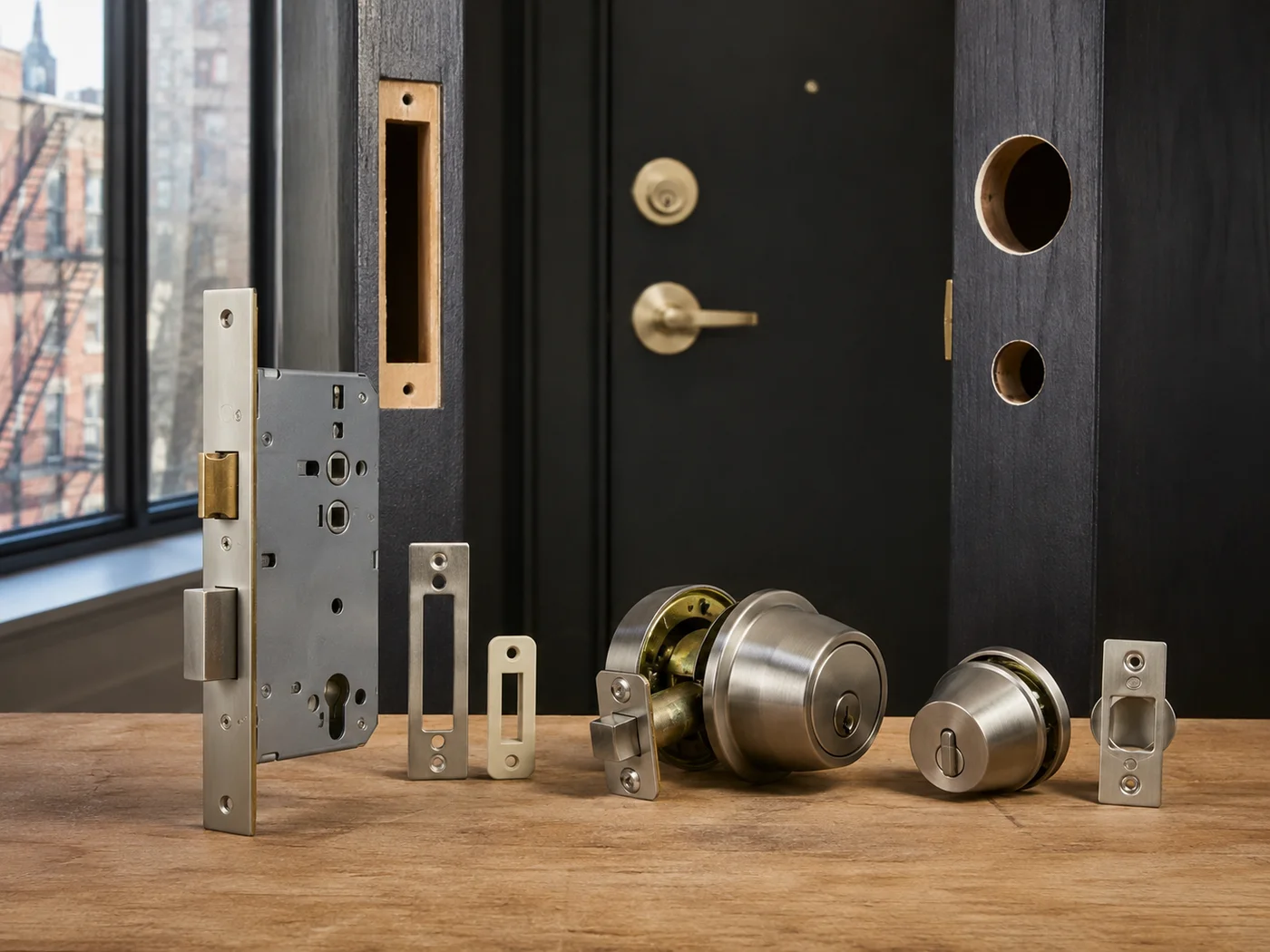
If you have ever looked at two doors that seemed to have the same handle and key but behaved completely differently, you have probably met both a mortise lock and a cylinder lock. From the outside they look alike. Inside the door they are built on entirely different principles, and that difference drives everything: security, durability, cost, how it installs, and how it gets repaired. This matters more in New York than almost anywhere, because so much of the city’s housing runs on mortise locks. Here is how the two compare and which belongs on your door.
Mortise locks are stronger and longer-lasting, but require a professional install and cost more. Cylinder locks, also called bored locks, are simpler, cheaper, and DIY-friendly, but less heavy-duty. For a main entry, a commercial door, or a prewar NYC apartment, mortise is the benchmark. For interior doors and modern pre-hung doors, a cylinder lock is the practical standard.
What is a mortise lock?
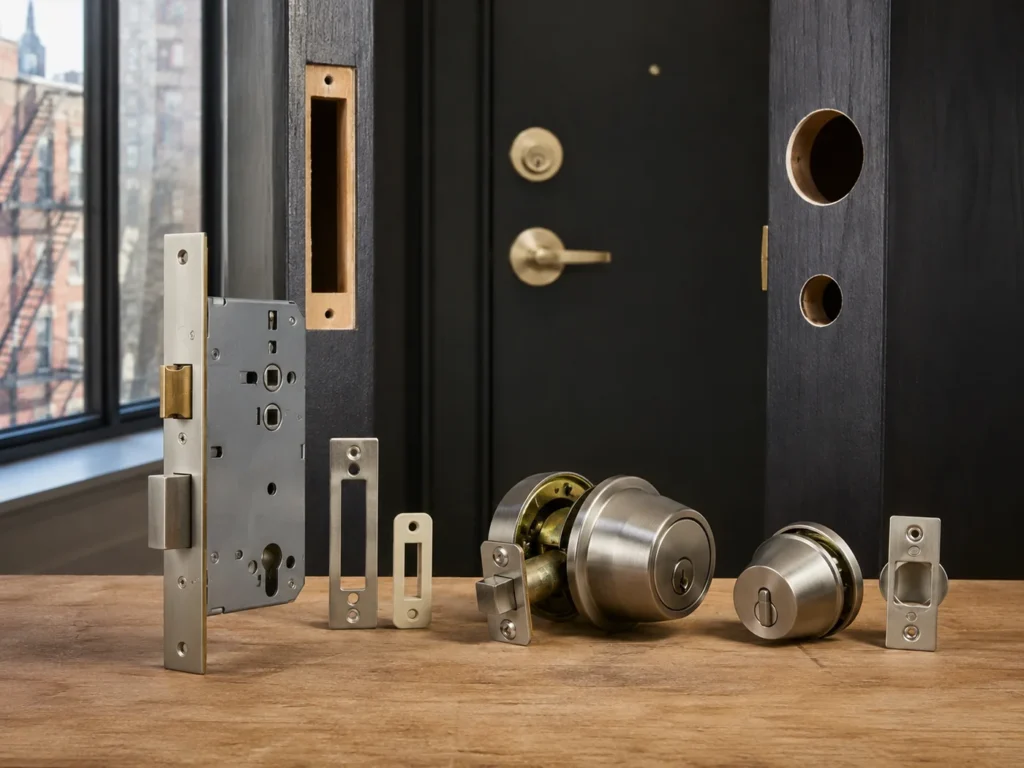
A mortise lock takes its name from the mortise, a rectangular pocket cut into the edge of the door. Into that pocket slides a single, self-contained metal lock case that houses the latch, the deadbolt, and the springs together as one reinforced unit. The key cylinder and handle attach to that case through the face of the door.
Because the whole mechanism lives deep inside the door rather than bolted through it, a mortise lock is heavier, more complex, and noticeably more solid in the hand. This is the lock you feel in the smooth, deliberate turn of a handle on an old apartment or hotel door.
What is a cylinder lock?
A cylinder lock, also called a cylindrical or bored lock, is the type on most modern doors. It installs through two cross-drilled holes: a large 2-1/8 inch bore through the face for the main chassis, and a smaller hole in the edge for the latch. The locking mechanism is compact and fits inside that round bore.
Most pre-hung doors arrive already drilled for this pattern, which is exactly why cylinder locks dominate today’s residential and DIY market. They do the job well; they are simply not as heavy-duty as a mortise lock.
The real differences
Security
Mortise locks are generally more secure. Because the case sits deep inside the door and the bolt extends into a longer, thicker reinforced strike, a mortise lock resists forced entry and kick-ins better than a typical cylinder lock, spreading impact force across the door instead of concentrating it. Cylinder locks provide adequate everyday security but are comparatively easier to bypass or force, especially the lower-grade ones.
Durability
The unified internal case of a mortise lock distributes stress evenly, which is why it withstands years of high-traffic use without loosening. That is why hotels, apartment buildings, and main entries favor it. Cylinder locks, with their lighter chassis, are more prone to wear over time, though they are cheap and quick to swap when they do wear out.
Installation
This is the biggest practical divide. A cylinder lock drops into two standard drilled holes and installs in roughly twenty minutes, which is a comfortable DIY job. A mortise lock requires a precise rectangular pocket cut into the door edge, which takes skill and the right tools, and is a job for a professional or a door already prepped for it.
Cost and functions
Mortise locks cost more, both for the hardware and the labor to install them, but they offer more built-in functions, such as passage, privacy, deadlock, and entrance, in a single unit. Cylinder locks are cheaper and easier to standardize across many doors, and come in clear ANSI/BHMA security grades from 3 up to 1, so you can match the grade to the door’s risk. You can read how those grades work at the Builders Hardware Manufacturers Association.
Side-by-side comparison
| Factor | Mortise lock | Cylinder lock |
|---|---|---|
| Where it sits | Case in a pocket in the door edge | Chassis through a round face bore |
| Security | Higher, deep-set, strong strike | Adequate, easier to force |
| Durability | Excellent, high-traffic rated | Good, wears faster |
| Installation | Professional, pocket cut required | DIY, two drilled holes |
| Cost | Higher hardware and labor | Lower, easy to replace |
| Typical use | Main entries, prewar NYC, hotels | Interior and modern pre-hung doors |
The NYC angle: prewar buildings run on mortise locks
Here is what makes this comparison practical in New York. A huge share of the city’s prewar and older apartment buildings were built with mortise locks, and many still have them. That has real consequences. You cannot simply buy a big-box cylinder lockset and swap it onto a mortise door; the pocket, faceplate dimensions, and backset are different, and not every replacement mortise case fits an existing pocket.
This is exactly why our guide on how to replace a door lock flags mortise locks as the main exception to DIY. If you are unsure what you have, our overview of the apartment lock types we see across NYC will help you identify it.
Can you switch from one to the other?
Sometimes, with caveats. Moving from a cylinder lock to a mortise lock means cutting a new pocket, which is a real carpentry and locksmithing job. Going the other way, from mortise to cylinder, is possible but the new bored holes may not fully cover the old mortise cutout, often leaving a gap that needs a wrap plate or filler.
In a rental, you also have the landlord’s rules and the building’s standards to consider. The honest answer is that this is a measure-twice, call-a-pro decision, not a weekend swap.
Which should you choose?
Choose a mortise lock for a main entry door, a commercial or high-traffic door, or to match and preserve a prewar building’s existing hardware and security level.
Choose a cylinder lock for interior doors, modern pre-hung doors already drilled for it, or any situation where fast install, low cost, and easy replacement matter most.
Whichever you have, if the lock is stiff, loose, or aging, watch for the signs your lock needs replacing. And if you manage a building or business with many doors, a mortise or high-grade cylinder setup can be tied into a master key system.
When to call a locksmith
Call a pro to install or repair any mortise lock, to switch a door from one type to the other, or to match new hardware to an older prewar door without leaving gaps or weak points. We service, repair, and replace both mortise and cylinder locks across NYC, and we make sure the strike and bolt engagement are right, which is where security is actually won or lost.
Frequently asked questions
Is a mortise lock more secure than a cylinder lock?
Generally yes. A mortise lock sits deeper in the door with a stronger strike engagement, so it resists forced entry and kick-ins better than a typical cylinder lock. Cylinder locks are fine for everyday and interior use.
Why do old NYC apartments have mortise locks?
Prewar and older buildings were built with mortise locks for their durability and security, and many still have them. That is why a replacement on those doors is usually a locksmith job, not a big-box swap.
Can I replace a mortise lock myself?
Usually not easily. Mortise locks require fitting a case into a precise pocket, and not every replacement fits an existing one. It is best handled by a locksmith.
Is a cylinder lock the same as a deadbolt?
Not exactly. A cylinder lock refers to the bored chassis style. A deadbolt is a separate bolt mechanism that can be cylinder-style or part of a mortise case. Many doors use a cylinder latch set plus a separate deadbolt.
Get help from Rainbow Locksmith NY
Mortise door or not sure what you have? Rainbow Locksmith NY installs, repairs, and replaces mortise and cylinder locks across Manhattan, including prewar hardware.
Rainbow Locksmith NY | 338 E 65th St, New York, NY 10065 | Licensed and insured | NYC DCWP License. Mortise replacements vary by case size and backset; measure or have a pro assess before buying.