
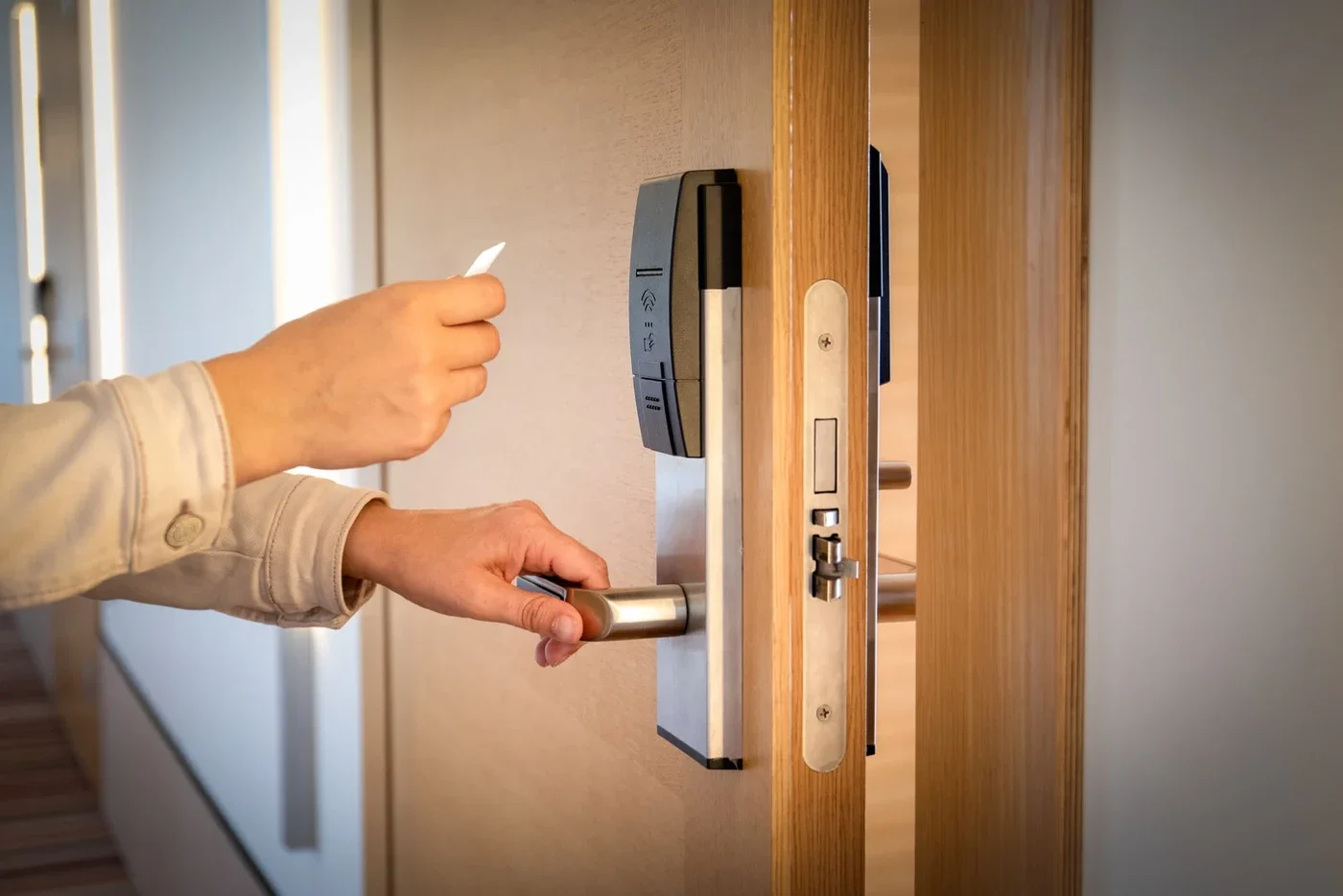
You signed the lease, got your keys, dragged your boxes up four flights of stairs, and started unpacking. Then a thought hits you in the middle of the night: how many people have a copy of these keys? The previous tenant. Their roommate. The contractor who painted last month. The cleaning service. The dog walker who had a copy for a year. The super. That's just the people you know about.
Welcome to one of the most common moving-in anxieties in New York City. After installing locks for thousands of NYC apartments over the years, we can tell you the short answer above. But the details matter, and there are NYC-specific rules, lease clauses, and tenant rights you need to understand before you call a locksmith.
This is the complete locksmith's guide to lock changes for NYC renters in 2026. We cover the legal side, the practical side, the costs, what your landlord can and cannot do, and exactly what steps to take in your first week in a new apartment.
The Surprising NYC Truth: Landlords Aren't Required to Change Locks
Despite what common sense would suggest, there is no New York State or New York City law that requires a landlord to change or rekey the locks between tenants.
This was confirmed by Sam Himmelstein, a long-time NYC tenant rights attorney, who has noted that while changing locks between tenants is the safer and better practice, it is not legally required. Most reputable NYC landlords and management companies do rekey between tenants as standard practice. Many do not.
In our experience installing locks across NYC, the practices break down roughly as follows. Large management companies with professional procedures usually rekey or change locks between tenants. Small private landlords often do not. Sublets and informal rentals almost never have lock changes between occupants. Co-op and condo unit rentals depend entirely on the individual owner.
This means that unless your landlord has specifically told you in writing that they changed or rekeyed the locks for you, you should assume that they did not. Ask explicitly, and if they have not, take care of it yourself.
Why You Should Change the Locks (Even If You Trust Your Landlord)
Even if your landlord assures you they rekeyed the locks, there are still good reasons to do it yourself. Here is the realistic list of who probably has a copy of your apartment keys right now.
Previous Tenant and Their Network
The previous tenant may have given keys to a partner, a roommate, family members, friends, or anyone else they trusted. When they moved out, they probably returned the original keys to the landlord but kept any copies they made. There is no way for you or the landlord to know how many copies exist.
Building Staff and Contractors
Over the previous tenant's lease, building maintenance, contractors, exterminators, painters, plumbers, and electricians may have been given temporary access. Some of these workers make unauthorized copies. We have seen this happen. NYC has a recurring problem of dishonest contractors who duplicate keys during routine work and return later for break-ins.
Service Workers
Dog walkers, cleaning services, grocery deliveries, plant-watering services, and personal trainers often have apartment keys. If the previous tenant used any of these services, those keys may not have been returned when the service ended.
Former Roommates
If the previous tenant had roommates, each of those people had their own copies. Some of those copies may have been made at unauthorized hardware stores rather than from the building's official keys, and tracking them down is impossible.
In a typical NYC apartment that has had one previous tenant for two to three years, conservative estimates suggest that 5 to 10 unauthorized copies of the key exist somewhere in the world. None are tracked. None belong to people with your permission to enter. Rekeying eliminates every one of those copies at once.
This is why every locksmith we know rekeys their own apartment immediately upon moving in.
What New York Law Says About Tenants Changing Locks
Here is the legal framework that protects your right to change or add locks to your NYC apartment.
Your Right to Add a Lock
Under New York Multiple Dwelling Law § 51-c, tenants in multiple dwellings (which covers virtually every NYC apartment building) have the right to install and maintain their own locks on their apartment entrance doors, in addition to the lock the landlord provides. This right cannot be waived in a lease. Any lease clause requiring extra rent or fees for an additional lock is void under public policy.
The lock you install cannot exceed three inches in circumference, which is a generous limit that covers virtually all standard residential locks.
Your Obligation to Provide a Duplicate Key
New York law requires that you provide your landlord with a duplicate key to your new lock if they request one. This is non-negotiable. Failing to give your landlord a key when requested can be construed as a violation of a substantial obligation of the tenancy, which can lead to eviction proceedings.
The reason is practical. Your landlord needs emergency access in case of fire, flood, gas leak, or other urgent maintenance. Most NYC leases also include explicit language about landlord access for repairs and maintenance.
Replacing vs Adding
The legal distinction between replacing the existing lock and adding a second lock matters. Most NYC leases prohibit alterations to the apartment without landlord consent, and replacing the existing deadbolt is generally considered an alteration. Adding a second lock alongside the existing one is protected under Multiple Dwelling Law § 51-c regardless of what your lease says.
In practice, most landlords are fine with rekeying or replacing the deadbolt as long as you provide them with a new key. If you want to be completely safe legally, send your landlord a short email letting them know you plan to have the locks rekeyed and offering to provide a copy of the new key.
If Your Landlord Refuses to Rekey for You
If you ask your landlord to rekey the locks and they refuse, you have options. You can simply hire a locksmith yourself, rekey the locks, and provide the landlord with a copy of the new key. Under NY law, this is your right. Your landlord cannot retaliate against you for exercising this right, and any lease clause attempting to prevent it is unenforceable.
Your Week One Lock-Change Action Plan
Day 1: Document and Inspect
Before changing anything, document the current state of your locks. Take clear photos of the existing deadbolt, doorknob, peephole, chain lock, and any secondary locks. Note the brand and approximate condition. This protects your security deposit if there is ever a dispute later about what was original versus what you changed.
Inspect for proper function. Does the deadbolt extend fully? Does the door close cleanly into the frame? Any signs of forced entry damage, scratches around the keyway, or paint chipping near the strike plate? These are signs you need replacement rather than just rekeying.
Day 2: Read Your Lease
Pull out your lease and look for clauses about altering the premises, changing locks, or providing landlord access. Most standard NYC leases include language requiring landlord approval for hardware changes.
Common lease clauses that affect lock changes include alterations clauses (usually require landlord consent), keys clauses (require providing duplicate keys), and security deposit clauses (require returning the apartment in original condition).
Day 3: Send the Landlord Email
Send a brief, professional email to your landlord or management company. Sample wording:
This single email accomplishes three things: documents that you informed the landlord, offers them the chance to do the work themselves, and confirms that you will comply with your obligation to provide a duplicate key. Save the email for your records.
Day 4: Call a Licensed Locksmith
Call a licensed NYC locksmith to schedule the work. Get a quote upfront before they arrive. A reputable rekeying job for a standard NYC apartment deadbolt should cost $75 to $150 per lock.
If a locksmith quotes you something dramatically lower over the phone like $19 or $29 service calls, this is almost always a scam. NYC has a significant unlicensed locksmith problem and these scammers will arrive, complete the work, and then charge you several hundred dollars by claiming the job was more complex than the phone quote suggested.
Verify the locksmith is licensed by the NYC Department of Consumer and Worker Protection (DCWP) before they arrive.
Day 5: The Rekey Appointment
Most rekeying jobs take 15 to 30 minutes per lock. The locksmith will remove the lock cylinder, replace the internal pins with a new configuration, and provide you with new keys. You should receive at least two copies of the new key. Test each key in the lock before the locksmith leaves to confirm everything works smoothly.
Day 6: Provide Landlord with Duplicate Key
Make one additional copy of your new key at any local hardware store ($3 to $8). Deliver this copy to your landlord or management office, either in person or by certified mail. Get written confirmation that they received it.
This satisfies your legal obligation under NY Multiple Dwelling Law and protects you against any lease violation claims.
Cost of Changing Locks in NYC (2026 Pricing)
Here is what you should actually expect to pay for lock changes in NYC, based on current 2026 market rates.
| Service | Typical NYC Cost | What's Included |
|---|---|---|
| Rekey one standard deadbolt | $75 – $150 | New pin configuration, 2 keys, service call |
| Rekey multiple locks (same visit) | $50 – $75 each | Discounted per-lock rate after the first |
| Rekey high-security lock | $150 – $300 | Medeco, Mul-T-Lock specialized work |
| Replace standard deadbolt | $150 – $300 | New hardware, installation, 2 keys |
| Replace high-security deadbolt | $300 – $600 | Premium hardware (Medeco, Abloy, etc.) |
| Install smart lock | $175 – $400 | Smart lock hardware, install, setup |
| After-hours emergency rekey | $200 – $400 | Standard plus emergency surcharge |
For most NYC renters, the practical answer is to rekey rather than replace. Rekeying gets you the same security benefit (no old keys work anymore) at half the cost, and it keeps your landlord's original hardware in place, which avoids any lease alterations concerns.
Replacement makes more sense if the existing locks are old, damaged, or low quality, or if you want to upgrade to a smart lock or higher security level. Otherwise, rekeying is the smarter spend for new movers.
Avoiding NYC Locksmith Scams
NYC has one of the worst locksmith scam problems in the country. Operators advertise unbelievably low prices ($19, $29 service calls) to lure customers, then dramatically inflate the price once they arrive. The Better Business Bureau and NYC Department of Consumer Affairs receive hundreds of complaints about this every year.
Signs of a Scam Locksmith
- Quoted price under $50 for any residential lock service
- No verifiable physical address or license number
- Answering phone with generic name like "locksmith services" instead of a specific company name
- Arriving in an unmarked vehicle
- Demanding cash only payment
- No itemized written estimate before starting work
- Pressure tactics or claims that the lock "must be drilled out"
How to Confirm a Legitimate NYC Locksmith
- Confirm they have a real, verifiable physical address in NYC
- Check their license through the NYC DCWP website
- Look for established Google reviews with detailed customer stories
- Ask for a written estimate before they begin work
- Confirm they will provide a receipt with their business name and license number
- Watch for marked vehicles with the company logo
Established NYC locksmiths like Rainbow Locksmith have physical storefronts you can visit, full license documentation, and consistent reviews going back years. The slightly higher price compared to scam operators is worth every dollar in protection against being overcharged hundreds of dollars.
Special Situations for NYC Renters
Rent-Stabilized Apartments
Stricter rules about alterations than market-rate units. Always check with management first. Your right to add a secondary lock under Multiple Dwelling Law § 51-c still applies regardless.
Public Housing
NYCHA tenants generally cannot change or rekey their own locks. Submit a maintenance request through your NYCHA management office. NYCHA is responsible for changes between tenants.
Renting from an Owner
Rules depend on both your lease and the building's bylaws. Most NYC co-op buildings have rules about exterior door hardware. Check with building management in addition to your individual landlord.
Subletting
You should change the locks immediately because the primary tenant retains a copy. Communicate clearly with them. Provide them a key, but ensure the building's official keys no longer work.
Roommate Situations
Have a conversation about whether locks should be rekeyed. Most existing roommate setups do not rekey when someone leaves, which means former roommates may still have working keys.
Furnished / 6-Month Stays
Often have lock arrangements where the platform or manager retains a key. Rekeying may be impractical. For peace of mind, consider adding a portable door lock you can remove when you leave.
Frequently Asked Questions
No. New York State and New York City do not require landlords to change or rekey locks between tenants. Most reputable landlords do, but it is not a legal obligation. Always ask explicitly whether the locks have been changed before you move in.
Technically you can, but it is not a good idea. New York law requires you to provide your landlord with a duplicate key upon request. Failing to do so can be grounds for lease termination. Better practice is to email your landlord briefly before changing the locks, offering to provide a copy of the new key.
Rekeying a standard residential deadbolt in NYC costs $75 to $150 per lock as of 2026. Multiple locks at the same appointment cost less per lock (typically $50 to $75 each after the first). High-security locks like Medeco or Mul-T-Lock cost more due to specialized cylinder work.
For most NYC renters, rekeying is the better choice. It accomplishes the same security goal (old keys no longer work) at half the cost and keeps your landlord's original hardware in place. Replace the lock only if the existing hardware is old, damaged, low-quality, or you want to upgrade to a smart lock or higher security level.
Most rekeying jobs take 15 to 30 minutes per lock. A licensed NYC locksmith can usually schedule an appointment within 24 to 48 hours, or sooner for an emergency. Rainbow Locksmith offers same-day rekeying throughout Manhattan and the boroughs.
If you lose your keys before you have a chance to rekey, prioritize rekeying immediately. There is no way to know who might have picked up your lost keys and figured out which apartment they belong to. Emergency rekeying is available 24/7 in NYC for $200 to $400 depending on the lock and time of day.
Yes, with the duplicate key you provide them. Landlords in NYC can enter your apartment with reasonable notice (typically 24 hours) for repairs, inspections, or maintenance. They can enter without notice in genuine emergencies (fire, flood, gas leak). Your duty to provide them a duplicate key is a non-negotiable part of NY tenant law.
Many NYC apartment buildings use master key systems where the super or management has a single key that opens every apartment. If you rekey your apartment lock, the master key will no longer work on your door. Most landlords are fine with this as long as you provide them with the new key, but it is courteous to mention this in your email before the rekey.
For short-term stays, rekeying may not be worth the cost ($75 to $150) compared to the duration. Alternatives include adding a portable door lock or a door reinforcement device that you can remove when you leave. For stays of one year or longer, rekeying is almost always worth it.
Smart locks can be a great option for renters, especially retrofit smart locks like the August Wi-Fi that install on the interior of your existing deadbolt without modifying the exterior. The landlord's original key still works, but you control the smart lock from your phone. We have a full guide to the best smart locks for NYC apartments in 2026 on our blog.
Final Verdict: Take Action in Your First Week
Changing or rekeying the locks within the first week of moving into your NYC apartment is one of the smartest, lowest-cost investments you can make in your personal security and peace of mind. For under $150 in most cases, you eliminate every unauthorized copy of your key that might be floating around the city.
Your obligations are simple. Read your lease. Email your landlord. Hire a licensed locksmith. Provide a duplicate key to your landlord when the work is done. Save documentation of everything.
Your rights are protected by New York Multiple Dwelling Law § 51-c, which guarantees your right to install an additional lock on your apartment door, regardless of what your lease says. You cannot be charged extra rent for this lock. You cannot be evicted for installing it (as long as you provide a duplicate key on request).
The new-mover anxiety about previous tenants and unauthorized key copies is real and justified. The fix is straightforward, affordable, and well within your rights as a NYC tenant.
Rekeying vs Lock Replacement: Which is Best for Your NYC Home?
Best Smart Locks for NYC Apartments in 2026: A Locksmith's Picks
Licensed NYC Locksmith — Same-Day Service
Rainbow Locksmith has been rekeying NYC apartments for years. Licensed by the NYC Department of Consumer and Worker Protection, fully insured, and available throughout Manhattan, Brooklyn, Queens, and the Bronx. Written estimates upfront. No surprises. Receipt with license number on every job.
☎ 212-879-5516