You’re standing outside your Upper West Side apartment, arms full of grocery bags, frantically searching your pockets for keys. Sound familiar? Now imagine instead you simply tap your phone, punch a code, or let your smart lock recognize you automatically. No fumbling, no dropped groceries, no frustration.
This is the promise of smart locks, and it’s changing how New Yorkers secure their homes. But does that mean traditional deadbolts are outdated? Not at all. Both lock types have their place in NYC homes, and the right choice depends entirely on your lifestyle, priorities, and property.
In this comprehensive guide, we’ll compare smart locks vs traditional deadbolts across every important factor: security, convenience, cost, reliability, and what matters most for NYC living. Whether you’re a tech enthusiast or someone who values time-tested simplicity, you’ll know exactly which lock belongs on your door by the end.
Understanding the Basics: How Each Lock Works
What is a Traditional Deadbolt?
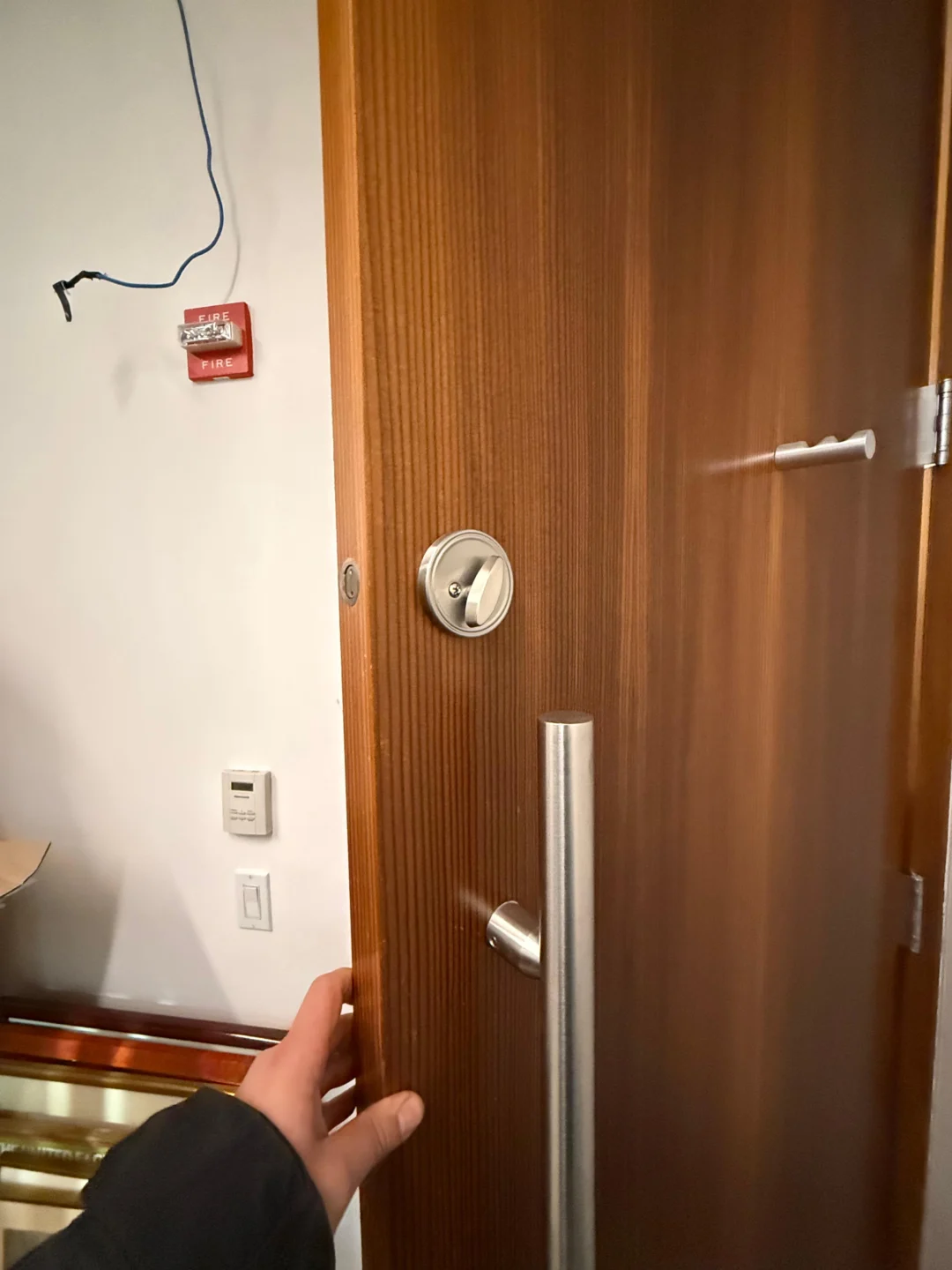
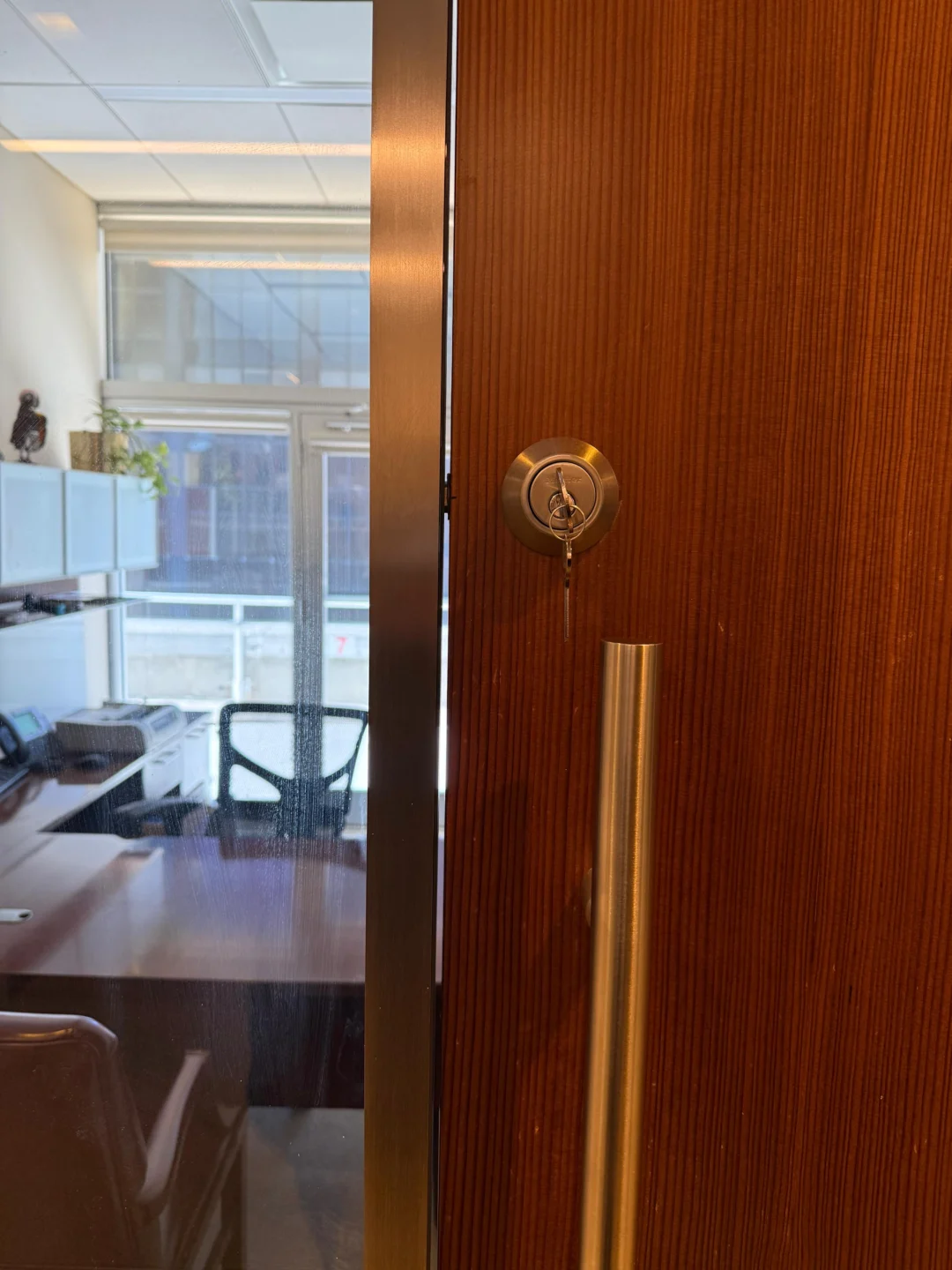
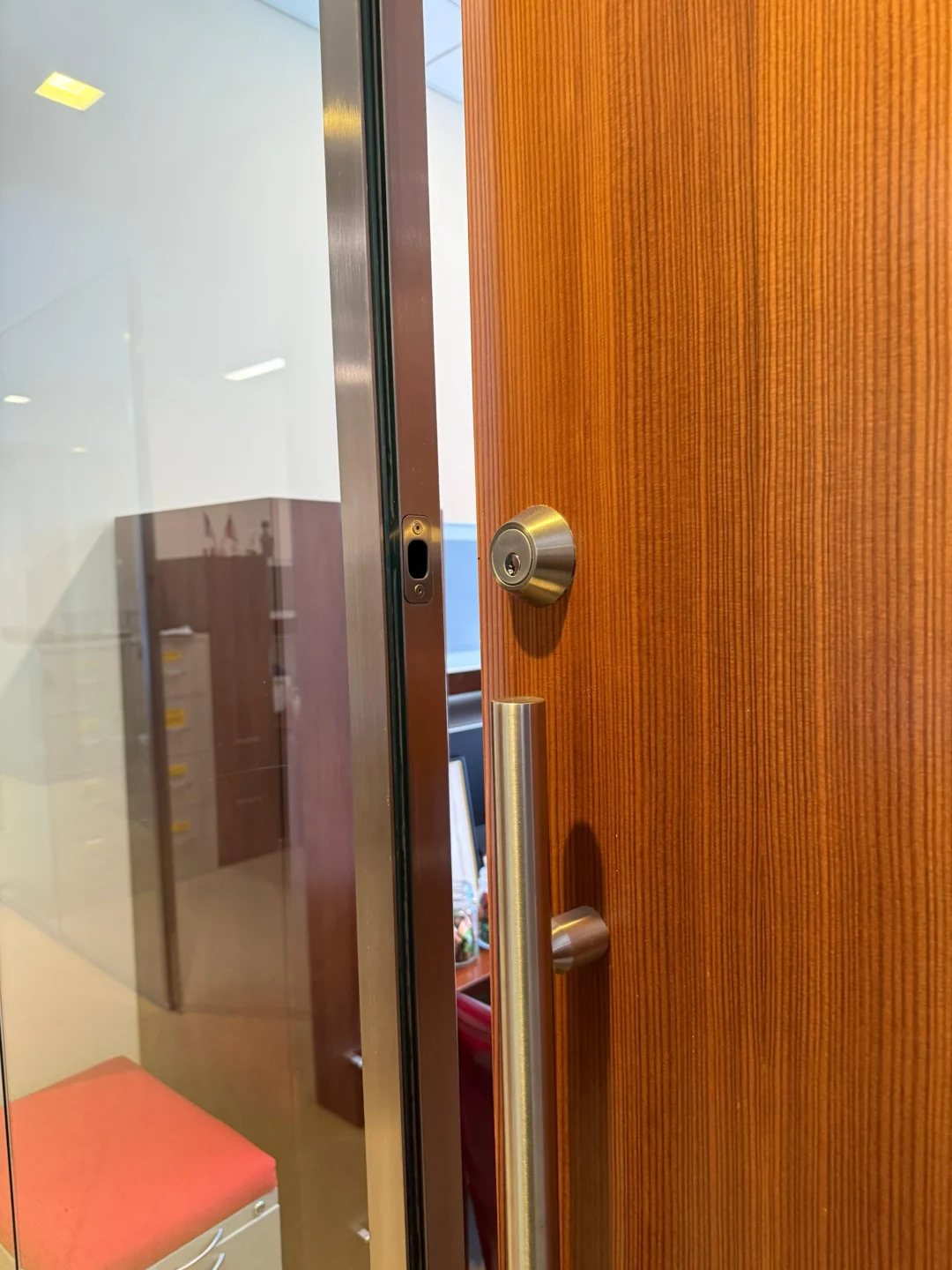
A traditional deadbolt is the classic lock you’ve trusted your whole life. It’s a purely mechanical device no electronics, no apps, no batteries. When you turn your key, metal pins inside the lock cylinder align perfectly, allowing the bolt to slide in and out of the door frame.
Traditional deadbolts come in two main types:
- Single cylinder: Key on the outside, thumb turn on the inside (most common in NYC apartments)
- Double cylinder: Requires a key on both sides (often used on doors with glass panels for extra security)
These locks are graded by the American National Standards Institute (ANSI) and Builders Manufacturers Association (BHMA):
- Grade 1: Highest security, commercial-grade strength
- Grade 2: Excellent residential security (most common)
- Grade 3: Basic residential security
Traditional deadbolts have secured homes since the 1800s. They’re time-tested, reliable, and simple turn the key, hear the click, your door is locked.
What is a Smart Lock?
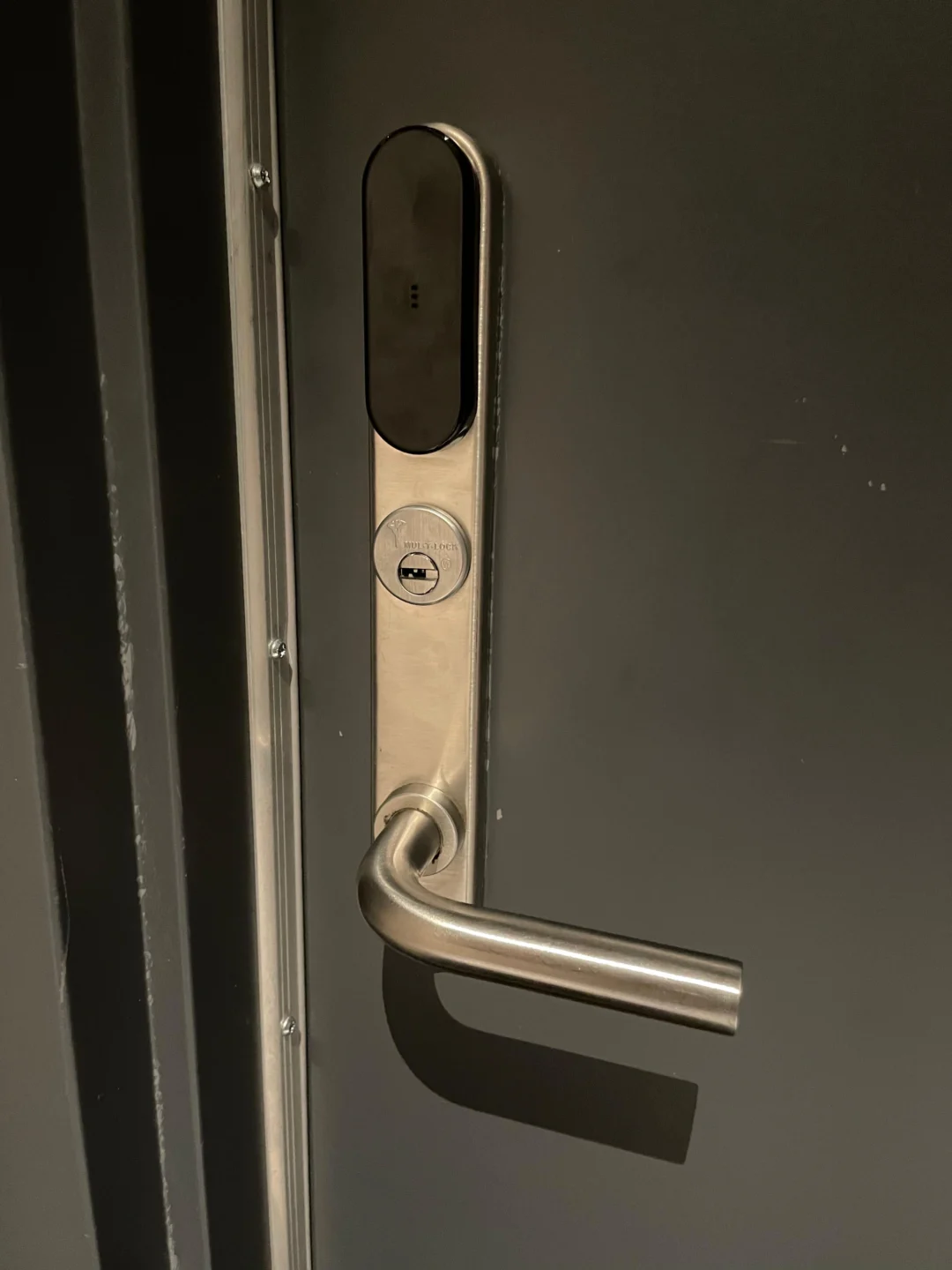
A smart lock brings your door into the digital age. Instead of (or in addition to) a physical key, you unlock your door using:
- Keypads: Enter a numerical code
- Touchscreens: Tap in your code on a digital display
- Smartphone apps: Unlock with your phone via Bluetooth or WiFi
- Fingerprint scanners: Biometric security
- Voice commands: “Alexa, unlock my front door”
- Auto-unlock: Your lock senses when you’re nearby and opens automatically
Smart locks run on batteries (usually 4 AA batteries) and connect to your home WiFi network, smart home hub, or work via Bluetooth. This connectivity enables remote access you can lock or unlock your door from anywhere in the world with an internet connection.
The Fundamental Difference
The core difference isn’t just technology it’s philosophy:
Traditional deadbolts are mechanical, standalone devices. They work the same way every single time, require no power, and have zero digital footprint.
Smart locks are connected electronic systems. They offer flexibility, monitoring, and remote control, but depend on batteries, connectivity, and software.
Both secure your door, but they do it in fundamentally different ways.

Security Showdown: Which Locks Your Door Better?
Traditional Deadbolt Security
Traditional deadbolts have protected homes for over a century and they’re still excellent security devices when properly installed. Here’s what makes them strong:
Physical strength: Grade 1 deadbolts can withstand over 10 strikes of 75 pounds of force. That’s serious break-in resistance.
Pick resistance: High-quality deadbolts feature anti-pick pins that make lock picking extremely difficult. Professional-grade locks like Medeco and Mul-T-Lock are nearly impossible to pick without specialized training.
No digital vulnerabilities: You can’t hack what isn’t connected. Traditional deadbolts have zero exposure to digital attacks, malware, or remote hacking.
Proven reliability: Decades of real-world use prove traditional deadbolts work consistently and predictably.
But they do have weaknesses:
- Lost keys: Anyone who finds your keys can access your home
- Key duplication: Keys can be copied without your knowledge
- Bump keys: Some traditional locks are vulnerable to “bumping” (a technique that exploits pin tumbler mechanics)
- No monitoring: You’ll never know if someone unlocked your door while you were away
Smart Lock Security
Smart locks bring modern security features that traditional locks can’t match:
Military-grade encryption: Communication between your phone and lock is encrypted with the same technology that protects banking transactions. Intercepting and decoding this data is extremely difficult.
No keys to lose or copy: Keyless entry means no one can duplicate your “key” without access to your phone or knowing your code.
Tamper alerts: Many smart locks notify you immediately if someone tries to force entry, pick the lock, or remove the lock from your door.
Activity monitoring: See exactly who unlocked your door and when invaluable for tracking family members, service workers, or tenants.
Auto-lock: Your door locks automatically after a set time, eliminating the “Did I lock the door?” worry.
Remote locking: Realize you forgot to lock up while sitting in your Midtown office? Lock your door instantly from your phone.
However, smart locks have their own concerns:
- Potential hacking: While rare and difficult, smart locks can theoretically be hacked
- Battery dependence: If batteries die and you don’t have backup access, you could get locked out
- Software vulnerabilities: Bugs or security flaws in the app or firmware could create weak points
- WiFi dependence: Some features require internet connectivity
Real-World Security in NYC
Here’s what matters in real New York City break-in scenarios:
Most burglaries don’t involve sophisticated lock picking or hacking they involve kicking in doors. The strength of your door frame, strike plate, and bolt matter more than whether your lock is smart or traditional.
According to FBI statistics, the vast majority of break-ins involve forced entry, not lock manipulation. This means:
- A properly installed Grade 1 traditional deadbolt is extremely secure
- A properly installed smart lock with strong encryption is also extremely secure
- Your weakest point is usually the door frame, not the lock itself
For ground-floor apartments in Brooklyn or Queens: Both lock types work great, but consider adding a reinforced strike plate and longer screws (3-inch) that anchor into the wall studs not just the door frame.
For upper-floor apartments: Both options provide excellent security. The convenience benefits of smart locks often outweigh the minimal additional risk.
Cost Comparison: Initial Investment and Long-Term Expenses
Traditional Deadbolt Costs
Initial purchase: $30-$300 depending on quality
- Basic residential deadbolt: $30-$80
- Mid-quality brand name (Schlage, Kwikset): $80-$150
- High-security (Medeco, Mul-T-Lock): $150-$300
Professional installation in NYC: $75-$150
- Standard installation: $75-$100
- Complex installations (metal doors, drilling required): $100-$150
Ongoing costs:
- Key duplication: $3-$10 per key (occasional)
- Rekeying when needed: $75-$150 (every few years or after lost keys)
- Maintenance: Essentially $0 (occasional graphite lubricant spray)
10-year total cost of ownership: $150-$450 (Lock + installation + occasional rekeying/keys)
Smart Lock Costs
Initial purchase: $150-$400+
- Budget models (Wyze, basic brands): $70-$150
- Mid-range (Yale, Schlage standard): $200-$280
- Premium (Schlage Encode Plus, Level Lock): $300-$400+
Professional installation in NYC: $100-$200
- Standard smart lock installation: $100-$150
- Complex setup with integration: $150-$200
Ongoing costs:
- Battery replacement: $10-$15/year (4 AA batteries replaced 1-2 times annually)
- Subscription fees: $0-$5/month (most don’t require subscriptions, but some advanced features do)
- Technology upgrades: Consider replacing every 5-10 years as technology evolves
10-year total cost of ownership: $400-$800+ (Lock + installation + batteries + potential subscriptions)
Value Beyond Price
The raw numbers tell only part of the story. Consider these less tangible values:
Time savings: Never driving back home to check if you locked up, never waiting for a locksmith after losing keys, never coordinating key handoffs with service providers these time savings add real value to busy NYC lives.
Peace of mind: Remote monitoring and auto-lock features provide psychological comfort worth far more than dollars.
Avoided locksmith emergencies: Lost key lockout service calls in NYC cost $150-$300. One avoided emergency nearly pays for the smart lock’s premium over a traditional deadbolt.
Property value: In competitive NYC real estate markets, smart home features (including smart locks) can make your listing more attractive to tech-savvy buyers.
Insurance discounts: Some insurance companies offer small discounts for smart security features, though this varies.

Installation Requirements and Complexity
Installing Traditional Deadbolts
Traditional deadbolt installation is straightforward if your door already has lock holes:
DIY process: 30-45 minutes for someone handy
- Remove old lock
- Insert new deadbolt assembly
- Attach interior and exterior
- Test operation
Tools needed: Screwdriver (that’s usually it)
When to go professional:
- Installing in a brand-new door (drilling required)
- Metal apartment doors (harder to work with)
- Reinforcing door frames
- You’re just not handy (no shame!)
Installing Smart Locks
Smart lock installation has two phases: physical and digital.
Physical installation: 45-60 minutes The installation is nearly identical to traditional deadbolts usually just replacing your existing deadbolt with the smart lock. Most smart locks are designed to fit standard door preparations, so no drilling is typically needed.
Digital setup: 15-30 minutes
- Download the app
- Create an account
- Connect lock to WiFi or Bluetooth
- Configure settings and access codes
- Test all features
When to go professional:
- You want integration with existing security systems
- Your door has unusual dimensions or materials
- You want it done perfectly the first time
- The app setup confuses you (tech comfort levels vary)
- You’re upgrading multiple doors simultaneously
NYC-Specific Installation Challenges
Metal apartment doors: Common in NYC high-rises, metal doors can interfere with WiFi signals and require specific installation techniques. Professional installers know how to handle these.
Co-op and condo regulations: Some buildings require board approval before changing exterior locks or have specific security requirements. Check before purchasing.
Historic brownstones: Thick doors (sometimes 2+ inches) or unusual sizes may need adapters or special installation considerations.
Rental restrictions: Landlords may prohibit smart locks or require you to restore the original lock when moving. Always get written permission first.
Fire safety codes: NYC has specific requirements for secondary exits and emergency egress. Professional installers ensure compliance.
Reliability and Maintenance
Traditional Deadbolt Reliability
Traditional deadbolts are the reliability champions they just work, year after year.
Proven performance: A quality deadbolt can last 15-30 years with minimal maintenance. Many NYC buildings still have deadbolts installed in the 1980s that work perfectly.
Minimal maintenance: Apply graphite lubricant once a year. That’s literally it.
Weather resistance: Brass and steel mechanisms aren’t affected by NYC’s temperature swings, humidity, or winter salt.
No external dependencies: No batteries, WiFi, apps, or accounts required. Your lock works the same way on day 1 and day 5,000.
Common issues (rare):
- Key wear over time (replace keys)
- Internal pin wear after decades (rare, easily fixed)
- Bolt alignment issues from door settling (adjust strike plate)
Smart Lock Reliability
Smart locks are highly reliable modern devices, but they do have more potential points of failure:
Technology dependence: Your lock depends on batteries, software, and (for some features) WiFi connectivity. Each adds a small failure possibility.
Battery management: Most smart locks last 8-12 months on batteries, with low-battery warnings 2-3 weeks before death. Miss the warning? You might get locked out.
WiFi issues: Lost internet connection means no remote features. Bluetooth-based functions still work, but you can’t control from afar.
Software bugs: Occasional app glitches or firmware bugs can cause temporary issues (usually resolved with updates).
Weather performance: Quality smart locks handle NYC weather well, but extreme cold (below 0°F) can slightly reduce battery life and touchscreen responsiveness.
Lifespan: Expect 5-15 years from a smart lock before technology advances make replacement desirable. They’ll probably still work longer, but you might want newer features.
Manufacturer support matters: Choose brands with strong customer support. When issues arise, you want responsive help.
Maintenance Comparison
Traditional deadbolt: Annual 2-minute lubrication. Total maintenance over 10 years: maybe 30 minutes of your time.
Smart lock: Battery changes 1-2 times per year (5 minutes each), occasional firmware updates (automatic), periodic app updates. Total maintenance over 10 years: maybe 2-3 hours of your time plus $100-$150 in batteries.
Neither requires significant maintenance, but smart locks need more attention.
Smart Home Integration and Future-Proofing
Traditional Deadbolts in Smart Homes
Traditional deadbolts stand alone and that’s okay. They work independently of any technology, which means:
- No compatibility concerns ever
- Never become “outdated” technologically
- Can be used alongside other smart home devices without integration
Retrofit options exist: You can add retrofit smart lock systems (like August Smart Lock) that install over your existing deadbolt, letting you keep your current lock while adding smart features.
Smart Locks and Home Automation
Smart locks transform from simple locks into connected security devices that interact with your entire home:
Security system integration: Your smart lock communicates with your alarm system, automatically disarming when you unlock and arming when you leave.
Voice control: “Alexa, lock my front door” as you leave. “Hey Google, is my door locked?” from bed at night.
Automated scenes: When you unlock your door after sunset, your lights turn on, thermostat adjusts, and security cameras switch to “home” mode.
Video doorbell coordination: See who’s at your door on your video doorbell, then remotely unlock your smart lock to let them in.
Geofencing: Your lock automatically unlocks as you approach home and locks when you leave.
IFTTT integration: Create custom automations if lock is opened during vacation mode, send emergency alert; if lock is opened by specific user, turn on certain lights.
Technology Evolution Considerations
Will your smart lock become obsolete? Probably not for years, but technology does evolve. The smart lock you buy today will function for 10+ years, but newer features might become available. Some brands offer software updates that add features; others require replacement for major advances.
Traditional deadbolts never become outdated: The lock technology that worked in 1920 works today. No obsolescence concerns ever.

Access Control and Key Management
Traditional Deadbolt Key Management
With traditional deadbolts, you manage physical metal keys:
Distribution challenges: Give keys to family members, dog walkers, housecleaners, contractors. Each key creates a copy floating around somewhere.
Lost key nightmares: Lose a key? Anyone who finds it could potentially access your home (if they know where you live). Solution: rekey your locks ($75-$150).
Duplication control: You can’t really control who makes copies. Your neighbor could copy the key you gave them “temporarily” and use it forever.
Master key systems: Landlords and property managers can create master key systems, but these require professional installation and careful key control.
Key tracking: You’ll never know for certain who has keys to your home.
Smart Lock Access Management
Smart locks revolutionize access control:
Unlimited digital codes: Create unique codes for everyone—family, friends, dog walker, cleaner, contractor. Each person gets their own code.
Temporary access: Create a code that works only this Thursday from 2-4 PM for your furniture delivery. It automatically becomes invalid afterward.
Scheduled access: Your dog walker’s code works Monday, Wednesday, and Friday from 11 AM-1 PM only.
Instant revocation: Fired your cleaning service? Delete their code immediately from anywhere.
Activity tracking: See exactly who unlocked your door and when. “Did the dog walker actually come today?” Check your log.
No keys to lose: Even if someone knows your code, you can change it instantly from your phone.
Remote access granting: Friend arriving early? Send them a temporary code via text while you’re still at work.
Best for Different NYC Situations
Airbnb hosts: Smart locks are a game-changer. Create unique codes for each guest, set them to expire automatically at checkout, never coordinate key handoffs again.
Multi-family property owners: Manage access to multiple units remotely, track service provider entry, change codes between tenants without rekeying.
Elderly parents with caregivers: Give caregivers scheduled access codes, monitor when they arrive and leave, ensure your parent’s safety without being intrusive.
Families with teenagers: Track when kids come home, eliminate the “lost my key” drama, give them codes that only work during approved times.
Dog walkers and service providers: Provide scheduled access without giving out physical keys, verify they actually showed up via activity logs.
Power Outages, Emergencies, and Backup Access
Traditional Deadbolt Emergency Access
Traditional deadbolts are bulletproof in emergencies:
- Always works: Hurricanes, blackouts, blizzards your mechanical lock doesn’t care
- No batteries: Never worry about power or battery death
- Locksmith accessible: Professional locksmiths can always pick or drill traditional locks if needed
- Emergency backup: Hide a spare key with a trusted neighbor or in a secure location
Smart Lock Emergency Scenarios
Smart locks handle most emergencies well, with backup plans:
Battery death: Even after low-battery warnings appear (weeks in advance), most smart locks give you 30-50 emergency unlocks before dying completely. If batteries do die, hold a 9-volt battery to the external terminals (usually on the keypad) to provide emergency power for unlocking.
Physical key backup: Many smart locks include a traditional key cylinder as backup. Some (like Yale Assure Lock SL) don’t trading that potential vulnerability for enhanced pick-proof security.
Power outages: Your smart lock doesn’t care about power outages it runs on batteries, not your home’s electricity. However, WiFi-dependent features won’t work without power to your router.
WiFi outages: Bluetooth and keypad functions still work fine. You just lose remote access features temporarily.
Smartphone dead: Use your backup code, fingerprint, or physical key (if available).
NYC Emergency Preparedness
Hurricane and storm readiness: Both lock types work during storms. Smart locks lose remote features if WiFi goes down, but local operation (keypad/phone Bluetooth) continues.
Building evacuation: Traditional deadbolts require grabbing keys on your way out. Smart locks let you leave instantly and lock remotely if needed.
Fire department access: NYC Fire Department can access both lock types when necessary. Many smart locks also allow you to remotely unlock for emergency responders if you’re monitoring from afar.
Environmental Factors: NYC Climate and Conditions
How NYC Weather Affects Traditional Deadbolts
Cold weather: Mechanical locks work perfectly in cold. Metal contraction can make very old locks slightly stiffer, but this rarely affects operation.
Salt and moisture: NYC’s winter salt can corrode brass over time. Stainless steel or protected finishes resist this better. Annual cleaning helps.
Heat and humidity: Summer’s heat and humidity don’t affect traditional locks at all.
Long-term durability: Traditional deadbolts handle NYC’s four-season extremes for decades without issue.
How NYC Weather Affects Smart Locks
Extreme cold: Batteries provide slightly less power below 0°F, potentially reducing battery life 20-30%. Touchscreens can be less responsive in extreme cold (physical buttons work better).
Moisture concerns: Quality smart locks are weatherproof, but installation must be proper to prevent water infiltration. Door overhangs help.
Temperature ratings: Check your smart lock’s operating range. Most work from -4°F to 140°F fine for NYC, but verify before purchasing.
Coastal salt air: Electronics are more vulnerable to salt corrosion than mechanical locks. If you’re near the water (Battery Park, Rockaway Beach), choose locks with strong weatherproofing ratings.
Urban Environment Challenges
Pollution and grime: Both lock types accumulate NYC dirt. Regular cleaning keeps them functioning smoothly.
High-traffic wear: Smart lock keypads can show wear patterns where frequently used numbers are touched. Touchscreens don’t reveal usage patterns.
Building materials: Steel doors conduct cold better, potentially affecting smart lock battery performance in unheated entryways.
Privacy and Data Security
Traditional Deadbolt Privacy
Traditional deadbolts are privacy champions:
- Zero data collection: Your lock doesn’t know who you are, when you unlock it, or how often you come and go
- No digital footprint: No data to be hacked, sold, or subpoenaed
- Complete privacy: Your comings and goings are known only to you
- No surveillance concerns: Can’t be monitored by anyone without physical observation
Smart Lock Data and Privacy
Smart locks collect data how much depends on the brand and model:
What smart locks typically collect:
- Lock/unlock events and times
- Which access method was used (code, phone, fingerprint)
- User identities (if multiple access codes)
- Battery levels and device status
- Sometimes: Location data from your phone app
How manufacturers use this data:
- Provide you with activity logs and notifications
- Improve products and fix bugs
- Aggregate anonymous data for research
- Some may share anonymized data with third parties (read privacy policies)
Security measures:
- Encrypted communication
- Secure cloud storage (if applicable)
- Access controls requiring authentication
Privacy concerns to consider:
- Data breaches could expose your comings and goings
- Subpoenas can require companies to turn over data
- Domestic situations (abusive relationships) where tracking is dangerous
Choosing privacy-focused brands: Some brands emphasize privacy with local-only processing, minimal data collection, and strong encryption. Research before buying.
NYC Privacy Regulations
New York has data protection laws, but smart lock data isn’t specifically regulated. However:
- Building management typically can’t access your smart lock data without permission
- Tenant privacy rights apply to rental situations
- Domestic violence victims should consider privacy implications carefully
Detailed Comparison Table
| Feature | Traditional Deadbolt | Smart Lock |
| Security Rating | Grade 1-3 available | Varies, often Grade 2 |
| Price Range | $30-$300 | $150-$400+ |
| Installation | Easy (30-45 min) | Moderate (45-90 min) |
| Power Source | None needed | Batteries (8-12 months) |
| Remote Access | No | Yes |
| Guest Access | Physical keys | Digital codes (unlimited) |
| Activity Logging | No | Yes, detailed |
| Weather Resistance | Excellent | Very good |
| Lifespan | 15-30 years | 5-15 years |
| Maintenance | Minimal (annual lube) | Low (battery changes) |
| Smart Home Integration | No | Yes, extensive |
| Emergency Backup | Spare keys | 9V battery + multiple methods |
| Privacy Level | Complete | Moderate (data collected) |
| Aesthetic Options | Wide variety | Growing variety |
| Best Use Cases | Simplicity lovers, privacy-focused | Multi-user homes, remote management |
Pros and Cons Summary
Traditional Deadbolt Advantages
✅ Absolute reliability – works 100% of the time, every time
✅ Complete privacy – no data collection or digital footprint
✅ Weather-proof – NYC’s extreme temperatures don’t affect performance
✅ Long lifespan – lasts 15-30 years with minimal maintenance
✅ No technology dependence – never worry about WiFi, apps, or software bugs
Traditional Deadbolt Disadvantages
❌ Need physical keys – lose them and you’re locked out
❌ No remote access – can’t lock/unlock from afar
❌ No activity monitoring – never know who came and went
❌ Lockout risks – forget or lose keys = emergency locksmith call ($150-$300)
❌ No temporary access – can’t give time-limited access to guests or services
❌ Rekeying costs – new tenant or lost keys = $75-$150 to rekey
Smart Lock Advantages
✅ Keyless convenience – never fumble for keys with hands full
✅ Remote control – lock/unlock from anywhere via phone
✅ Multiple access methods – phone, code, fingerprint, voice, and more
✅ Activity monitoring – know exactly who accessed your door and when
✅ Temporary codes – give time-limited access to guests and services
✅ Auto-lock feature – automatically locks after set time period
✅ No lockouts – multiple backup access methods
✅ Easy access changes – change codes instantly without rekeying
✅ Smart home integration – works with Alexa, Google, security systems
✅ Instant revocation – delete access codes immediately when needed
Smart Lock Disadvantages
❌ Higher cost – $150-$400+ initial investment
❌ Battery dependence – need periodic battery replacements
❌ Technology complexity – apps, WiFi, setup can frustrate some users
❌ Potential connectivity issues – WiFi problems affect remote features
❌ Privacy trade-offs – data collection and potential monitoring
❌ Shorter lifespan – 5-15 years before technology advances make replacement desirable
❌ Learning curve – family members need to adapt to new system
❌ Software bugs – occasional glitches require troubleshooting
Who Should Choose Which Lock?
Choose a Traditional Deadbolt If You:
✔️ Value absolute simplicity and don’t want to deal with technology
✔️ Prioritize privacy and don’t want any data collection
✔️ Rarely have guests or service providers needing access
✔️ Are on a tight budget and need the most affordable option
✔️ Live in a historic property where traditional locks fit the aesthetic
✔️ Never forget your keys and don’t need backup access methods
✔️ Want minimal maintenance and maximum longevity (15-30 years)
✔️ Are uncomfortable with connected devices in your home
✔️ Don’t have reliable WiFi or prefer not to depend on connectivity
✔️ Have concerns about hacking or digital vulnerabilities
Choose a Smart Lock If You:
✔️ Frequently forget or lose keys and want backup access options
✔️ Need to grant temporary access to guests, Airbnb visitors, or services
✔️ Want remote control to lock/unlock from work or while traveling
✔️ Run a multi-family property or manage rental units
✔️ Have elderly parents or children and want to monitor their arrivals
✔️ Are a busy NYC professional who values convenience and time-saving
✔️ Embrace smart home technology and want integration with other devices
✔️ Have service providers (dog walkers, cleaners, contractors) regularly accessing your home
✔️ Want activity logs to track who enters and when
✔️ Hate coordinating key handoffs with visitors or service people
Hybrid Solution: Best of Both Worlds
You don’t have to choose just one for your entire home:
Smart lock on front door: Your main entrance gets all the convenience features—keyless entry, remote access, activity monitoring.
Traditional deadbolts on other doors: Back doors, side entrances, and interior doors use reliable traditional locks.
Layered security: Use both a smart deadbolt and a traditional deadbolt on the same door for maximum security.
Retrofit smart solutions: Install smart lock systems like August that work over your existing traditional deadbolt, giving you both options.
Frequently Asked Questions
Are smart locks as secure as traditional deadbolts?
Yes, when properly installed, both lock types provide excellent security. High-quality smart locks use military-grade encryption that’s extremely difficult to hack, while Grade 1 traditional deadbolts resist physical attacks. The reality is that most break-ins involve forced entry (kicking in doors) rather than lock manipulation, so your door frame strength matters more than whether your lock is smart or traditional.
What happens if a smart lock’s battery dies?
You get weeks of low-battery warnings through the app and on the lock itself before batteries die. If they do die completely, hold a standard 9-volt battery against the external terminals (marked on most smart locks) to provide emergency power for unlocking. Then immediately replace the AA batteries inside. Many smart locks also include physical key backup cylinders.
Can smart locks be hacked?
While theoretically possible, smart lock hacking is extremely rare and difficult in practice. Modern smart locks use the same military-grade encryption that protects online banking. The much bigger security risk is simple burglary methods like kicking in doors or breaking windows not sophisticated digital hacking. Follow basic security practices: use strong WiFi passwords, keep firmware updated, and choose reputable brands.
Which is more expensive in the long run?
Smart locks cost more both initially and over time. Over 10 years:
- Traditional deadbolt: $150-$450 total
- Smart lock: $400-$800 total
However, smart locks can save money by eliminating emergency locksmith calls ($150-$300 per incident) and rekeying costs ($75-$150) when keys are lost or access needs change.
Can I install either lock on my NYC apartment door?
Renters need landlord permission before changing locks get it in writing. Some landlords prohibit smart locks; others don’t care. Homeowners can install whatever they choose, but check if your co-op or condo board has restrictions. Both lock types install in standard door preparations, so compatibility is rarely an issue with professional installation.
Expert Recommendations from Rainbow Locksmith NY
After 40+ years of installing and servicing locks across all five boroughs, here’s our honest guidance:
There is no universally “better” choice. Both traditional deadbolts and smart locks are excellent security devices the right one depends entirely on your specific situation.
For NYC apartments (renters): Consider smart locks for the convenience and portability, but get landlord permission first. Smart locks help you avoid key coordination hassles in a city where you’re constantly juggling dog walkers, cleaners, and guests.
For NYC brownstones and houses: Smart locks offer tremendous value for property owners who’ll enjoy the investment for years. The convenience of keyless entry and remote access becomes more valuable when you own your home long-term.
For ground-floor properties: Both options work great. Add reinforced strike plates and 3-inch screws regardless of which lock type you choose this matters more for security than the lock itself.
For Airbnb hosts and landlords: Smart locks are game-changers for rental properties. The ability to change access codes remotely and track entry eliminates key management headaches and saves money over time.
For elderly residents: Consider each individual’s comfort level. Some seniors love the convenience of not fumbling with keys; others find technology intimidating. Traditional deadbolts work better for those uncomfortable with tech.
Our most common installation: Honestly, we install both types regularly because different New Yorkers have different needs. About 60% of our customers still choose traditional deadbolts for reliability and cost; 40% choose smart locks for convenience and features.
Hybrid approach: Many of our clients use smart locks on front doors (for convenience) and traditional deadbolts on back doors (for simple reliability). This gives you the best of both worlds.
Common mistakes to avoid:
- Buying a smart lock without checking WiFi coverage at your door
- Choosing the cheapest option instead of a quality lock that lasts
- DIY installation on complicated NYC doors (metal, unusual sizes)
- Forgetting to get landlord permission before installing
- Not reading your co-op/condo rules before purchasing
Professional installation matters: NYC doors especially in older buildings present unique challenges. Metal doors, unusual thicknesses, and alignment issues can complicate installations. Professional installation ensures your lock works perfectly from day one and protects warranties.
Conclusion
The smart lock vs traditional deadbolt debate doesn’t have a clear winner—because both are winners in different situations.
Traditional deadbolts offer unbeatable reliability, complete privacy, zero ongoing costs, and decades of proven performance. They’re perfect for anyone who values simplicity, wants minimal maintenance, and doesn’t need advanced features.
Smart locks deliver remarkable convenience, flexible access control, remote monitoring, and seamless smart home integration. They’re ideal for busy professionals, property managers, Airbnb hosts, and anyone managing multiple people’s access to their home.
The real question isn’t “which is better?”—it’s “which is better for you?”
Consider your priorities: Is security your top concern? Both options are excellent when properly installed. Is convenience crucial to your daily life? Smart locks win. Is budget tight? Traditional deadbolts cost less. Do you value privacy? Traditional locks collect zero data. Need to grant temporary access often? Smart locks are game-changers.
Whatever you choose, proper installation matters enormously. A perfectly installed traditional deadbolt is far more secure than a poorly installed smart lock, and vice versa.