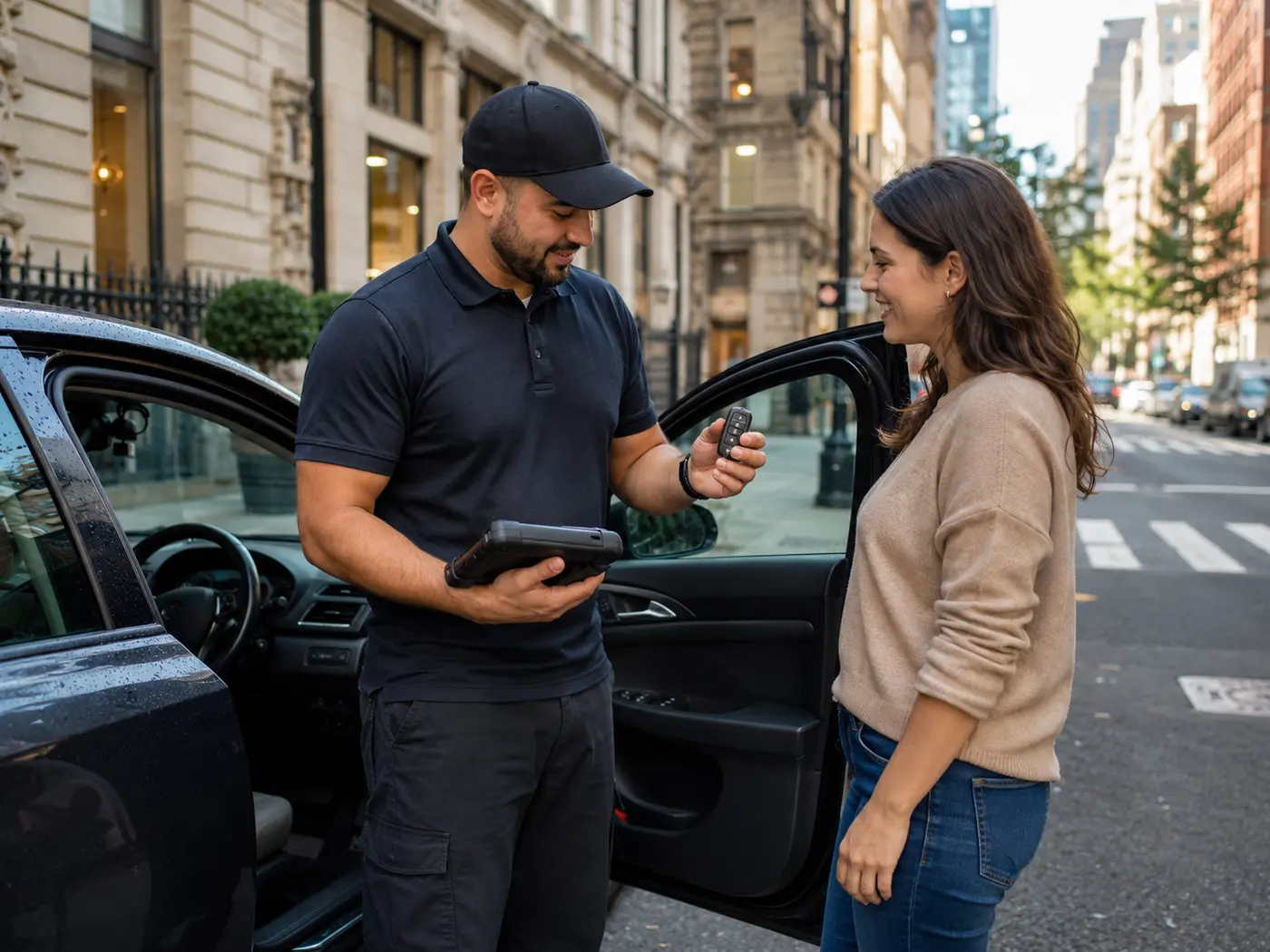
Losing your only car key feels like a dead end, but it is a routine job for an automotive locksmith, and you do not need the original to solve it. With your VIN, proof that the car is yours, and the right equipment, a brand-new working key can be cut and programmed from scratch. This guide explains how that is even possible, what you need to have on hand, how to choose between a dealership and a locksmith, and the New York realities most national guides ignore entirely.
The reason this matters is that a lot of people assume a lost-only-key situation means a tow and a huge dealer bill. Often it does not. Once you understand how a key is generated without an original, you can make the call that gets you back on the road fastest and for the least money.
Why you do not need the original key
It seems like magic that a locksmith can make a working key for a car you cannot even open, but it is just process. Every vehicle carries a unique identity and a factory key code tied to it. A professional recovers your key cuts in one of two ways.
They look up the key code from your VIN through the manufacturer’s records, or, when that code is not available, they decode the lock directly by reading the internal wafers of the door or ignition cylinder. Either way, they end up with the exact cut pattern your original had. From there they cut a fresh blade and, if your car uses a chip, program a new transponder to handshake with your engine immobilizer. The original key is never part of the equation.
A replacement without the original needs three things: your VIN, proof of ownership, and a professional, either a locksmith or a dealer. They look up your key code from the VIN, or decode the lock directly, then cut a blade and program the transponder chip to your car’s immobilizer. For most vehicles this is same-day work.
First, know your key type
What you have determines how it is replaced and what it costs, so identify it before you call. The cost difference between these is large, and it comes down to how much electronics are involved.
| Key type | What it is | Replacement |
|---|---|---|
| Basic metal key | Older vehicles, no electronics | Easiest and cheapest to make |
| Transponder key | Chip in the head, mid-1990s onward, must talk to the immobilizer | Cut plus chip programming |
| Laser-cut sidewinder key | Thicker blade, unique groove down the center | Needs special cutting equipment |
| Smart key or push-to-start fob | Proximity fob, no blade inserted | Most advanced and most expensive to replace |
What you need before you call
Gather these three things first and the job goes quickly. Show up without them and a reputable provider will not, and should not, make you a key.
- Your VIN. The 17-digit number visible through the windshield on the driver’s side dash and on the driver’s door jamb sticker. It also appears on your registration and insurance card. The VIN is what unlocks your factory key code, so it is the most important item. You can confirm your vehicle details with the free NHTSA VIN decoder.
- Proof of ownership. Registration or title, plus a photo ID. No reputable locksmith or dealer makes a key without confirming the car is yours, and that requirement protects you from someone else copying their way into your vehicle.
- Make, model, and year. This tells the locksmith which blade blank and which chip your car uses, so they arrive with the right parts the first time.
Your two options: dealer vs automotive locksmith
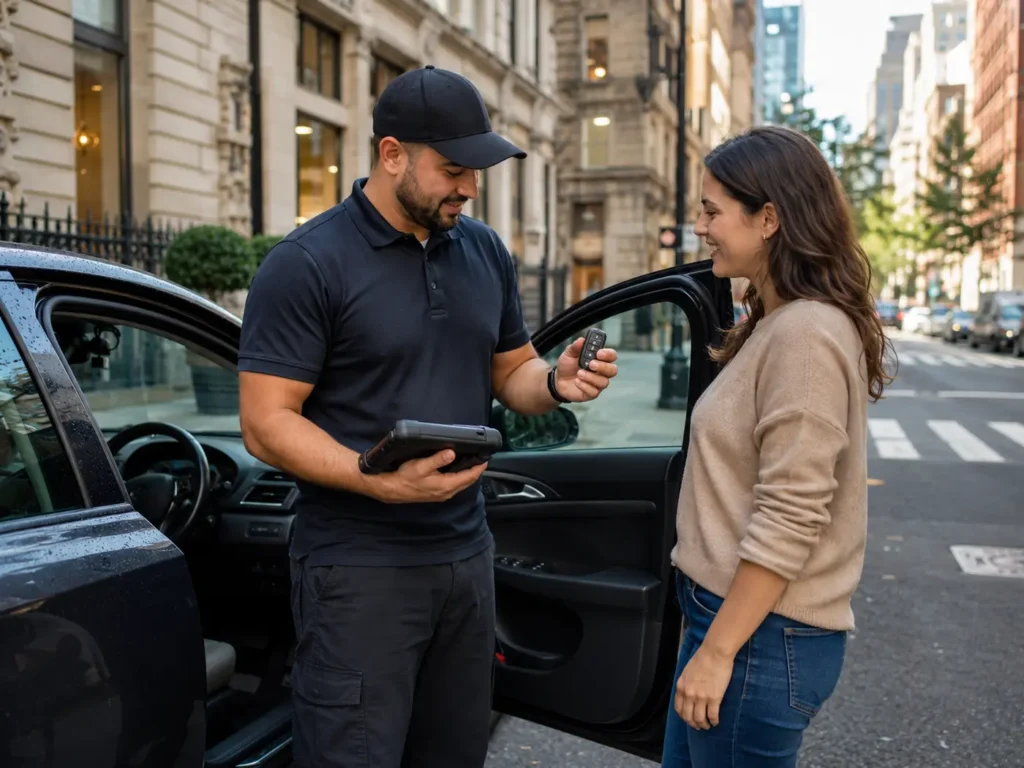
Both can do the job. They differ on speed, cost, and whether you have to bring the car to them, which in this city is a bigger factor than it sounds.
| Dealership | Automotive locksmith | |
|---|---|---|
| Comes to you | No, car must be there | Yes, mobile service |
| Speed | Often days if key is ordered | Frequently same day |
| Cost | Typically higher | Usually lower |
| Coverage | OEM parts for that brand | Most makes and models |
For some high-end European brands with restricted protocols, parts may have to come from the manufacturer, which points you to the dealer. For the vast majority of vehicles on the road, a locksmith is the faster and cheaper route, and the one that does not require moving a car you cannot start.
How a locksmith makes a key with no original
Here is the actual sequence, so you know what to expect when the tech arrives.
- Verify ownership. You show the VIN, your registration or title, and a photo ID. This is non-negotiable and quick.
- Cut the blade. The locksmith either cuts by code from the VIN, or decodes the door lock or ignition directly to read the cuts, which is common on older or imported cars where the code is not on file.
- Program the chip. A diagnostic tool connects to the OBD-II port under the dash to pair the new transponder or fob with your engine immobilizer, so the car will actually start.
- Test everything. Lock, unlock, and start the car to confirm the new key works on every function before you pay. Nothing is final until it starts the engine cleanly.
Why this matters more in NYC
In most of the country, a dead car can be towed to a dealer cheaply and parked there for a day. In Manhattan, towing your car off a street spot to a dealership is a costly, slow ordeal, and the car risks a ticket or a city tow while it sits waiting.
A mobile automotive locksmith who comes to your parking spot and makes the key on site is usually the only sensible option, not just the convenient one. If you have lost more than the car key, our guide on what to do when you lose your keys in NYC covers the rest of the situation.
What drives the cost
Price depends on three things: your key type, since a basic metal key is cheap and a smart fob is not, your make and model, and whether the chip needs programming.
We keep pricing transparent and walk you through it before any work begins, so there are no surprises. For typical ranges across our services, see the NYC locksmith cost guide. It is also worth a quick check of your insurance, because some comprehensive policies and roadside assistance add-ons cover emergency key replacement.
Tip: program a spare once you are back in
The single best way to avoid this whole situation again is to have a spare cut and programmed while you still have a working key, which is meaningfully cheaper than a from-scratch job with no original. A from-scratch key requires decoding and full programming; a spare made from a working key is faster and simpler. If you want to understand fob pairing yourself, see our guide on how to program a key fob.
When to call
Call an automotive locksmith as soon as you confirm there is no spare, especially if you are stranded somewhere. This is an emergency service situation, and a mobile tech can usually get you moving the same day rather than leaving your car sitting overnight.
Frequently asked questions
Can a locksmith make a car key without the original?
Yes. Using your VIN-based key code or by decoding the lock directly, a locksmith cuts and programs a new key from scratch and pairs the chip to your car. No original is needed for most vehicles.
What do I need to get a replacement car key?
Your VIN, proof of ownership such as registration or title, and a photo ID. These confirm the car is yours before any key is made.
Is a locksmith cheaper than the dealer?
Usually. A locksmith is typically faster, less expensive, and mobile, which matters in NYC where towing to a dealer is impractical. Final cost depends on your make and key type.
How long does it take to make a car key from scratch?
For most common vehicles it is same-day and often done on site in under an hour. High-end or restricted models can take longer if parts must be ordered from the manufacturer.
Get help from Rainbow Locksmith NY
No spare key? We can make one on the spot. Rainbow Locksmith NY cuts and programs car keys and fobs across Manhattan, same day, at your location.
Rainbow Locksmith NY | 338 E 65th St, New York, NY 10065 | Licensed and insured | NYC DCWP License. Replacement process and cost vary by make, model, year, and key type. Bring proof of ownership; reputable providers require it.