A surprising number of key fobs can be programmed at home with no tools at all, as long as your vehicle supports onboard programming. Just as many cannot, and pushing the wrong process wastes an afternoon and leaves you wondering if the fob is defective. This guide explains how a fob actually talks to your car, how to tell which camp your vehicle is in, the exact onboard steps and why each one matters, and the honest line on when a locksmith or dealer is the faster, cheaper call.
Understanding the why here saves real frustration, because most failed DIY attempts are not bad luck. They are people running an onboard sequence on a car that never supported it, or trying to pair a key that needs a programming tool. A few minutes of background will tell you immediately whether your job is a five-minute driveway task or a call to a pro.
How a key fob actually talks to your car
This is the part most guides skip, and it is the part that explains everything else. A modern car key really does two separate jobs, handled by two separate systems inside the fob.
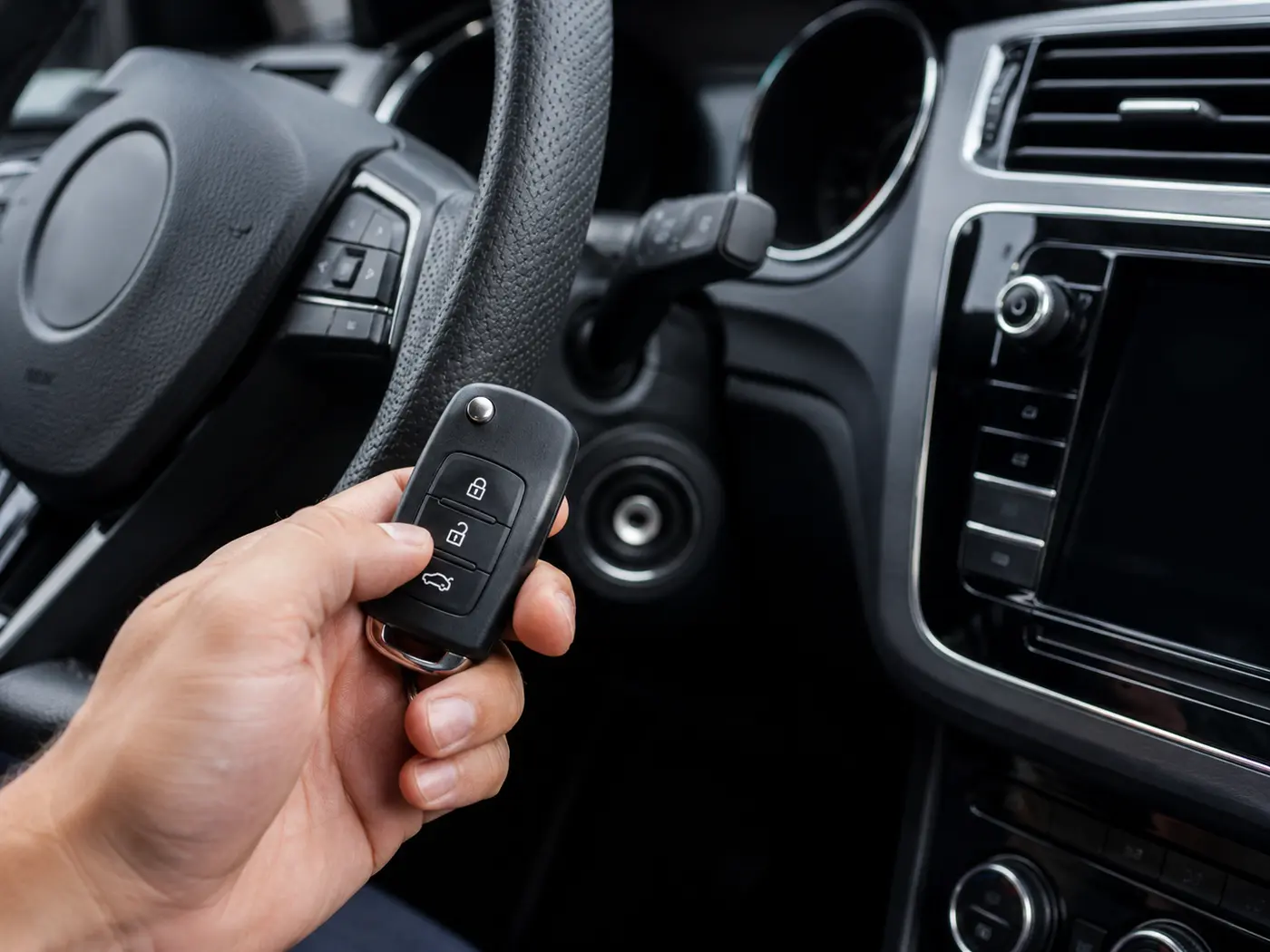
- The remote. When you press lock, unlock, or trunk, the fob sends a short-range radio signal that the car’s receiver recognizes. This is the part onboard programming pairs. It is relatively simple and is why DIY can work.
- The transponder chip. If your key also starts the engine, a small chip in the key exchanges an encrypted code with the car’s immobilizer every time you start it. No correct code, no start. This security layer is what generally cannot be done with an onboard sequence and needs a programming tool.
So when someone says they programmed their fob in the driveway, they almost always mean the remote functions. The engine-start side is a different and more guarded process. Keeping these two straight is the single most useful thing to understand before you begin.
If your owner’s manual lists an onboard programming sequence, you can usually pair a new fob yourself in about five minutes: fresh battery, sit inside with the doors closed, cycle the ignition the specified number of times until the locks click, then press the fob’s lock button. If there is no onboard sequence, or the key also starts the engine, you almost certainly need a programmer tool and should call a locksmith or dealer.
The 3 ways a key fob gets programmed
Every fob is paired through one of these three routes. Knowing which applies to you decides everything that follows.
- Onboard or self-programming. Common on many vehicles from the 1990s through the mid-2010s. A sequence of ignition cycles and button presses pairs the remote. No tools, no cost. This is the only route you can do at home.
- Dealer programming. Many newer and push-to-start vehicles require a dealer’s diagnostic tool plugged into the car. Reliable and brand-official, but usually the most expensive option and often the slowest if the key has to be ordered.
- Automotive locksmith. A locksmith can cut, supply, and program fobs and transponder keys for most makes using their own programmer, typically for less than a dealership, and can come to your location instead of you bringing the car in.
Why onboard works on some cars and not others
It comes down to how much security the manufacturer built in. Older vehicles trusted the simple radio handshake, so they let owners add remotes with a button sequence. As car theft adapted, manufacturers locked the process down, adding encrypted immobilizers and rolling codes that change with every use.
Those systems are deliberately not owner-programmable, because the same convenience that lets you add a key would let a thief add one too. That is why a 2008 sedan may pair in your driveway while a current push-to-start model will not. It is not that yours is broken. It is that newer cars are built to refuse exactly this shortcut.
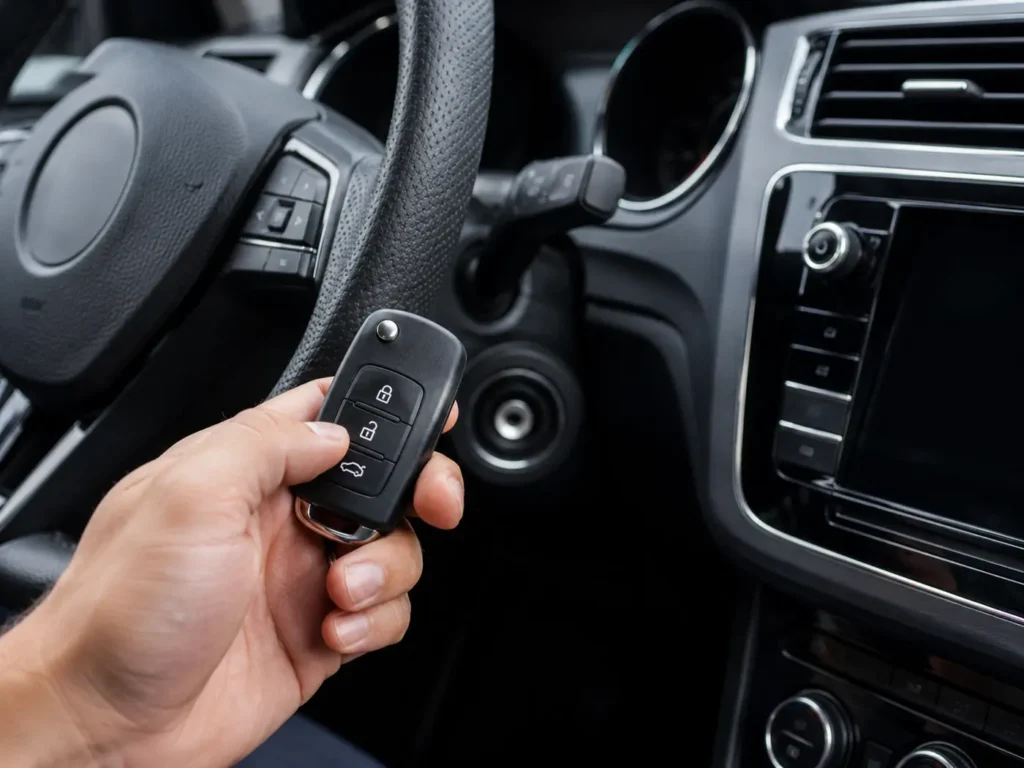
Before you start: a 4-point check
Two minutes of checking saves a wasted attempt. Confirm all four before you sit down in the car.
- Confirm onboard support. Search your owner’s manual for remote programming or key fob programming. If no sequence is listed, onboard is not supported and no amount of ignition cycling will work.
- Put a fresh battery in the fob. A weak coin-cell battery is the single most common reason programming fails, because the fob cannot transmit a strong enough signal at the critical moment.
- Have the right fob. It must match your exact make, model, and year, and ideally share the FCC ID printed on the back of your original fob. A close-but-wrong fob may pair partially and then fail.
- Know your key type. A plain remote is easy. A transponder key that starts the engine carries a security chip and almost always needs a tool, so identify which you have before deciding to DIY.
How to program a car key fob using the onboard method
This is the general pattern most onboard-capable vehicles follow. The exact cycle count and timing vary by make, so confirm yours first, but the logic is the same across brands.
- Sit in the driver’s seat and close all doors. Even one open door can interrupt the process, because the car uses door states as part of the programming logic. Closed doors tell the car you are ready.
- Turn the ignition to ON. Dash lights come on, but do not start the engine. ON powers the modules that listen for the programming sequence.
- Cycle the ignition. Turn it ON and OFF the number of times your manual specifies, usually within a few seconds, until you hear a chime or the door locks cycle on their own. That signal is the car confirming it has entered programming mode. Timing matters: too slow and the car does not register the sequence.
- Press the lock button on the fob. Do it within a few seconds of entering programming mode. The locks cycling again confirm the fob paired successfully.
- Program any extra fobs. If you have more than one, press each one’s lock button in turn while still in programming mode, because exiting and re-entering can wipe what you just did.
- Exit and test. Turn the ignition off, step out, and test lock and unlock from a few feet away to confirm range and function.
Program every fob in the same session. On many vehicles, entering programming mode erases all previously paired remotes and starts fresh. That means a fob you left in a drawer can suddenly stop working after you program a new one. Always pair every fob you own in the same session, including spares, so you do not accidentally lock out a key you still rely on.
Brand patterns at a glance
Because sequences differ by model year, treat this as a starting point and verify your exact procedure before you begin.
| Make | Typical situation |
|---|---|
| Honda, Toyota, Ford, GM, Chrysler, and Dodge older models | Often support an onboard ignition-cycle sequence. These are good DIY candidates. |
| Most push-to-start and proximity models | Usually need a dealer or locksmith programmer, since the proximity system is tied to the immobilizer. |
| Mercedes-Benz and some European makes | Proprietary, heavily encrypted security. Dealer-only in many cases, even for a locksmith. |
For your specific make and model year, verify the procedure against a maker-specific guide such as J.D. Power’s key programming guide before you start cycling the ignition.
What onboard programming cannot do
This is where most DIY attempts stall, and it goes back to the two-system point from earlier. Onboard sequences pair the remote functions: lock, unlock, and trunk. They generally do not program the transponder chip that lets a key start the engine.
If your key both opens the doors and starts the car, that chip has to be coded to the vehicle’s immobilizer with a programming tool plugged into the OBD-II port. No button sequence reaches that system. That coding is a locksmith or dealer job, not a driveway DIY, and trying the onboard method on it simply will not take.
NYC apartment and building fobs are different
If you searched program a key fob hoping to copy your apartment or building entry fob, that is a separate process from car fobs entirely. Building entry fobs use RFID, a short-range chip encoded to a specific access-control system, and many are managed by building management rather than the resident.
Some standard-frequency fobs can be duplicated by a locksmith. Encrypted or proprietary ones often must be issued by the building, because the access system will not accept an unauthorized copy. We sort out which is which every week across Manhattan. If you have lost a building fob, treat it like any access credential and read our guide on what to do when you lose your keys in NYC, and see the range of apartment lock and access types we work with.
What it costs, and when to call a locksmith
Reach for a pro when your vehicle has no onboard sequence, the key starts the engine, the fob will not pair after fresh batteries, or you need a replacement cut and coded from scratch. An automotive locksmith brings the programmer to you, which beats a tow to the dealer, and is especially valuable in a city where moving a dead car is a headache.
If you have lost your only key with no spare at all, that is a from-scratch job. For typical pricing across these services in the city, see our NYC locksmith cost guide. A genuine lockout while you are stranded is an emergency service call.
Frequently asked questions
Can I program a key fob myself?
Often, yes, if your vehicle supports onboard programming. It uses an ignition-cycle sequence and a button press with no tools. Many push-to-start cars and brands like Mercedes need a dealer or locksmith with a programmer.
Why will my key fob not program?
Usually a weak fob battery, a door left open, timing the ignition sequence too slowly, or a car that does not support onboard programming at all. A key that starts the engine needs a programmer tool, which onboard cannot replace.
Is it cheaper to use a locksmith or a dealer?
An automotive locksmith is usually less than a dealer and can come to you. Exact pricing depends on your make and key type, especially whether the chip needs programming.
Does a new fob need a fresh battery before programming?
Yes. Install a fresh battery first. A weak battery is the most common single cause of a fob that will not pair, because it cannot transmit cleanly during the brief programming window.
Get help from Rainbow Locksmith NY
Fob will not pair, or need one cut and coded? Rainbow Locksmith NY programs car keys, fobs, and building credentials across Manhattan, same day, at your location.