That sinking feeling when you go to unlock the door and hear a snap instead of a click is one we hear about constantly. The good news is that a broken key is often recoverable at home if you act carefully, and the single most important word there is carefully. The wrong move pushes the fragment deeper and turns a free fix into a cylinder replacement. This guide walks through six methods in the order we would actually try them, explains why each works, and tells you exactly when to stop and call a pro.
Before any tool comes out, understand one thing about why this happens. Keys are softer than the lock around them, and over years of use the metal fatigues. When a worn key meets a slightly stiff cylinder, the key is what gives. That is also why the fix sometimes needs to address the lock, not just the fragment.
First, do no harm: assess before you poke
The biggest mistakes happen in the first thirty seconds, when people jab at the keyhole in a panic. Take a breath and check two things first.
- Is the key turned or straight? A key only comes out when the cylinder is in the upright, neutral position, the same position it goes in. If the break happened mid-turn, the internal pins are holding the fragment in place. Gently rotate the cylinder back to vertical before you try to pull anything, or nothing will move.
- How much is sticking out? If a piece protrudes, your odds are excellent. If it is flush or sunk below the face, you will need a fishing or push-out method, and you should be more willing to call a pro before you push it deeper.
A quick spray of dry graphite for an indoor lock, or a silicone-based lubricant for an outdoor or bike lock, cuts the friction holding the fragment. Avoid oil-based sprays as a long-term lubricant because they gum up the pins over time, though using what you have in a one-time pinch is fine if you clean and re-lubricate the lock properly afterward.
Method 1: Pull it out with fingers or needle-nose pliers
If enough of the key protrudes to grip, this is the fastest fix. Pinch the exposed metal with your fingers or, better, a pair of needle-nose pliers, and pull straight out while keeping the cylinder vertical. Do not twist or rock side to side, which can snap off the part you are gripping and leave even less to work with.
Steady, straight, gentle pressure is the whole technique. The key caution: only grip what is already outside the lock. Reaching pliers into the keyway tends to push the fragment deeper.
Method 2: Tweezers for a thin protrusion
When the protruding piece is too small or thin for pliers, fine-tipped tweezers can sometimes grab the very edge. The trap here is that tweezers slip easily and the act of fishing for grip can shove the key inward.
Use tweezers only when you can clearly see and reach the edge, and stop the moment it starts sliding the wrong way. If tweezers are pushing more than pulling, move on to a proper extractor.
Method 3: A broken key extractor, the right tool
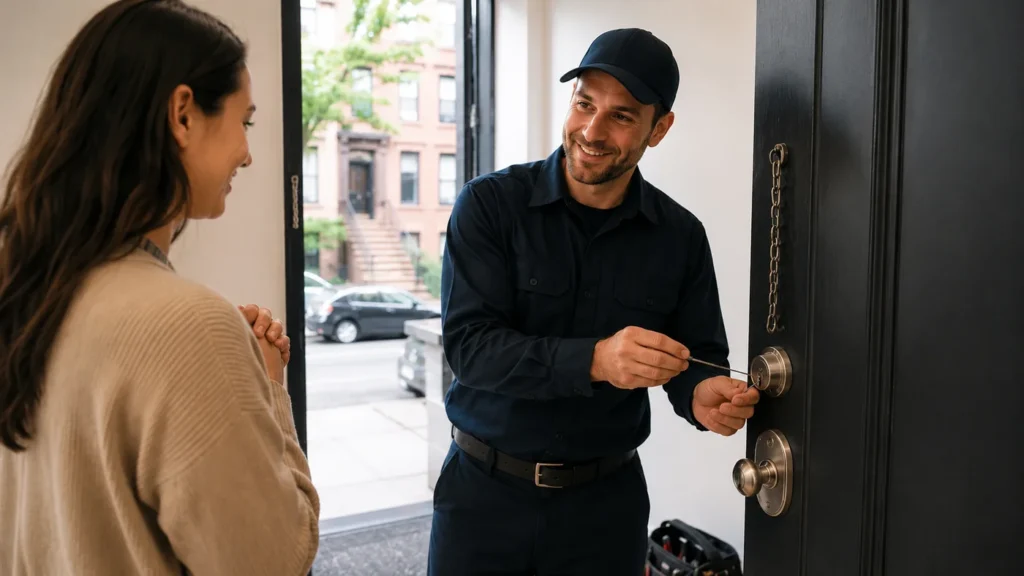
This is the tool locksmiths reach for, and inexpensive versions exist for home use. A key extractor is a thin strip of spring steel with a hook or barbed edge. You slide it into the keyway alongside the broken key, rotate so the hook catches the cuts or serrations of the fragment, and draw both out together.
The skill is in seating the hook into a notch rather than just scraping past it, which is why this works far better in trained hands. If you own one and the fragment is reachable, it is the cleanest DIY option. If you are buying a tool you have never used during a stressful lockout, weigh whether a pro is the better call.
Method 4: The two-pin fishing technique
With no extractor on hand, you can improvise with two thin, stiff wires such as straightened paperclips, bobby pins, or the teeth of a small jigsaw blade. Here is the method, done patiently.
- Lubricate again. A slick keyway gives the fragment the best chance to slide free.
- Slide a wire down each side of the key. Insert one thin wire along the top or side of the broken key inside the keyway until you feel it pass the cuts.
- Pinch and pull. Press both wires inward against the sides of the key fragment to grip it, then draw them out together, pulling the key with them. Keep the cylinder vertical the whole time.
- Stop if it resists. If the fragment does not begin to move with light pressure, do not force it. Forcing is how a recoverable key becomes a drilled cylinder.
A jigsaw blade works on the same principle: slide it in teeth-up beside the key, angle so the teeth bite the fragment, and pull. The serrated edge grabs better than a smooth wire.
Method 5: A magnet, for ferrous keys only
If the key is made of a magnetic metal, a strong magnet held at the mouth of the keyway can sometimes draw the fragment out, especially after lubrication. The important limit: most modern keys are brass, nickel silver, or aluminum, which are not magnetic, so this only works on steel keys.
If a magnet does nothing, your key is almost certainly non-ferrous and you should not keep trying it. It is a quick test, not a reliable method for most keys.
Method 6: Push it out from the back of the cylinder
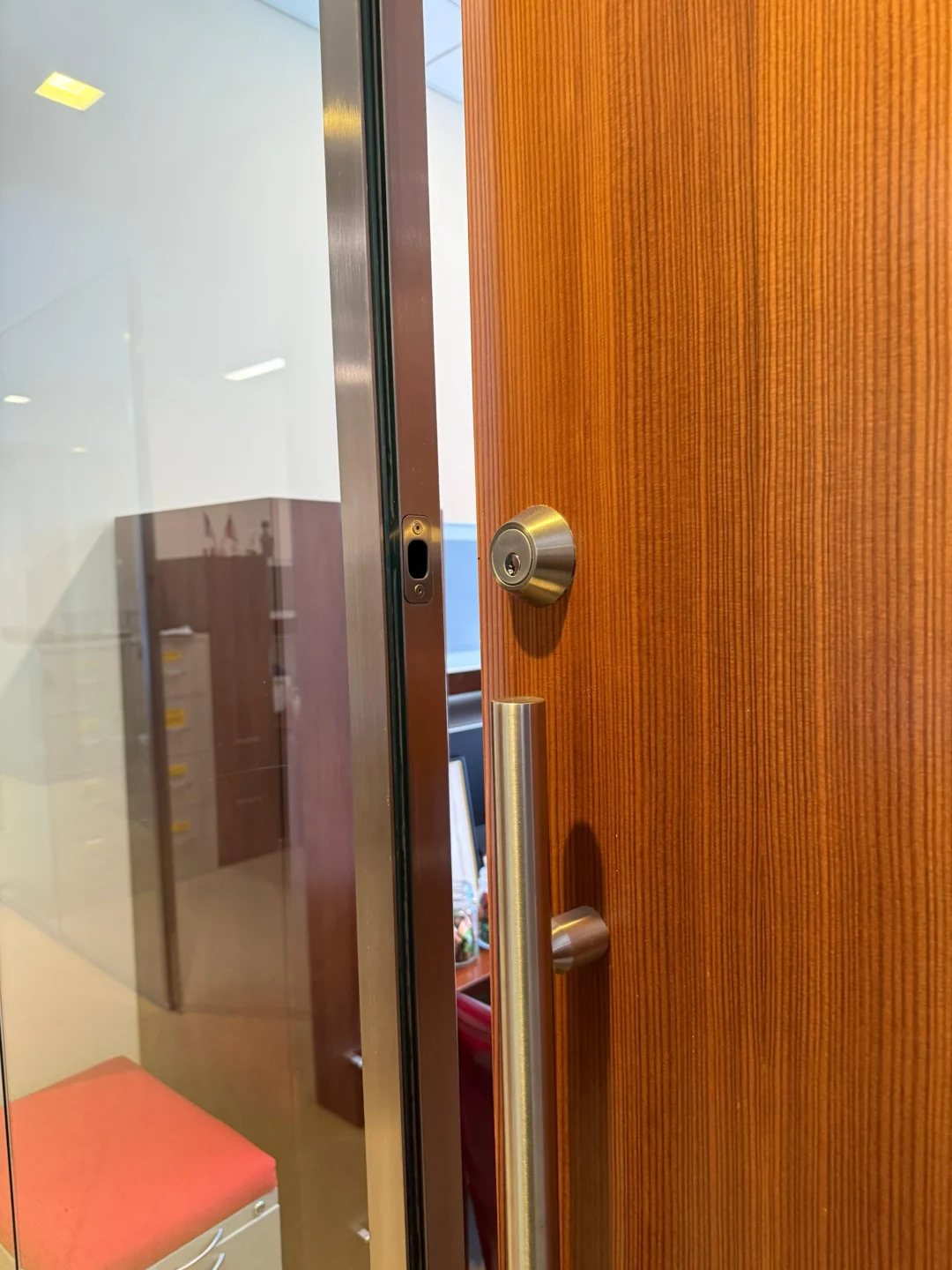
This is the method most guides bury, and it is often the cleanest of all because it works from behind the fragment rather than fighting it from the front. On many residential locks, including a lot of Schlage and similar hardware, you can remove the lock cylinder from the door and expose the back of it. The back of the cylinder usually has a small slot or hole that lines up with the keyway.
- Remove the lock from the door. Take off the interior hardware to free the cylinder. On some locks you also remove a C-clip or retaining nut to reach the back.
- Find the slot in the back of the cylinder. Look at the rear face of the cylinder for an opening aligned with the keyway.
- Push the fragment forward. Insert a paperclip, pin, or small rod into that slot and push the broken key out the front, the direction it came in. Because you are pushing with the cuts rather than against them, it slides out cleanly.
This takes a little disassembly, but it avoids the deeper-jamming risk of all the front-side methods.
What not to do
These are the moves that turn a ten-minute fix into a new lock.
- Do not force the key to turn or jam tools in hard. Pressure pushes the fragment deeper and can damage the pins.
- Do not use super glue on a wire or stick to grab the key. It bonds to the inside of the lock as easily as the key and frequently ruins the cylinder. A hot glue gun stick is the safer last-resort variant some try, but even that is risky.
- Do not keep retrying the same failed method. If two careful attempts do not move it, each further attempt mostly raises the odds of damage.
Why keys break, and how to prevent the next one
A key that snaps was usually warning you first. Keys break because they are worn thin, because the lock is stiff or dry, or because someone forces a sticky lock instead of fixing it. Replace keys once they look worn rather than waiting for a break, keep your lock lubricated, and address a sticking lock early.
If your lock is consistently stiff, that is one of the signs your lock needs replacing, and a worn cylinder will keep eating keys until you do.
When to call a locksmith
Call a pro when the fragment is flush or sunk in, when it broke mid-turn and will not rotate back, when two careful attempts have not moved it, or when the lock is high-security and you do not want to risk it. A locksmith extracts the fragment without damage and can rekey or, if the cylinder is already harmed, replace it on the spot.
If you are now locked out as a result, see how to unlock a door without a key in NYC and what to expect from an emergency locksmith. If the cylinder did get damaged, our guide on how to replace a door lock covers the next step, and the NYC locksmith cost guide explains typical pricing.
Frequently asked questions
Can I get a broken key out of a lock myself?
Often yes, especially if part of the key protrudes. Keep the cylinder vertical, lubricate, and use pliers, an extractor, or the two-pin method. Stop and call a pro if the fragment is flush or will not move with light pressure.
Will WD-40 help remove a broken key?
It can loosen a fragment in a pinch, but it is oil-based and gums up the pins over time. Use a dry graphite or silicone lubricant instead, and if you only have WD-40, clean and properly re-lubricate the lock afterward.
Will a broken key ruin my lock?
Not by itself. The damage usually comes from forcing the fragment deeper or using super glue. Extract it gently and the lock is typically fine.
Does a locksmith have to replace the lock?
Usually not. A locksmith extracts the fragment and the lock is reused. Replacement is only needed if the cylinder was already damaged, often by a forced DIY attempt.
Get help from Rainbow Locksmith NY
Key snapped off and stuck? Rainbow Locksmith NY extracts broken keys without damage and rekeys or replaces locks across Manhattan, same day.
Rainbow Locksmith NY | 338 E 65th St, New York, NY 10065 | Licensed and insured | NYC DCWP License. Stop attempting extraction if the fragment moves deeper; forcing it is the leading cause of cylinder damage.