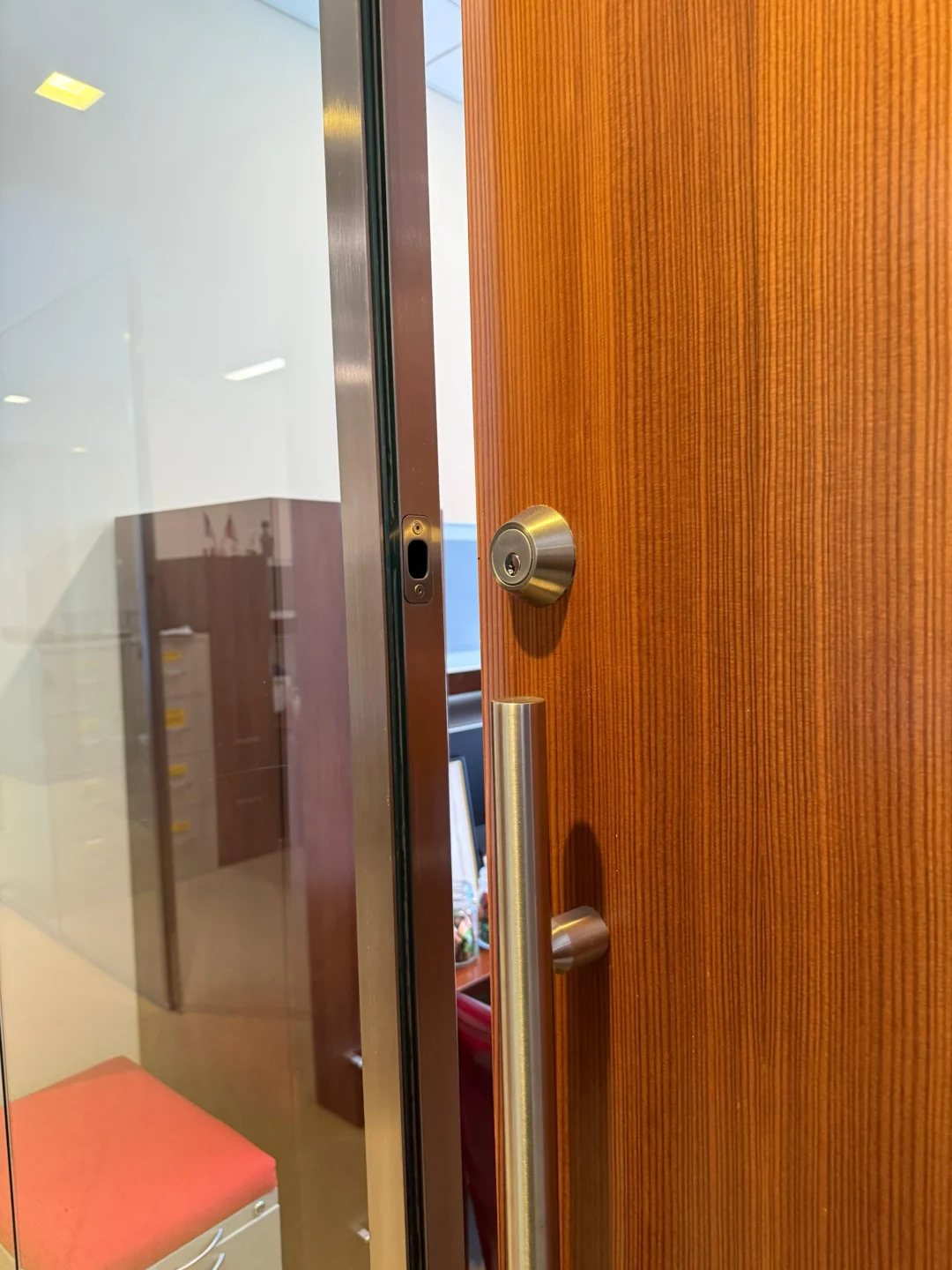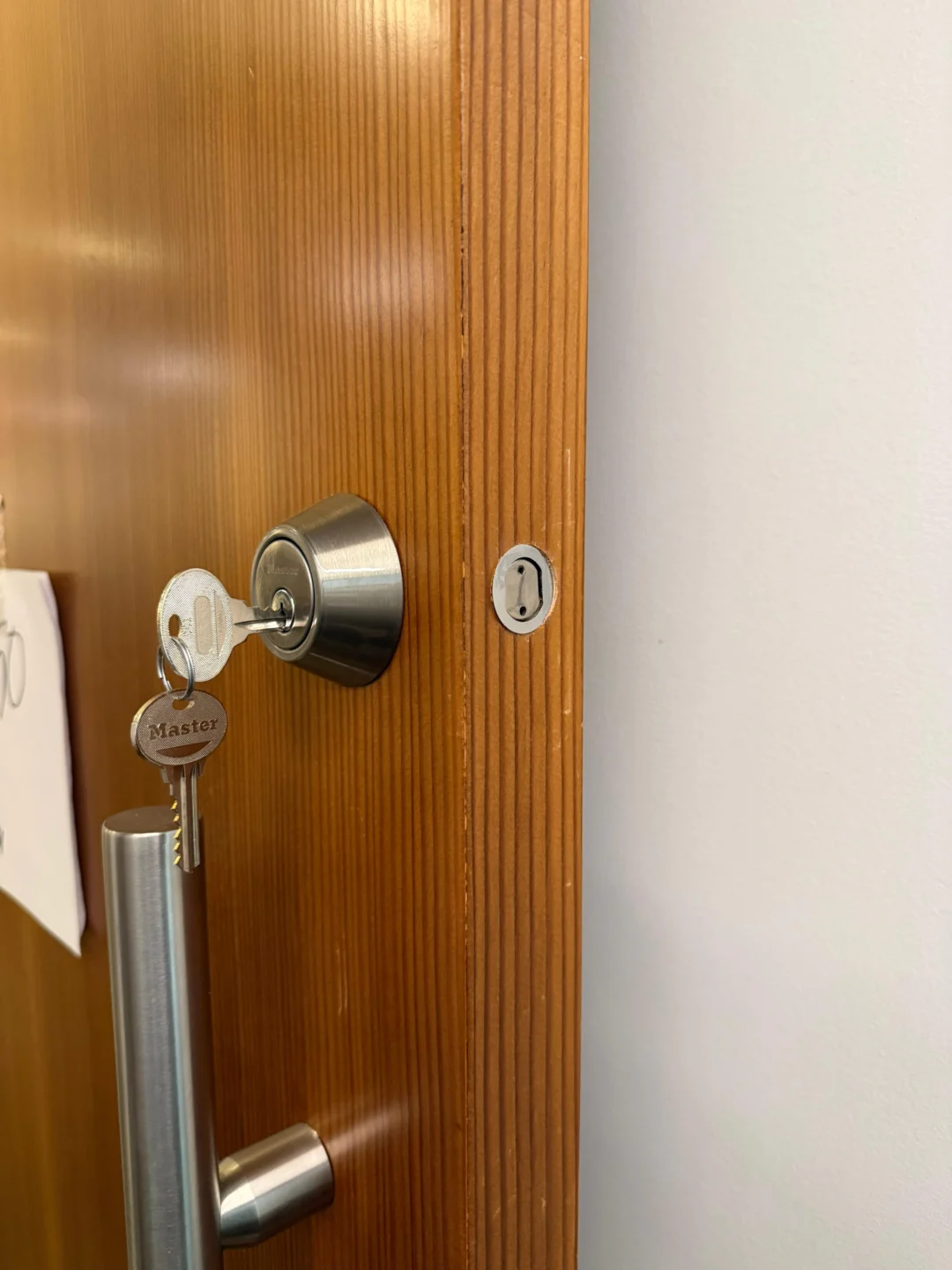
If the keyway is damaged or the keyed portion of a door lock is failing, you may not need to replace the entire lock. Many locks are designed so the cylinder – the component that accepts the key – can be serviced or replaced separately from the bolt, latch, trim, and other door hardware.
But there is an important catch: “lock cylinder” does not describe one universal part. A residential deadbolt cylinder, mortise cylinder, rim cylinder, key-in-knob cylinder, and interchangeable core are different components. They may be retained by screws, clips, threaded housings, control keys, or other mechanisms. Even cylinders that look similar from the front can differ in length, cam design, tailpiece, keyway, and lock compatibility.
Schlage’s current residential support illustrates the problem well. Most of its residential locks have removable cylinders, but its instructions vary by lock family, and Schlage specifically warns that cylinder replacement on the BE365 keypad deadbolt should be performed by a certified locksmith because removing certain screws can void the warranty. Commercial hardware can be even more specific: Allegion’s Falcon documentation shows different mortise-cylinder dimensions depending on the cylinder and lock configuration, while separate documentation lists different cams for different lock functions.
So the first step in cylinder replacement is not grabbing a screwdriver. It is answering one question: what cylinder is actually installed in this door?
First identify the exact cylinder type and compatible replacement. Keep the door open, photograph the existing hardware, and remove only the lock components required to access the cylinder. Release the manufacturer’s retaining screw, clip, control mechanism, or other retainer, then compare the old and new cylinders for dimensions, tailpiece or cam, and mounting design. Install the replacement in the correct orientation, secure its retainer, reassemble the lock, and test every key with the door open before closing and testing the door normally.
First decide: cylinder replacement, rekeying, or full lock replacement?
These three services are often confused, but they solve different problems.
Choose rekeying when the cylinder still works
If the lock turns smoothly and the hardware is in good condition, but you need old keys to stop working, replacing the physical cylinder may be unnecessary. Rekeying changes the key combination inside a compatible cylinder so the previous key no longer operates it. This commonly makes sense after:
- Moving into a property
- Losing a key
- Changing tenants
- A roommate moving out
- Ending contractor access
- Recovering only some copies of a key
Rainbow Locksmith NY offers rekeying services in NYC specifically for situations where the existing lock can remain in place while key access is changed. Our guide to rekeying vs. replacing locks in NYC also explains the difference between changing the keying and replacing the physical hardware. Some lock platforms even have a manufacturer-designed owner-rekey procedure: Kwikset SmartKey, for example, allows compatible locks to be rekeyed using the current working key, SmartKey tool, and new key without replacing the cylinder.
Choose cylinder replacement when the keyed component is the problem
Cylinder-only replacement makes sense when the keyed portion is damaged or when you need a compatible cylinder with different features but want to retain the rest of the lock. Possible reasons include:
- Damaged keyway
- Cylinder physically loose
- Worn keyed mechanism
- Broken cylinder housing
- Required cylinder upgrade
- Existing lock body still works well
- Commercial lock needs a different compatible cylinder
- Key-control system is being changed
Cylinder replacement can preserve the door’s existing latch, deadbolt, lever, trim, or mortise case.
Choose complete lock replacement when more than the cylinder is failing
A new cylinder cannot repair a damaged bolt, broken latch, cracked housing, badly worn trim, or failing lock body. Consider complete lock replacement when you have:
- A broken bolt mechanism
- A loose or damaged lock body
- Severely corroded hardware
- Multiple failing components
- Repeated mechanical problems
- Incompatible obsolete hardware
- Need for a different lock type
Rainbow Locksmith NY’s lock replacement service specifically covers old, worn, and damaged residential lock hardware.
The fastest way to identify your lock cylinder
Do not identify a cylinder by key shape alone. Look at the complete door hardware. Photograph:
- The outside of the lock
- The inside of the lock
- The edge of the door
- Manufacturer markings
- The cylinder face
- The lock body where visible
Schlage’s commercial replacement-parts guidance likewise recommends providing photographs of the inside, outside, and edge of the door when identifying unknown hardware. Now compare your hardware with the common categories below.
Type 1: residential deadbolt cylinder
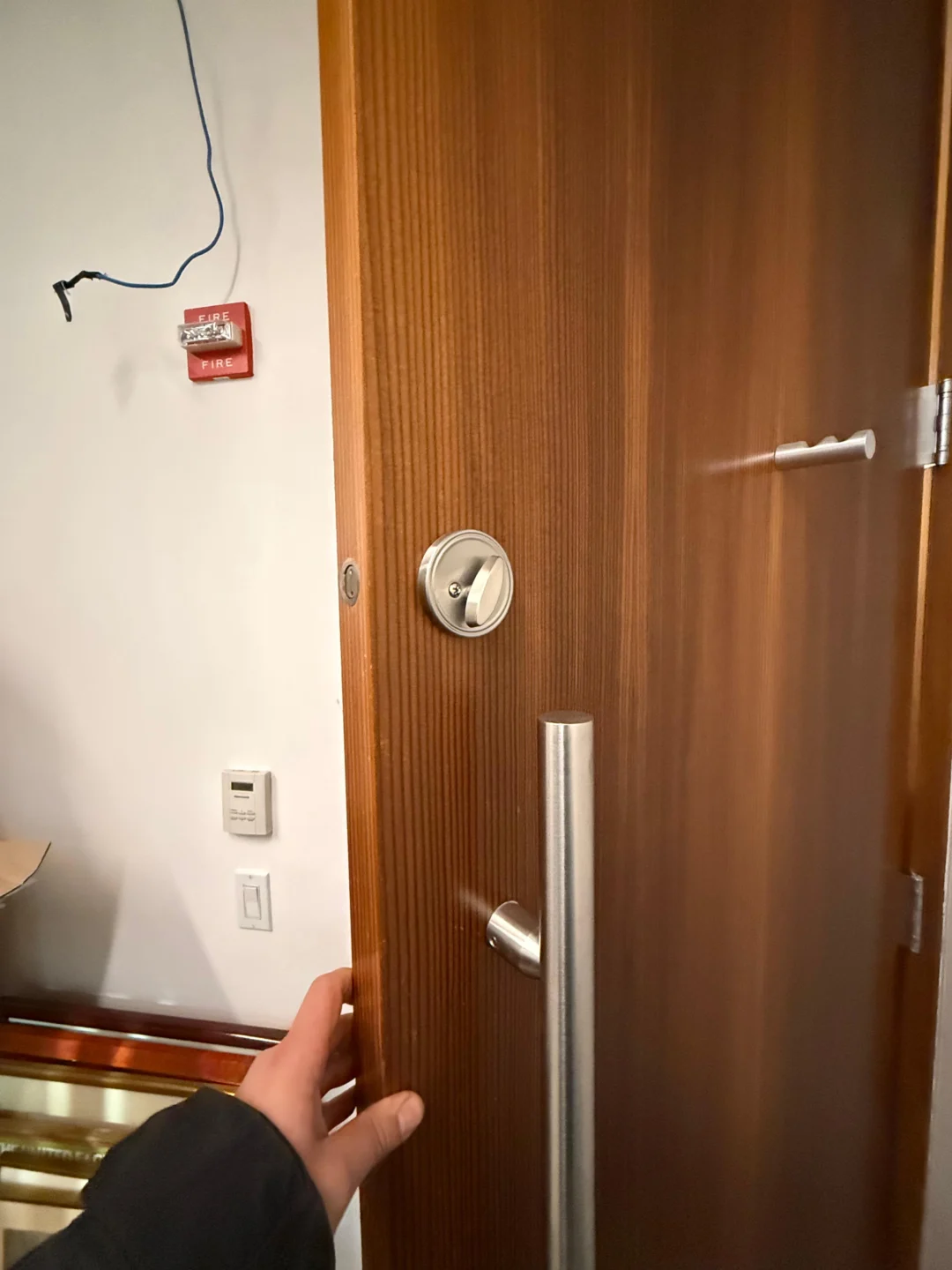
A typical single-cylinder residential deadbolt has a keyed cylinder outside and a thumb turn inside. The cylinder usually sits inside the exterior deadbolt housing. It may look like the cylinder should simply pull out from the front, but that is usually not how it is retained.
For current Schlage B60/B62 mechanical deadbolts, Schlage’s official cylinder-replacement procedure requires accessing the cylinder retaining screw after the lock is removed as needed. Once the retaining screw is removed, the cylinder can be released from the exterior assembly. Kwikset hardware can use a different method: for its 816 deadbolt, Kwikset instructs users to remove the interior and exterior assemblies, remove the cylinder housing mechanism, release a silver retaining clip, and then push the cylinder out through the front. That difference is exactly why a generic instruction such as “pull the cylinder out” is unreliable.
A good DIY candidate
A deadbolt cylinder can be a reasonable DIY replacement when:
- The manufacturer is known
- The lock model is identifiable
- The correct replacement cylinder is available
- The manufacturer provides servicing instructions
- The lock body is otherwise working
- The door can remain open throughout the repair
Stop before disassembly when the manufacturer says so
Do not assume every removable-looking cylinder should be opened. Schlage specifically states that a BE365 cylinder swap or replacement should be performed by a certified locksmith and warns that removing its torque screws otherwise voids the residential warranty policy. Model-specific instructions matter.
Type 2: mortise cylinder
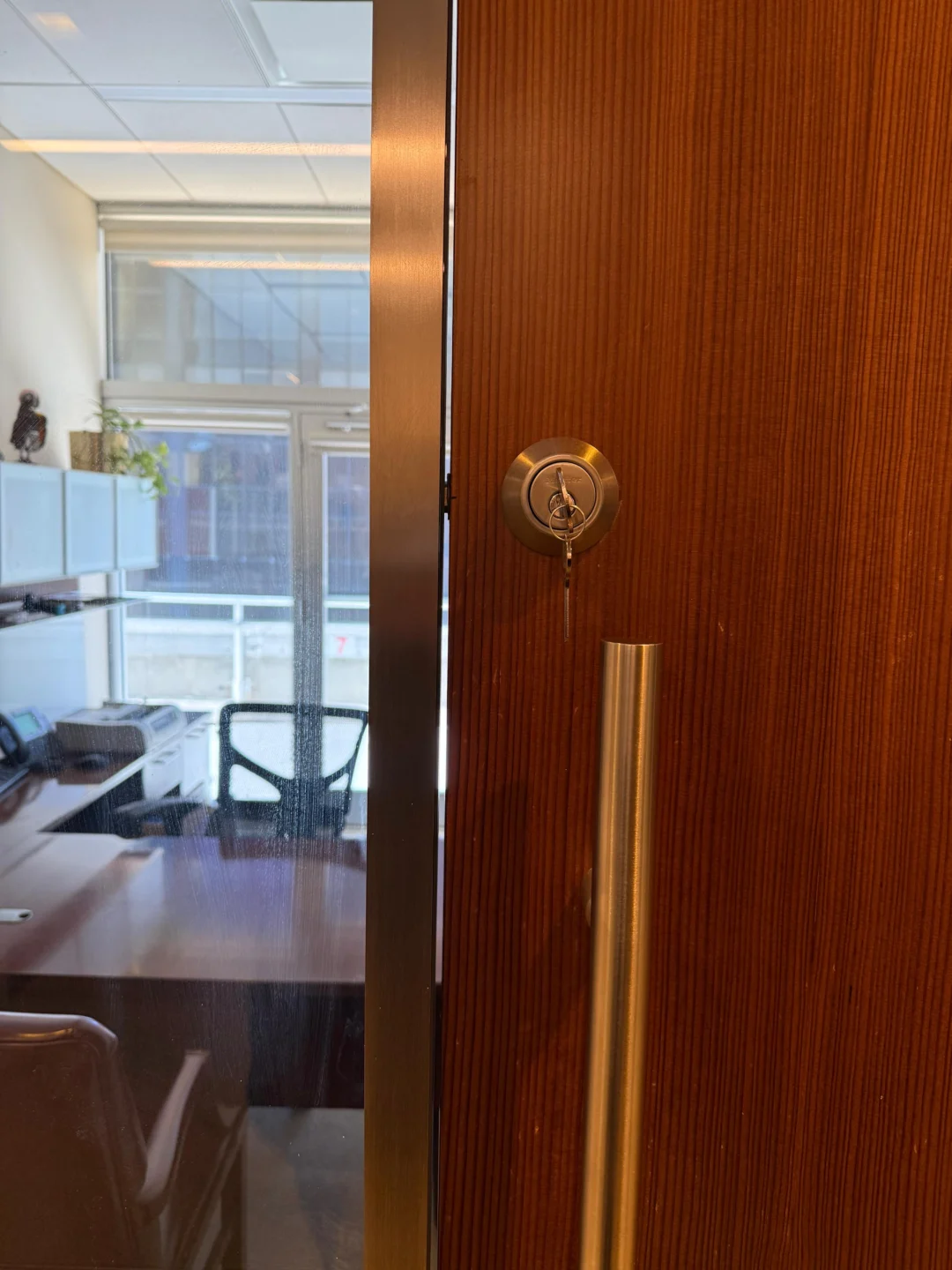
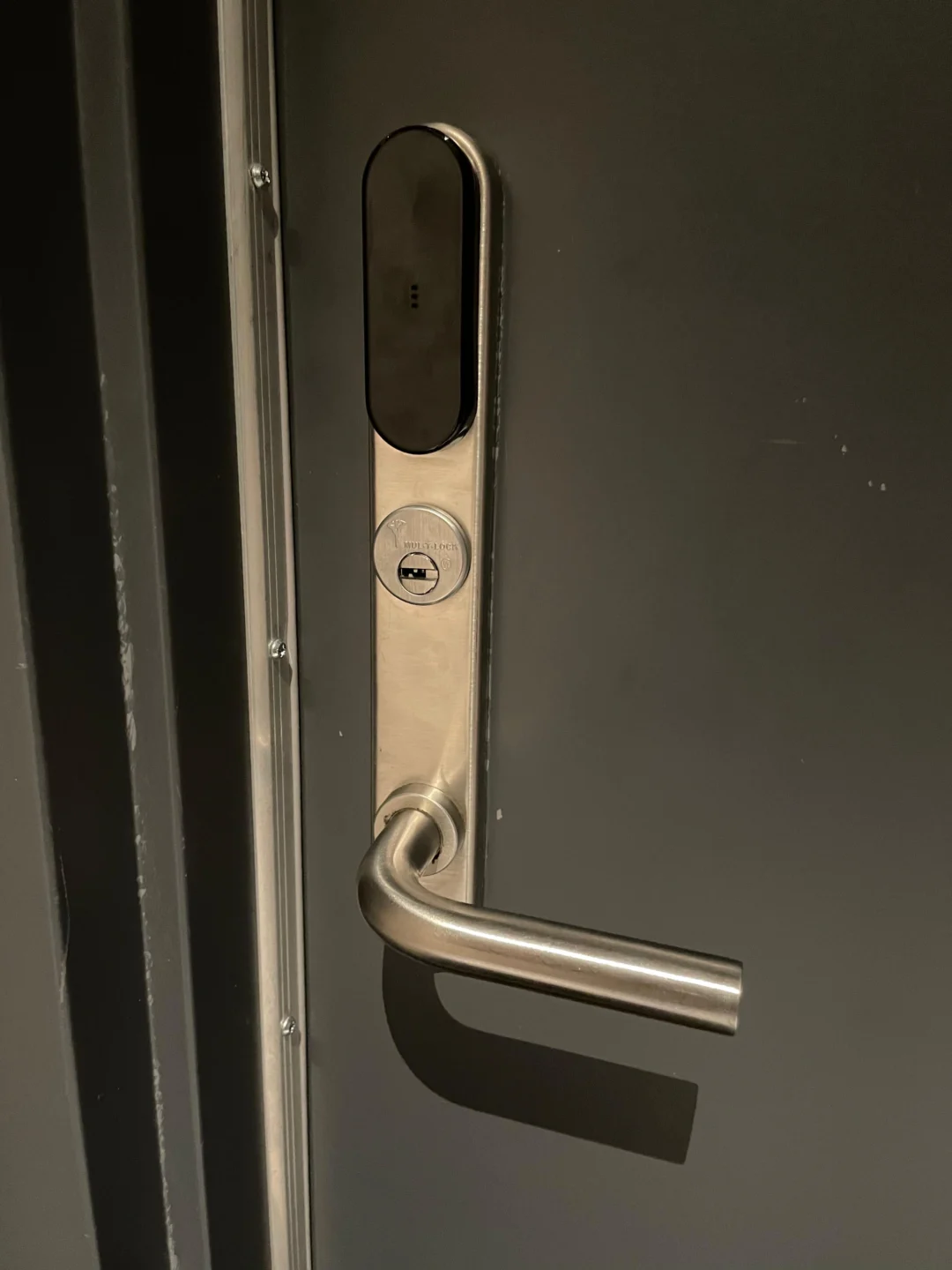
Mortise cylinders are common on commercial locks and are also found on many older and specialty NYC doors. From the front, a mortise cylinder often looks like a round keyed cylinder mounted in the door trim. Behind the visible face, however, the cylinder has a threaded body that interfaces with a mortise lock case, typically through a rear cam.
The two specifications that frequently determine compatibility are cylinder length and cam configuration. Allegion documentation demonstrates why neither should be guessed: Falcon MA mortise-lock cylinder dimensions vary depending on cylinder type, with documented configurations including 1-1/8-inch, 1-3/8-inch, and other dimensions. Allegion also lists different cams for various Falcon and other lock applications, including specific cam configurations for Adams Rite, Schlage, Sargent, Yale, Corbin Russwin, and other hardware. Two mortise cylinders can therefore look almost identical from the hallway and still be mechanically incompatible.
Do not buy a mortise cylinder from appearance alone
Before ordering, identify:
- Lock manufacturer
- Lock model if possible
- Existing cylinder length
- Cam type
- Keyway
- Trim thickness
- Required cylinder function
If the old cylinder can be removed safely, keeping it available for comparison is often far more useful than relying on a photograph of the keyway.
Type 3: rim cylinder
A rim cylinder is another round cylinder commonly used with surface-mounted or commercial hardware. Unlike a threaded mortise cylinder, a rim cylinder typically passes through the door and connects to the lock through a tailpiece. Mortise and rim cylinders can look similar from the exterior, so do not order one until you determine how the existing cylinder attaches behind the door.
In commercial systems, cylinder selection can depend on the exact trim and device. Allegion’s documentation for Von Duprin hardware, for example, distinguishes among mortise, rim, and key-in-lock cylinders according to device series, trim model, and function. That is another reason to identify the full lock rather than only the visible cylinder.
Type 4: key-in-knob or key-in-lever cylinder
Some keyed knobs and levers contain a removable cylinder inside the exterior handle. These do not necessarily use the same servicing procedure as a deadbolt. Kwikset currently lists a dedicated Cylinder Removal Tool among its official lock parts and accessories, demonstrating that compatible knob or lever cylinders may use a manufacturer-specific removal method rather than simple prying or pulling.
If you cannot identify the release method, find the exact manufacturer’s documentation before forcing anything. A screwdriver used as a pry bar can damage:
- The decorative finish
- Retaining components
- The knob housing
- The cylinder shell
- The door surface
Type 5: interchangeable core
An interchangeable core is a different concept again. Rather than disassembling the lock housing, the removable core is specifically designed to be changed using an authorized control key. Falcon’s current interchangeable-core documentation explains that the control key releases the core so it can be removed and replaced without removing the entire lockset. This is common in commercial and institutional key-control systems.
If you see interchangeable-core hardware in an office, managed building, or commercial property, do not treat it like a standard residential cylinder. The core may belong to:
- A master-key system
- A restricted key system
- A building access hierarchy
- A managed key-control program
Rainbow Locksmith NY’s high-security lock systems service covers restricted key systems, master-key arrangements, and other controlled-access hardware.
What to record before ordering a replacement cylinder
Once you know the cylinder category, record the specifications that matter for that design. Depending on the lock, these may include:
- Manufacturer
- Lock model
- Cylinder type
- Cylinder length
- Tailpiece style
- Cam configuration
- Keyway
- Finish
- Number of pins
- Retention method
- Existing master-key relationship
Not every cylinder needs every measurement. The important point is to use the specifications required by that lock, rather than assuming all keyed cylinders use one standard.
Whether you are replacing a residential deadbolt cylinder or servicing commercial hardware, keep the door open while the lock is apart. This gives you access to both sides of the hardware and prevents a simple servicing error from becoming a lockout. Kwikset’s own SmartKey procedure begins by telling users to make sure the door is open and cannot close unexpectedly. Complete all initial tests before closing the door.
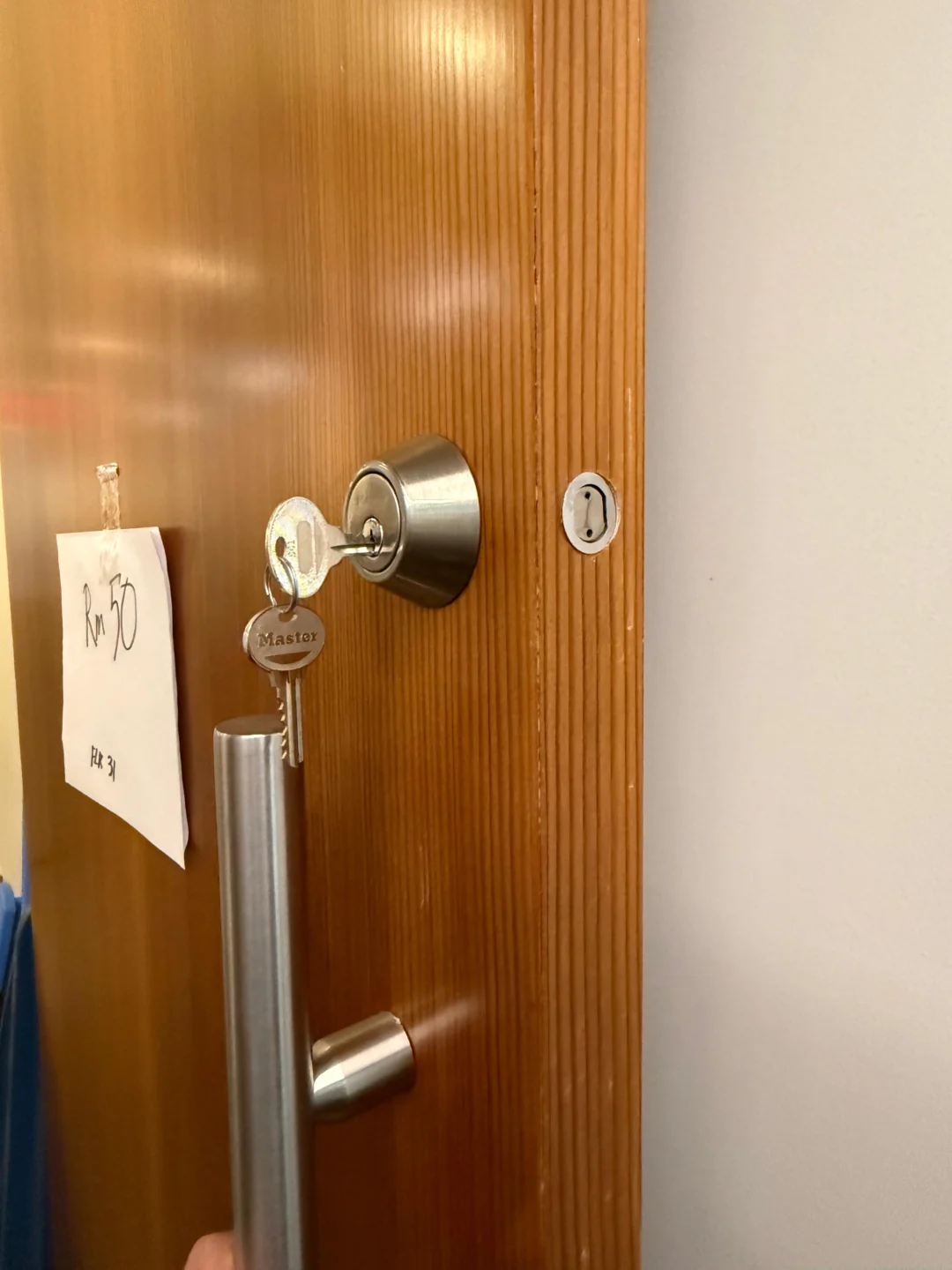
Deadbolt cylinder replacement: a safe general workflow
The exact procedure must follow the instructions for your lock, but the sequence below shows how a typical serviceable residential deadbolt cylinder replacement should be approached.
Document the existing assembly
Before removing screws, take clear photographs of the interior and exterior deadbolt, and photograph the door edge as well. This gives you a reference if the trim rotates unexpectedly, the tailpiece orientation becomes unclear, screws differ in length, the replacement cylinder does not fit, or the original lock needs to be restored.
Remove the lock assembly as required
Most conventional deadbolts are accessed from the interior side. Support the exterior portion while loosening the interior mounting screws. Remove only the components required by the manufacturer’s cylinder procedure. Do not automatically remove the bolt from the door edge if the cylinder can be serviced without doing so.
Find the actual cylinder retainer
This is where product-specific instructions matter. Depending on the design, the cylinder may be retained with a dedicated retaining screw, a retaining clip, a cylinder housing, or another proprietary mechanism. Schlage B60/B62 cylinders use a retaining screw according to Schlage’s current replacement instructions; Kwikset’s 816 procedure uses a cylinder housing and silver retaining clip. Do not assume one method applies to the other.
Compare the original and replacement cylinders
Place the two components beside each other before installing the new one. Compare:
- Body dimensions
- Driver bar or tailpiece
- Retaining points
- Front profile
- Orientation
- Keyway position
Schlage’s current instructions even note that a replacement cylinder that is shorter than the original may prevent the retaining screw from securing it properly on some mechanical deadbolts. “Close enough” is not a good cylinder specification.
Install the new cylinder in the correct orientation
Place the replacement into the exterior housing according to the manufacturer’s procedure, paying attention to the rear driver or tailpiece orientation. On certain Schlage motorized deadbolts, for example, Schlage specifies a particular driver-bar orientation before the lock is reinstalled. If the cylinder does not seat naturally, remove it and find the reason. Do not pull an incompatible cylinder into place with the retaining screw.
Secure the retainer and reassemble
Reinstall the designated clip or screw. The cylinder should remain stable without excessive movement: it should not pull out, rotate freely in its housing, rattle significantly, or sit noticeably crooked. If it does, stop before reinstalling the complete lock. Then reinstall the exterior and interior hardware, starting the mounting screws carefully and tightening them evenly so the cylinder stays aligned.
Test with the door open
Test the exterior key, the interior thumb turn, full bolt extension, and full bolt retraction. The key should operate the bolt smoothly. If the key turns but the deadbolt does not move, the rear driver or tailpiece may not be engaging correctly.
Test every supplied key
Do not assume all copies work because the first key does. Each key should insert fully, turn smoothly, operate the lock completely, and withdraw normally. Only after all open-door tests pass should the door be closed.
Mortise cylinder replacement requires a different mindset
A mortise cylinder should not be serviced using the deadbolt instructions above. The cylinder interacts directly with a larger mortise lock case, and compatibility often depends on the exact cylinder and cam. Allegion’s current documentation shows numerous cam options for different lock applications – which is why a mortise cylinder that threads into the hole perfectly can still fail to operate the lock correctly.
Match the existing cylinder before removing it for long
If the door is an exterior entrance, remember that removing the cylinder may temporarily leave the door unable to be secured normally. Have the correct replacement available before beginning.
Check cylinder projection
Cylinder length affects how the lock fits relative to the trim. Allegion offers multiple mortise-cylinder lengths depending on the hardware configuration. Do not assume adding washers, random collars, or extra spacers is an acceptable substitute for ordering the appropriate cylinder configuration.
Match the cam
The rear cam is what interfaces with the mortise lock. An incorrect cam may fail to move the lock, move the wrong component, prevent complete key rotation, or interfere internally with the lock case. The cam must match the application.
Do not confuse a cylinder problem with a door-alignment problem
One of the easiest ways to waste money is replacing a perfectly good cylinder because the key feels hard to turn. Test the lock while the door is open. If the key and bolt operate smoothly while the door is open but become difficult when the door is closed, the cylinder may be fine. The real issue may involve strike alignment, door sag, loose hinges, frame movement, or weatherstripping pressure. Cylinder replacement will not correct the physical position of the door.
Key goes in but will not turn
Do not immediately assume the cylinder needs replacement. Possible causes include a worn key, a damaged key, an incorrect key, debris in the keyway, cylinder wear, an internal lock problem, or a bolt under pressure from the strike. Try a known-good key if one is available and compare operation with the door open and closed. If multiple good keys behave the same way even with the door open, cylinder or lock servicing becomes more likely.
Key turns but the lock does not unlock
This symptom is particularly useful. If the key rotates but the bolt or latch does not respond, the cylinder may no longer be properly connected to the lock mechanism. Possible causes include a broken tailpiece, an incorrect replacement tailpiece, the wrong mortise cam, a cam not engaging the lock, a damaged actuator, or internal lock-body failure. Replacing the cylinder is only the correct repair if the failure is actually in the cylinder or its interface.
The entire cylinder spins in the door
A cylinder should not freely rotate as a complete unit. If the whole cylinder body moves rather than the key plug operating normally, inspect the retention system. Depending on the lock, this could involve a loose retaining screw, a missing clip, an improperly installed cylinder, a damaged housing, an incorrect mortise-cylinder installation, or a failed lock component. Stop using the door as though nothing is wrong – a loose cylinder can become a larger lock failure.
New cylinder fits but the key will not operate the lock
A cylinder fitting the opening does not prove functional compatibility. Check the rear connection. On a mortise cylinder, the cam may be wrong. On another lock, the tailpiece may be the wrong length or shape. On a deadbolt, the driver may have been installed in the wrong orientation. This is why visual exterior matching is only the beginning.
Should you change the cylinder after losing a key?
Usually, the goal after losing a key is to ensure the missing key can no longer open the door. If the existing lock is healthy, that goal may be achieved through rekeying without physical cylinder replacement – our rekey vs. replace guidance specifically distinguishes key-control problems from hardware failures. Cylinder replacement becomes more relevant when the existing component is also damaged, unsuitable, or due for an upgrade.
Should you change the cylinder after moving?
Again, separate access control from hardware condition. If the lock itself is reliable but you do not know who has old keys, rekeying can invalidate those old keys while preserving the hardware. If the cylinder is worn, damaged, low quality, or incompatible with the keying system you want, replacement can be reasonable. Do not replace perfectly serviceable hardware simply because “new home equals new lock” without first identifying what outcome you need.
NYC apartment cylinder replacement
Apartment entrances require a little more caution. NYC HPD states that when a tenant changes the locks, the law requires the tenant to provide the landlord with copies of the keys. HPD also states that tenants in multiple dwellings have the right to install and maintain their own entrance locks while preserving the owner’s requested duplicate-key access.
So before changing an apartment cylinder, consider whether it is independently keyed residential hardware, part of a building master-key system, a high-security restricted cylinder, a mortise lock, or a specialty apartment entrance lock. If the existing cylinder participates in a building-wide key system, an independently purchased replacement may prevent authorized building access or remove existing master-key functionality. Our guide to NYC lock laws for tenants is a useful resource before changing apartment entrance hardware.
Master-keyed and restricted cylinders are different
A commercial or managed-building cylinder may be intentionally keyed within a larger hierarchy. Falcon describes multi-level master keying and restricted keyways as part of formal building key-control systems. Replacing one cylinder with an ordinary off-the-shelf cylinder might make that particular door work with its new key while destroying its relationship with the building’s master key.
If you see restricted key markings, an interchangeable core, a building-issued key, a master-key system, or a high-security cylinder, confirm the keying requirements before replacing anything. Rainbow Locksmith NY’s high-security lock systems service covers restricted-key and master-key arrangements.
When a smart lock upgrade makes more sense
If the cylinder is working and your real goal is keyless access, replacing the cylinder with another ordinary keyed cylinder may not address what you actually want. Rainbow Locksmith NY provides smart lock installation and setup as part of its residential service offering. A smart-lock upgrade may make sense when you want keypad access, app control, temporary access, automatic locking, or remote management. But the existing door and locking mechanism should work mechanically before electronics are added.
When cylinder replacement is not a good DIY job
Cylinder-only service is most DIY-friendly when the lock is clearly identified and the manufacturer provides a straightforward replacement procedure. Professional help makes more sense when:
- The lock manufacturer cannot be identified
- Mortise cylinder dimensions are uncertain
- The cam type is unknown
- The cylinder belongs to a master-key system
- A high-security cylinder is installed
- An interchangeable core is controlled by management
- The key turns but the internal lock does not respond
- The cylinder will not release normally
- The lock is part of commercial exit hardware
- The apartment entrance uses specialty hardware
- The manufacturer specifically restricts servicing
- The door cannot currently be secured
For urgent failures that leave the entrance unusable or unsecured, Rainbow Locksmith NY provides 24/7 emergency locksmith services. We also offer broader residential locksmith services for planned cylinder, rekeying, installation, and replacement work.
Cylinder replacement mistakes to avoid
The biggest DIY mistakes happen before installation begins. Avoid:
- Ordering by keyway appearance alone
- Assuming cylinders are universal
- Confusing mortise and rim cylinders
- Ignoring mortise-cylinder length
- Ignoring cam configuration
- Forcing a cylinder out before finding its retainer
- Losing a retaining clip
- Using an incorrect tailpiece
- Closing the door before testing
- Breaking a building master-key relationship
- Replacing a cylinder when rekeying would solve the problem
- Replacing a cylinder when the actual problem is door alignment
- Disassembling hardware the manufacturer says should be professionally serviced
Final test: is the replacement actually correct?
A cylinder replacement is successful only when the complete lock still works properly. Check the following with the door open first:
- The cylinder sits securely.
- The key inserts normally.
- Every new key works.
- The key rotates smoothly.
- The bolt or latch moves through its full travel.
- The interior thumb turn or lever still operates.
- The cylinder does not spin in the housing.
- The cylinder cannot be pulled out.
- The lock returns to its normal position after use.
Then close the door and test again. The lock should not suddenly become difficult because the bolt is binding against the frame. A successful cylinder replacement should feel almost boring: insert the key, turn it, the lock operates, remove the key. That is exactly what you want.
Professional lock cylinder service in NYC
Cylinder replacement is one of those locksmith projects where a small amount of identification work can prevent a large amount of unnecessary disassembly. The exterior keyway alone does not tell you enough. A correct replacement needs to match the existing lock’s cylinder type, dimensions, rear interface, retention system, keying requirements, and intended function.
Rainbow Locksmith NY provides rekeying services, lock replacement, residential locksmith services, and high-security lock systems throughout New York City, with hands-on experience in prewar mortise locks and high-security cylinders. If you can identify the exact residential cylinder and have the manufacturer’s replacement instructions, this can be a reasonable DIY repair. If you are dealing with a mortise cylinder, high-security system, interchangeable core, building master key, or an unknown older NYC lock, identifying the hardware correctly before removing it is often the most important part of the job.
Frequently asked questions
Can I replace just the cylinder in a door lock?
Yes, many locks have separately serviceable cylinders. However, the removal method and compatible replacement depend on the exact lock design. Schlage, for example, currently provides specific cylinder-replacement instructions for several residential deadbolts.
Is replacing a cylinder the same as rekeying?
No. Rekeying changes which key operates an existing compatible cylinder. Cylinder replacement physically removes the cylinder and installs another one. If the existing hardware is healthy and you only need old keys disabled, rekeying services may be more appropriate.
Can I replace a deadbolt cylinder without replacing the whole deadbolt?
Often yes, when the manufacturer designed the cylinder to be serviced separately. Schlage currently provides cylinder-replacement procedures for its B60 and B62 mechanical deadbolts, among others.
Are deadbolt cylinders universal?
No. Different brands and lock families can use different dimensions, retainers, tailpieces, keyways, and servicing procedures.
Are mortise cylinders universal?
No. Mortise-cylinder length and cam configuration can vary. Allegion’s Falcon documentation lists different dimensions and numerous cam configurations for different lock applications.
Why does my new mortise cylinder fit but not work?
The rear cam may be incompatible with the mortise-lock function even if the cylinder threads into the opening correctly.
Why does my whole lock cylinder spin?
The cylinder’s retaining system may be loose, missing, damaged, or incorrectly installed. Stop and inspect the mounting rather than continuing to use it.
Why does the key turn but the door stay locked?
The cylinder may not be engaging the actuator, tailpiece, cam, or internal lock mechanism correctly. This can also indicate a lock-body problem rather than a cylinder problem.
Can I replace a cylinder in a keyed door knob?
Some knob and lever cylinders are removable, but procedures vary. Kwikset currently supplies a dedicated cylinder-removal tool for compatible products, illustrating why manufacturer-specific instructions matter.
What is an interchangeable core?
An interchangeable core is designed to be removed from compatible hardware using a control key. Falcon’s official documentation explains that the control key releases the core without requiring the complete lockset to be removed.
Should I replace my cylinder after losing a key?
Not automatically. If the cylinder is functioning properly, rekeying may be sufficient to prevent the lost key from working.
Can an NYC tenant replace an apartment lock cylinder?
NYC HPD states that tenants may maintain their own entrance locks, but if the tenant changes the locks, the landlord must be provided copies of the keys. Building and lease requirements should also be considered, especially when a master-key system is involved.
Get help from Rainbow Locksmith NY
Not sure which cylinder your door actually uses? Rainbow Locksmith NY identifies, replaces, and rekeys cylinders across NYC – residential deadbolts, prewar mortise hardware, high-security systems, and commercial cores included.
Rainbow Locksmith NY | 338 E 65th St, New York, NY 10065 | Licensed and insured | NYC DCWP License. Lock designs and servicing procedures change; follow your exact manufacturer’s instructions and confirm compatibility before disassembly.