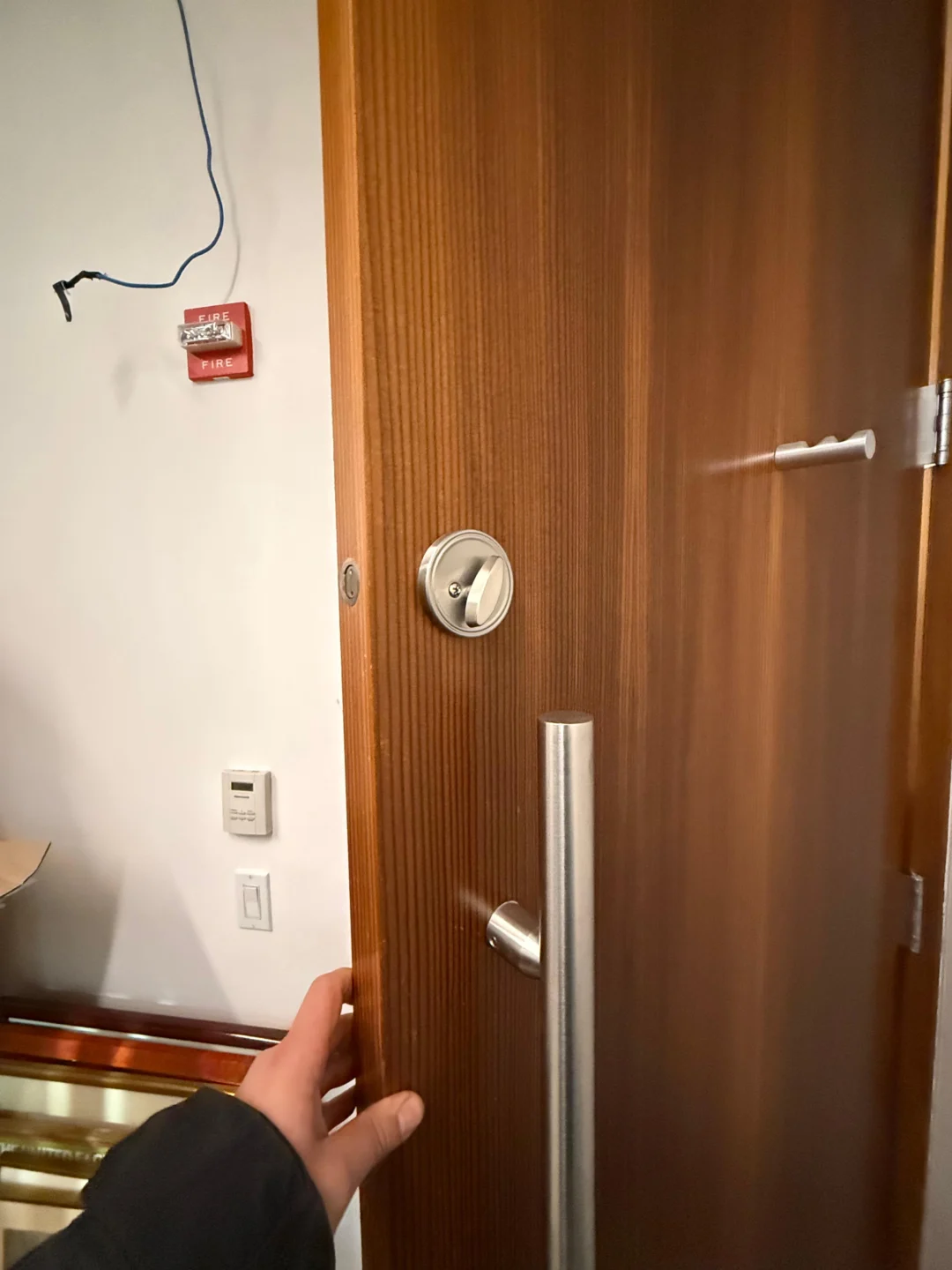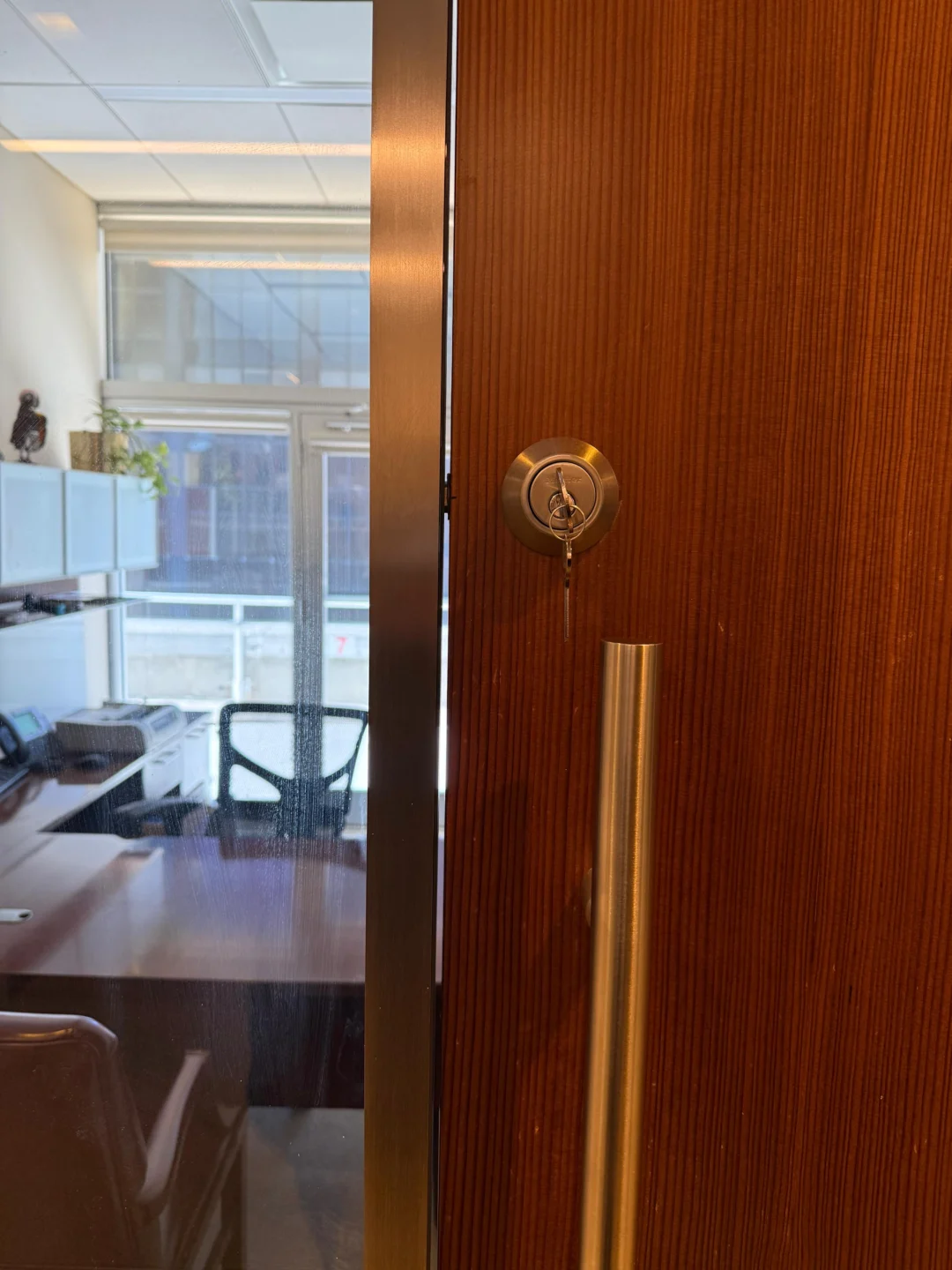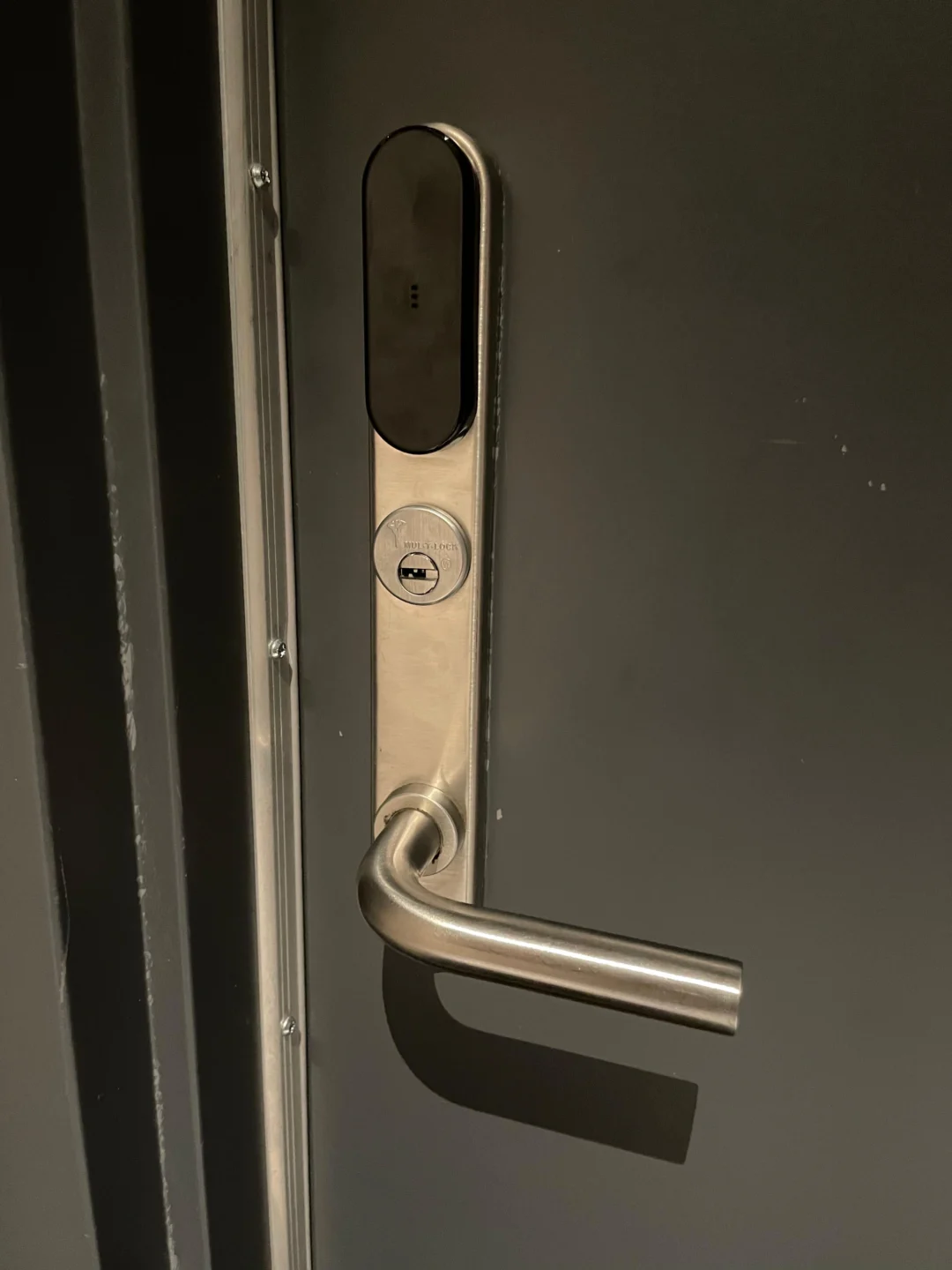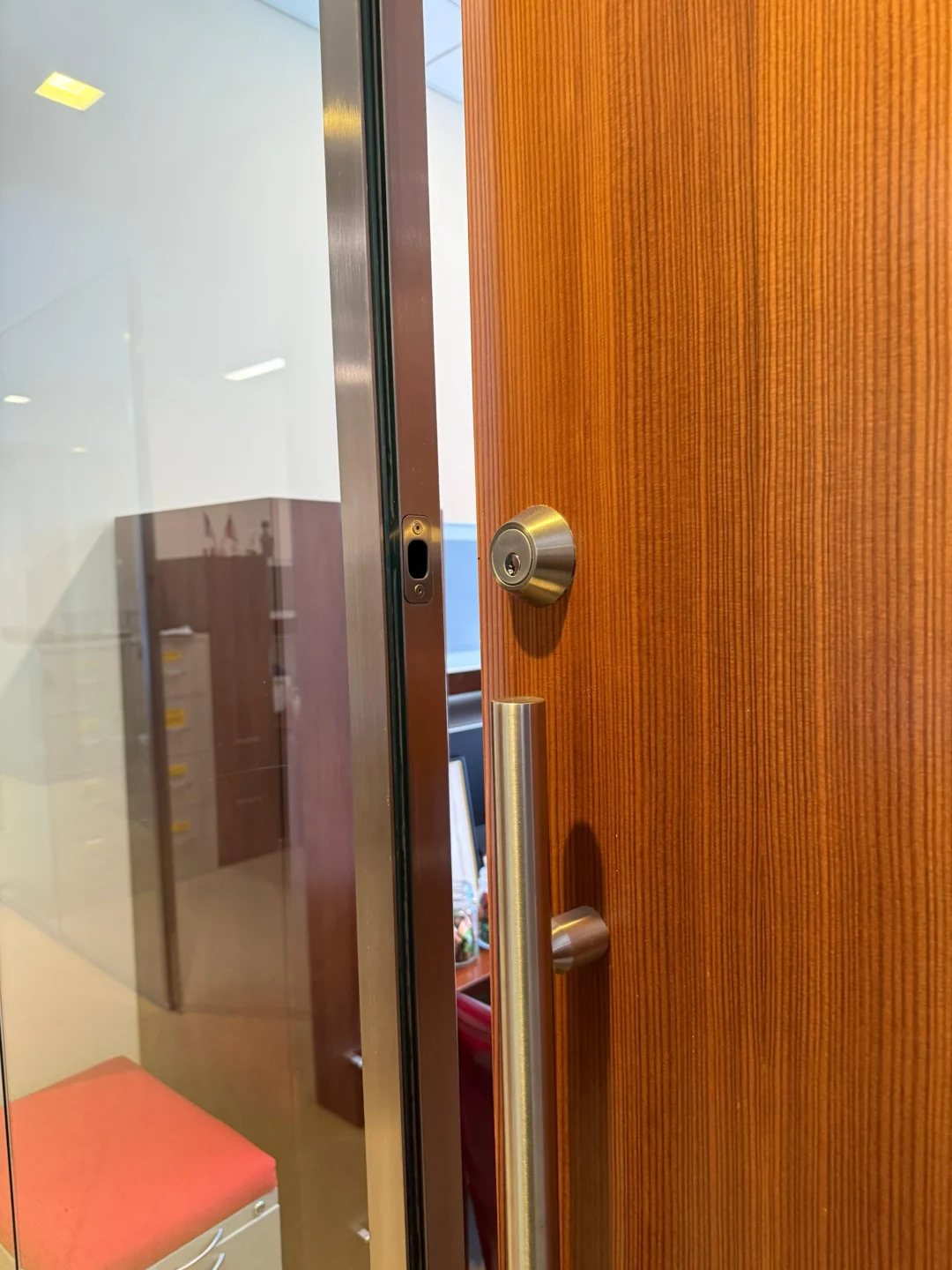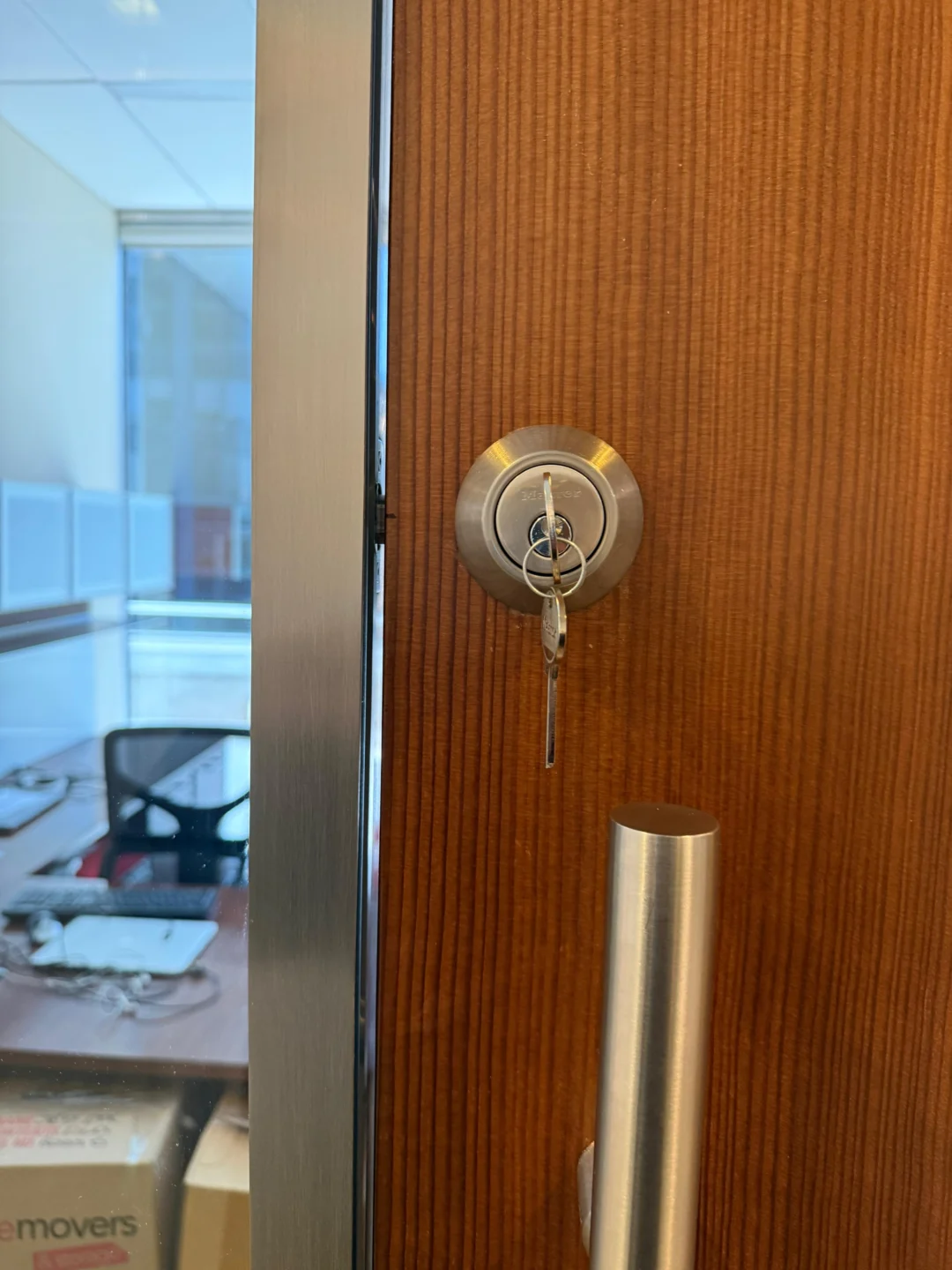
A key that will not turn usually points toward the keyway or cylinder. A key that does turn but the door still will not open is a different problem.
The cylinder may be rotating without properly operating the bolt. The deadbolt may have retracted while the latch remains stuck. The lock may be working but the door is binding against the frame. A mortise-lock cam or another internal connection may have failed. On an electronic deadbolt, a clutch or mechanical connection can also prevent normal operation even though part of the lock appears to respond. That is why the amount and type of movement you feel in the key matters.
Manufacturer troubleshooting reflects the same principle. Allegion notes that a cylinder that spins without locking or unlocking can result from a missing or disconnected tailpiece in certain lock systems, while Kwikset documents strike misalignment, torque-blade tension, clutch problems, and mechanical binding as separate causes of locks that appear to operate but fail to move the bolt normally. The best first step is therefore not to twist the key harder – it is to determine what is moving and what is not. If the door is your only usable entrance and the lock has already failed, Rainbow Locksmith NY provides emergency home lockout service and 24/7 emergency lock repairs throughout New York City.
If the key turns but the door does not open, the cylinder may no longer be engaging the bolt or latch, the deadbolt may be binding against the strike, the spring latch may remain stuck, or an internal lock component may have failed. If the key turns much more freely than normal, a tailpiece, cam, or actuator may be disconnected. If the lock becomes difficult only when the door is closed, door or strike alignment is more likely. Avoid forcing the key; identify which part of the lock is actually moving before replacing hardware.
Start with the exact symptom
“Key turns but door won’t open” can describe several completely different failures. Before trying anything else, determine which description most closely matches what your lock is doing.
Symptom 1: the key turns normally, but the deadbolt does not move
You insert the correct key, rotate it through what feels like the normal unlocking motion, but the deadbolt remains extended. This usually suggests that the cylinder is no longer transferring its rotation correctly to the locking mechanism. Depending on the lock design, the connection between the cylinder and lock may involve a tailpiece, driver bar, cam, torque blade, or other internal actuator. Allegion specifically documents cases where a cylinder can spin without locking or unlocking because a required tailpiece is missing or disconnected. This is different from a dirty keyway: the key and cylinder may be rotating, but the motion is not reaching the part of the lock that actually retracts the bolt.
Symptom 2: the key spins much more freely than it used to
Pay attention to the amount of resistance. A normal lock usually has a predictable operating range – you feel the cylinder engage the mechanism as the key rotates. If the key suddenly turns unusually freely, rotates farther than normal, or seems to spin without producing any mechanical response, the cylinder may no longer be engaging the lock correctly. Possible faults include a disconnected tailpiece, broken actuator, incorrect or failed cam, loose cylinder, failed internal component, or damaged lock body. Do not keep rotating the key repeatedly – continued operation will not reconnect a broken mechanical interface.
Symptom 3: you hear or feel the deadbolt retract, but the door still will not open
If you can clearly feel the deadbolt retract, another component may still be holding the door closed: a spring latch still engaged, a latch mechanism not retracting, a door binding tightly against the frame, door sag, weatherstripping pressure, swollen wood, or a secondary lock still engaged. A common entrance door may have both a deadbolt and a separate latch operated by the knob or lever – unlocking one does not automatically retract the other.
Symptom 4: the key works only when you push or pull the door
This strongly suggests alignment or pressure rather than a cylinder that has completely failed. Kwikset’s official troubleshooting uses essentially this diagnostic test: if a lock operates correctly with the door open but the user has to push, pull, or lift the door when it is closed, the latch or deadbolt and strike are not properly aligned. Possible causes include loose hinges, door sag, frame movement, weatherstripping pressure, a misaligned strike, a warped door, or the bolt rubbing against the strike. The key is encountering resistance because the bolt is mechanically loaded by the frame – that should not be treated the same way as a broken cylinder.
Symptom 5: the key unlocks, but the handle does nothing
If the key appears to unlock the door but turning the knob or lever does not retract the latch, the latch or handle mechanism may be failing separately from the cylinder. Allegion’s Schlage troubleshooting for a latch that will not retract identifies strike misalignment, loose hardware, and worn latch or lever components among the conditions that should be checked. A working keyed cylinder cannot compensate for a broken latch mechanism.
When a door will not open, people naturally increase force – and that is often when one problem becomes two. If the key is already rotating, applying dramatically more torque can damage the key, cylinder, tailpiece, cam, or internal lock parts. Stop if you notice the key visibly flexing, grinding, sudden loose rotation, sharp clicking that was not present before, the cylinder moving in the trim, or the key becoming difficult to withdraw. If the key breaks inside the cylinder, access becomes more complicated.
A safe 60-second diagnosis before you call anyone
You do not need to dismantle the lock to gather useful information. Observe five things.
- How far does the key turn? Does it stop at the normal position, rotate farther than usual, or spin freely? The answer helps distinguish a loaded bolt from a disconnected internal mechanism.
- Do you feel the bolt moving? A normal deadbolt produces a noticeable mechanical movement as the bolt retracts. If the key rotates without that familiar movement, the cylinder may not be driving the bolt.
- Does gentle door pressure change anything? Without forcing the door, apply only light pressure in the direction the door naturally closes and then lightly in the opposite direction while testing the lock. If the resistance changes significantly, frame or strike alignment is likely involved. Use this only as a diagnostic test, not as an instruction to force a jammed door.
- Does the handle retract the latch? If the deadbolt appears unlocked but the door stays shut, operate the knob or lever normally. Does it feel normal, loose, floppy, stiff, or disconnected? That tells you whether the spring latch may be the remaining problem.
- Is another lock still engaged? NYC apartment doors can have more than one locking device. Our guide to types of apartment locks in NYC identifies deadbolts, mortise locks, jimmy-proof locks, key-in-knob hardware, smart locks, and high-security systems among the hardware found on local apartment doors. Make sure the problem is actually the lock you are testing.
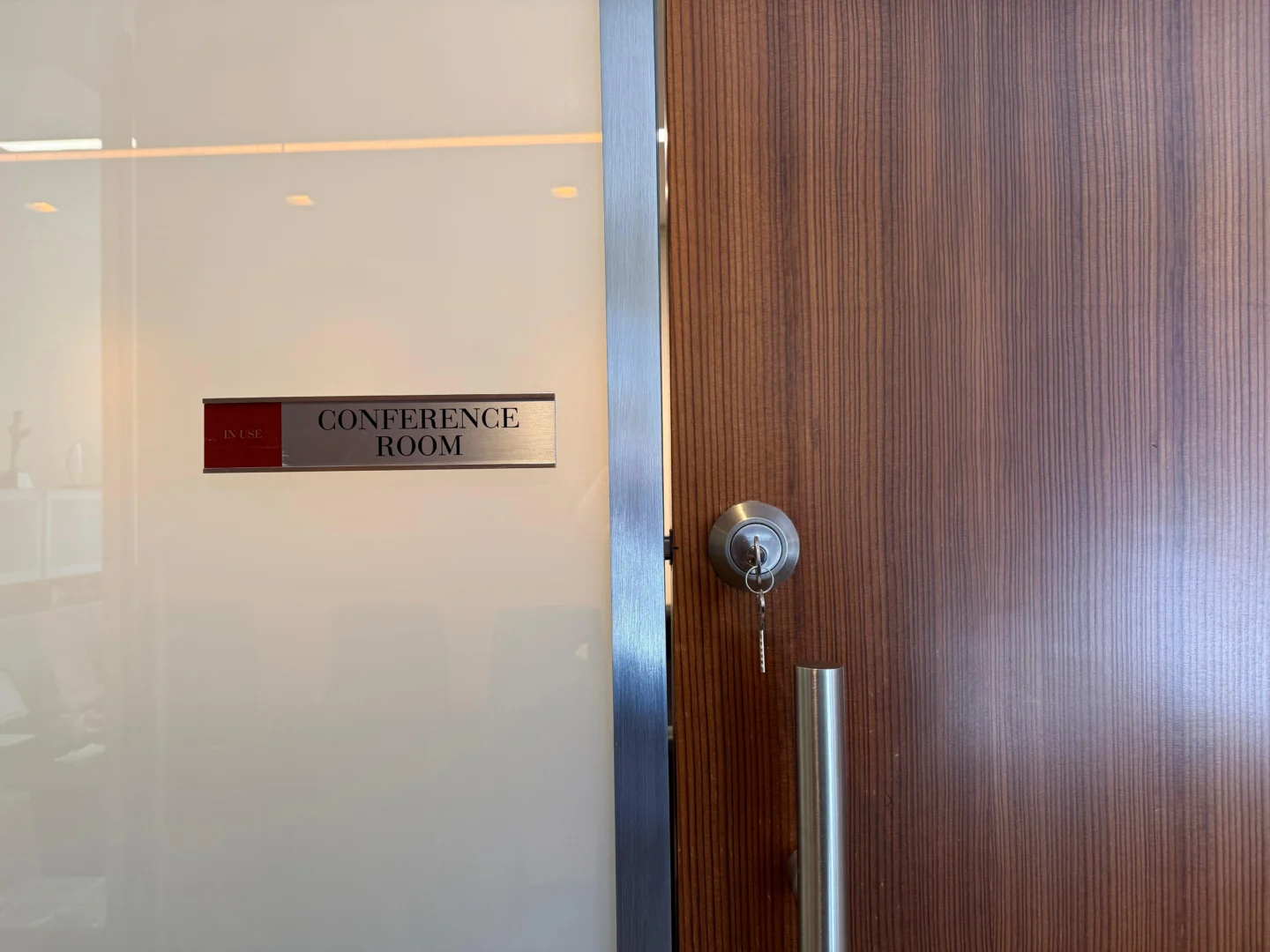
Cause 1: the cylinder is turning but the tailpiece is not operating the bolt
On many common deadbolts, the exterior keyed cylinder does not move the bolt directly. A rear tailpiece or driver connects the cylinder to the deadbolt mechanism. When that connection is damaged, incorrectly installed, or disconnected, the key can still rotate while the bolt stays in place. This is particularly worth considering when the symptom appeared suddenly after lock installation, cylinder replacement, rekeying involving disassembly, a smart-lock retrofit, or hardware becoming loose. If you recently serviced the cylinder and the problem started immediately afterward, do not assume the new key is the issue – the cylinder-to-lock connection should be inspected.
Cause 2: a mortise cylinder cam is no longer operating the lock correctly
Mortise locks deserve their own section because they do not operate like a standard tubular residential deadbolt. The key cylinder typically uses a rear cam to interact with the larger mortise lock body. If the cam is incorrect, loose, damaged, poorly positioned, or no longer engaging the mechanism, the key may rotate without producing the intended lock action. This is one reason cylinder compatibility is more complicated than matching the visible keyway. If you have an older apartment entrance or prewar-style door, first identify whether the hardware is a mortise lock. Do not disassemble an unidentified mortise lock while the door is stuck closed – the lock body contains multiple interacting components, and access is already limited while the door edge is inside the frame.
Cause 3: the bolt is binding against the strike
This is one of the easiest problems to misdiagnose. The cylinder may be perfectly healthy; the bolt may simply be pressed hard against the strike. Kwikset’s current troubleshooting repeatedly recommends comparing operation with the door open and closed. If the lock works with the door open but binds after the door closes, strike alignment, door preparation, weatherstripping, or door position should be checked. Possible reasons include a door that dropped slightly on its hinges, a strike that moved, a frame that shifted, weatherstripping that became thicker, a wood door that changed dimension with humidity, or loosened mounting hardware.
Why does door pressure change the lock? Imagine the deadbolt resting hard against one edge of the strike opening. The lock now has to overcome friction as well as retract the bolt. When you lightly push or pull the door and the key suddenly becomes easier to turn, you have temporarily removed some of that pressure. That observation is diagnostically useful: the next repair should probably focus on hinges, door position, strike alignment, or the frame – rather than simply replacing the cylinder. Do not permanently solve the symptom by enlarging the strike indiscriminately; identify why the alignment changed.
Cause 4: the deadbolt retracts but the spring latch remains stuck
Many doors use two separate mechanisms: a deadbolt (security bolt controlled by key or thumb turn) and a latch (spring-loaded bolt controlled by knob or lever). Unlocking the deadbolt does not necessarily retract the latch. If the key works but the door remains closed, try the handle normally and pay attention to its feel. A latch problem becomes more likely if the handle turns with no resistance, feels unusually loose, does not return normally, moves but produces no latch sound, or has recently become progressively unreliable. If the latch remains physically engaged inside the strike while the door is closed, access usually requires professional lock or latch service rather than repeatedly operating the key.
Cause 5: the cylinder or lock was installed under mechanical tension
A lock can be assembled too tightly or slightly off-center, placing pressure on the component connecting the key cylinder to the bolt. Kwikset documents this issue on its electronic deadbolts: a mounting plate can place tension on the torque blade, making key operation difficult until the assembly is repositioned. The general diagnostic clue is timing. Did the problem start immediately after a new lock was installed, after smart-lock installation, after screws were tightened, after cylinder replacement, or after the lock was removed and reinstalled? If yes, installation alignment deserves attention before assuming internal wear.
Cause 6: the whole cylinder is loose
Watch the face of the cylinder while turning the key. The key plug inside the cylinder is supposed to rotate – the entire cylinder body should not wobble significantly or rotate with it. A loose cylinder can indicate a retaining hardware problem, incorrect installation, damaged trim, failed cylinder mounting, or an incorrect replacement part. If the cylinder itself moves in the door, stop trying to operate it repeatedly. That hardware needs to be secured or serviced.
Cause 7: the internal lock body has failed
Sometimes the key and cylinder are doing exactly what they should – the failure is deeper in the lock body. Possible internal failures depend on the lock design and may involve the latch mechanism, deadbolt mechanism, actuator, spring, cam follower, clutch, or another internal component. This becomes more likely when the key rotates through its normal range, the cylinder feels secure, door pressure makes no difference, the bolt or latch produces little or no movement, and the lock has been unreliable for some time. In that situation, replacing only the key cylinder may not solve the problem – Rainbow Locksmith NY’s lock replacement service is more relevant when the physical locking mechanism itself is damaged or worn.
What if the key turns a full 360 degrees?
This symptom is especially useful because many locks normally operate within a more limited range. If the key suddenly makes a full rotation – or multiple rotations – without the expected locking action, suspect that the cylinder is not properly engaging the lock mechanism. Possible causes include tailpiece failure, cam failure, an internal actuator problem, a loose cylinder, an incorrect replacement cylinder, or lock-body failure. Do not assume the cylinder itself must be replaced: the cylinder may be rotating normally while the component behind it has failed. The lock should be identified before ordering parts.
What if the key turns halfway and stops?
A key that begins the normal unlocking motion and then hits a hard stop usually suggests resistance rather than complete disconnection. Possible causes include a bolt loaded against the strike, mechanical binding, a damaged internal component, door pressure, misalignment, or lock debris and wear. First note whether light door pressure changes the resistance. If it does, investigate alignment. If it does not and the lock has become progressively worse, internal servicing is more likely.
What if the key unlocks the deadbolt but the door is physically stuck?
Once you are confident the bolt and latch have retracted, the problem may no longer be a lock problem – the door itself may be binding. Possible causes include swollen wood, a damaged frame, door sag, threshold interference, severe weatherstripping pressure, paint bonding, or structural movement. Do not use the key or cylinder as a handle to force the door open: pulling on an inserted key can bend it or damage the cylinder. The door needs to be diagnosed as a door.
Which side works? Use it as a clue
If the interior thumb turn reliably retracts the deadbolt but the exterior key does not, focus on the keyed side and its connection to the mechanism: the cylinder, tailpiece, driver, cam, or cylinder retention. If both the exterior key and interior thumb turn fail in the same way, the deeper bolt or lock body becomes more suspect. The reverse pattern also tells you something: if the exterior key reliably operates the bolt but the interior control does not, the cylinder itself is probably not the primary failure – the interior thumb-turn connection, trim, actuator, or assembly may need attention. Diagnosing by which control still works is more useful than replacing parts randomly.
What if this is a smart lock?
Electronic deadbolts add another layer, but they still rely on mechanical hardware. Kwikset’s current SmartCode troubleshooting identifies several different mechanical reasons a lock can fail even when the electronics activate, including strike misalignment, mounting-plate tension, a disengaged clutch, incorrect latch installation, and door handing or configuration problems. If your smart lock still has a physical key cylinder, compare electronic and key operation:
- App fails, but key works: the issue may be electronic, battery-related, or configuration-related rather than the mechanical lock.
- Key and app both fail only with the door closed: alignment is highly suspect.
- Motor runs but the bolt does not move properly: the mechanical connection, latch configuration, or internal hardware should be checked.
- Key turns but the smart lock housing does not respond correctly: the retrofit adapter, torque blade, or clutch may not be properly connected.
Rainbow Locksmith NY offers smart lock installation and setup for NYC doors where installation or mechanical compatibility needs professional attention.
What if it is a mortise or jimmy-proof lock?
NYC apartments frequently include door hardware that is more complex than a basic tubular deadbolt. A mortise lock can combine several functions inside a larger lock body inserted into the door edge, so when the key turns but the door stays locked, the problem can involve the mortise cylinder, rear cam, lock case, deadbolt, latch, or trim connection. Because the door edge is inaccessible while the entrance is closed, this is not a good time to start removing random screws from the visible trim – identify the system first.
A surface-mounted jimmy-proof deadlock also differs from a standard cylindrical deadbolt. If the cylinder rotates but the surface-mounted locking mechanism does not release, the failure can be within the cylinder interface or lock mechanism. Do not assume a troubleshooting technique written for a standard bored deadbolt will apply.
Can lubricant fix a key that turns but does not unlock?
Usually, lubrication should not be the first answer when the key already rotates freely. Lubrication is more relevant when mechanical parts are stiff or rough. If the key rotates normally but does not operate the bolt, adding lubricant cannot reconnect a broken tailpiece, a disconnected cam, a failed actuator, or a broken latch mechanism. Likewise, if the bolt is mechanically loaded against the strike, the underlying alignment needs attention. Diagnose first.
Should you try another key?
Yes, if you have a known-good duplicate available – this is a low-risk diagnostic step. Compare whether both keys insert equally, rotate the same distance, meet resistance at the same point, and produce the same lock response. If only one key behaves poorly, the key itself may be worn or damaged. If multiple correct keys behave identically, the problem is more likely within the lock or door.
Do not try to “work the lock loose” for ten minutes
Repeatedly turning a failing lock does not necessarily make it safer – it can convert a partially functioning component into a completely failed one. Stop repeated cycling when the cylinder begins feeling looser, the key starts bending, internal clicking increases, the lock response becomes less consistent, or the key becomes harder to remove. A lock that is deteriorating should be diagnosed before the door becomes impossible to secure from either side.
When this is an emergency
Not every sticky lock needs emergency service. A key-turns-but-won’t-open condition becomes more urgent when:
- You are locked outside your only usable entrance.
- Occupants cannot open the door from inside.
- The door cannot be secured after it opens.
- The cylinder is coming loose.
- The key has broken.
- The lock failed after attempted forced entry.
- A business entrance cannot open.
- An apartment entrance lock is completely nonfunctional.
Rainbow Locksmith NY’s 24/7 emergency locksmith service currently covers home lockouts, office lockouts, emergency lock repairs, and other urgent access problems. If someone cannot exit through a door that must be usable for emergency egress, prioritize personal safety and appropriate emergency or building assistance rather than continuing DIY lock disassembly.
Repair the lock or replace it?
Once the door is open, the repair decision becomes much easier. Repair may make sense when the lock is generally in good condition and the fault is limited to a serviceable component: loose hardware, an alignment issue, a replaceable latch, a compatible cylinder interface, a serviceable actuator, or installation tension. Replacement may make more sense when the lock has broader deterioration such as multiple worn components, a damaged housing, repeated failure, severe corrosion, a broken internal mechanism, obsolete hardware, or previous unsuccessful repairs. Rainbow Locksmith NY’s residential locksmith services include lock repair alongside lock installation, lock replacement, rekeying, and lockout assistance.
Does rekeying fix this problem?
Usually not. Rekeying changes which key operates a compatible lock cylinder – it does not repair a broken connection between the cylinder and bolt. If the key already turns but the lock mechanism does not respond, the problem is primarily mechanical, not about which key is authorized. Our guide on rekeying vs. replacing locks makes the same important distinction.
How to prevent the same failure later
Once the lock has been repaired, pay attention to early warning signs. Do not ignore a lock that gradually requires more key force, more handle movement, pushing the door, pulling the door, lifting the door, multiple attempts, or unusual key rotation. Those changes are diagnostic clues. A reliable entrance lock should operate consistently – if the lock only works when you perform a particular trick every time, something is already out of adjustment or wearing out.
Common mistakes when the key turns but the door won’t open
The most common mistakes come from assuming more force will solve the problem. Avoid:
- Twisting the key aggressively
- Pulling on the door using the inserted key
- Repeatedly spinning a free-turning cylinder
- Spraying lubricant without diagnosing the failure
- Enlarging the strike before checking hinges
- Replacing the cylinder when the lock body is broken
- Rekeying a mechanically failed lock
- Removing mortise-lock trim while the system is unidentified
- Forcing a smart-lock motor repeatedly against a jam
- Ignoring a loose cylinder
- Waiting until a progressively failing lock stops working completely
Frequently asked questions
Why does my key turn but the door won’t open?
The key cylinder may no longer be correctly operating the latch or deadbolt, or the bolt may be binding against the strike. Other possibilities include a broken tailpiece, failed cam, stuck latch, door misalignment, or internal lock-body failure. Manufacturer troubleshooting from Allegion and Kwikset confirms that disconnected cylinder components and strike binding can produce these types of symptoms.
Why does the key spin freely in the lock?
A free-spinning cylinder can indicate that the cylinder is not engaging the locking mechanism. Allegion specifically identifies a missing tailpiece as one cause on compatible cylinder systems.
Why does my deadbolt turn but not retract?
The cylinder may not be correctly connected to the bolt mechanism, or internal components may have failed. If the bolt retracts normally when operated from the inside but not with the exterior key, focus on the cylinder and its rear connection.
Why does the lock work when the door is open but not closed?
That strongly indicates strike or door alignment. Kwikset recommends comparing open-door and closed-door operation and checking strike alignment, weatherstripping, and door position when binding occurs only after closing.
Why do I have to push the door before the key will turn?
Pushing the door changes the pressure between the bolt and strike. This suggests an alignment or door-position problem rather than a key that is simply worn.
Why does the key unlock but the handle won’t open the door?
The deadbolt may be unlocked while the spring latch remains engaged. A worn or failed latch, lever, spindle, or related hardware may be responsible. Schlage’s current troubleshooting identifies latch wear, loose hardware, and strike alignment among causes of latch-retraction problems.
Will lubricant fix a key that turns but doesn’t unlock?
Not if the cylinder is mechanically disconnected from the lock or the latch mechanism is broken. Diagnose whether the problem is stiffness, alignment, or failed components before applying maintenance products.
Should I replace the cylinder?
Only if diagnosis shows the cylinder or its interface is actually the problem. If the deeper lock body, latch, bolt, or door alignment has failed, replacing the cylinder alone may not solve anything.
Should I rekey the lock?
Rekeying is useful when you need existing keys to stop working. It does not normally repair a lock where the correct key already turns but the mechanism fails to open the door.
Can smart locks have this problem?
Yes. Kwikset documents mechanical causes including strike binding, mounting-plate tension, clutch problems, and installation configuration issues that can stop a smart deadbolt from moving correctly even when the electronics respond.
Are mortise locks different?
Yes. Mortise locks use a larger lock body inside the door and commonly operate through a mortise cylinder and cam – common on older NYC apartment doors.
When should I call a locksmith?
Call when the key spins without operating the lock, the latch or deadbolt will not retract, the cylinder is loose, the door remains locked after basic alignment checks, the key is beginning to bend, or the entrance cannot be secured. Rainbow Locksmith NY provides emergency lock repair and home lockout assistance in NYC.
Get help from Rainbow Locksmith NY
Key turning but the door still holding you hostage? Rainbow Locksmith NY diagnoses and repairs failed cylinders, latches, mortise locks, and smart deadbolts across NYC – 24/7, with the price quoted before dispatch.
Rainbow Locksmith NY | 338 E 65th St, New York, NY 10065 | Licensed and insured | NYC DCWP License. Lock designs vary; follow your exact manufacturer’s guidance and avoid forcing hardware that is already failing.